Quick Take
- Narration: Dani Binnington self-narrates, and this is non-negotiable, her own cancer diagnosis is the reason this book exists, and her voice carries the weight of lived experience that no professional narrator could replicate. Eleven hours feels earned.
- Themes: Medically-induced menopause, treatment side effects, HRT safety after cancer, survivorship
- Mood: Urgent and compassionate, with the specific relief of finding information you’ve been unable to locate anywhere else
- Verdict: Binnington bridges a genuine gap in the survivorship literature, the HRT-after-cancer question is handled with real nuance, and the self-narration makes this feel like the resource survivors have been asking their oncologists for and not getting.
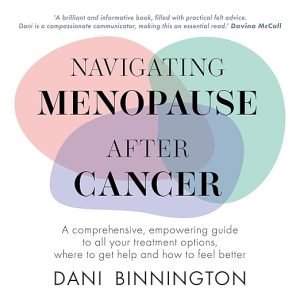
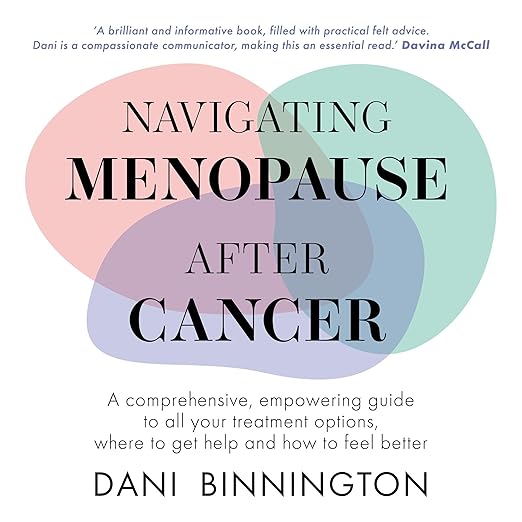
There are books that fill a gap, and then there are books that fill a gap that most people didn’t know existed until they fell into it. Dani Binnington’s audiobook belongs to the second category. I listened to a substantial portion of it over two evenings, partly because I wanted to understand the material and partly because the narration created a kind of intimacy that made it difficult to step away from. Binnington’s voice has the quality of someone who is still, on some level, processing what she’s telling you, and that’s exactly right for what this material asks of a narrator.
The central problem the audiobook addresses is one that reviewer Cay Chandler described bluntly: the medical industry doesn’t help you with menopause after cancer treatment, and the questions are numerous. Binnington herself went through an estrogen-positive breast cancer diagnosis and emerged into a medical landscape where her menopause symptoms were either dismissed as inevitable or surrounded by contradictory guidance on HRT safety. The book began as an attempt to fill what she describes as a serious gap between patients, their oncologists, and the questions those oncologists either don’t have time to answer or haven’t been asked to think about carefully.
The HRT Safety Question, Finally Addressed With Real Specificity
The chapter structure distinguishes between different cancer types when addressing HRT, which is the single most valuable feature of this audiobook. Not all cancer survivors face the same risk profile when considering hormone replacement therapy, and the conversation in most survivorship resources treats HRT as either uniformly safe or uniformly dangerous. Binnington brings together oncologists, menopause specialists, and wellbeing experts, credited in the text, to address the nuance that individual diagnoses require. For a hormone-positive breast cancer survivor, the calculus around estrogen is different than for an ovarian cancer survivor, which is different again from a lymphoma survivor navigating chemotherapy-induced menopause. The fact that this audiobook distinguishes between these cases is not a minor thing. For many listeners, it will be the first resource that has.
Reviewer Amanda Matveia described encountering Binnington’s podcast while dealing with a March 2025 breast cancer diagnosis, then purchasing the book and reading it in two days during treatment. That account captures something important about who this audiobook is for and how it functions: it’s not a background-listening wellness title, it’s an active reference that people reach for at moments of urgency. The self-narration serves this use case well. Binnington’s voice creates a sense of being guided through difficult terrain by someone who has already walked it.
Beyond Hot Flushes: The Long-Term Health Sections
One of the genuinely underserved areas in menopause writing, even outside the cancer-survivor context, is long-term bone, brain, and heart health. Most popular menopause guides treat these as appendices or afterthoughts. Binnington’s treatment of protective strategies for bone density, cognitive function, and cardiovascular health in the context of medically-induced or treatment-accelerated menopause is substantive and specific. For a population who may be navigating early-onset menopause due to chemotherapy-induced ovarian suppression or surgical removal of the ovaries, this is not theoretical future planning, it’s immediate clinical relevance.
The audiobook also covers endocrine therapy side effects with a directness that is rare in publicly available patient education. Drugs like tamoxifen and aromatase inhibitors have menopausal side effects that are frequently underweighted in pre-treatment counseling, and Binnington treats them as the serious quality-of-life issue they are rather than acceptable collateral damage for survival.
The Alternative Therapies Section and Its Honest Limits
Binnington includes complementary therapies for HRT-ineligible survivors, and the treatment here is balanced in a way that earns trust. She doesn’t oversell non-hormonal options or suggest that acupuncture and cognitive behavioral therapy are equivalent substitutes for systemic estrogen. The framing is honest about what the evidence supports and what remains under-researched, which means listeners can make informed decisions rather than being sold optimism. Reviewer stephgarrigus noted that this book is valuable for both patients and healthcare professionals, which speaks to the quality of the evidence base behind the recommendations.
Who should listen: Cancer survivors experiencing menopausal symptoms, whether induced by chemotherapy, surgery, or hormonal therapies, who need evidence-based guidance navigating HRT eligibility, symptom management, and long-term health protection. Healthcare professionals treating this population will also find it a useful patient-facing resource.
Who should skip: Anyone looking for a general menopause guide without the cancer-survivor context, this is a highly specific resource and the specificity is its value. Listeners who find prolonged self-narration by non-professional narrators difficult should know the full runtime is eleven-plus hours.
Frequently Asked Questions
Does the audiobook differentiate HRT safety guidance by cancer type, or does it treat all cancer survivors as a single category?
It differentiates by cancer type, which is one of its core strengths. The guidance around HRT for hormone-positive breast cancer survivors is handled separately from other cancer types, reflecting the specific clinical concerns around estrogen exposure in that population versus others for whom HRT may be more accessible.
Does Binnington’s self-narration ever feel too emotionally close to the material to function as a reliable guide?
No, the narration is composed and clinical when the material requires it, and the emotional register is appropriate rather than overwhelming. Binnington draws on her own experience to establish context and credibility, but the bulk of the audiobook functions as evidence-based guidance informed by the contributing specialists.
Is there coverage of chemotherapy-induced menopause specifically, for younger women who enter menopause early due to treatment?
Yes. The audiobook addresses the distinct experience of treatment-induced menopause, including early-onset cases in younger women, and covers the specific concerns around bone density, cardiovascular health, and hormonal management that apply when menopause occurs prematurely due to cancer treatment.
Is the companion podcast Binnington hosts related to or separate from the audiobook content?
The podcast, which several reviewers found before the book, covers ongoing conversations with specialists and survivors, while the audiobook consolidates the core evidence-based guidance into a structured reference. They are complementary, with the book providing the foundational framework and the podcast offering ongoing depth and community.