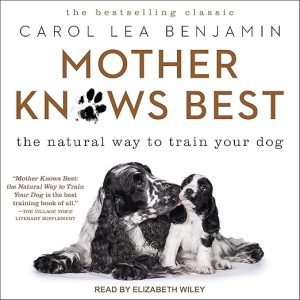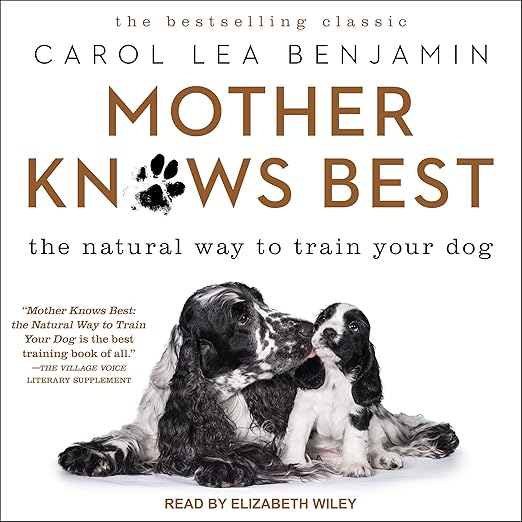
I have a specific soft spot for dog training books, partly because I grew up with a rotation of poorly-trained but deeply loved dogs, and partly because the genre reveals something interesting about how people think about authority and relationship. Carol Lea Benjamin's Mother Knows Best: The Natural Way to Train Your Dog has been circulating since the 1980s, with more than 150,000 copies sold, and this Tantor Media audiobook edition narrated by Elizabeth Wiley finally makes it properly accessible to listeners who do their reading on the move. I listened to most of it on a long walk, which felt genuinely fitting given what the book is actually about.
The core premise is stated clearly in the title and the synopsis. Benjamin argues that the most effective approach to training a dog is to observe how a mother dog trains her puppies and adapt those methods for human use. This means discipline that is brief, immediate, and followed without delay by resumed normal activity, play, and affection. It means reading canine body language rather than imposing human emotional frameworks on dog behavior. It means understanding that dogs respond to consistency, timing, and clear pack hierarchy, not to extended lectures or escalating punishment cycles that the dog cannot connect to any specific transgression.
Training Lineage and a Standout Games Chapter
The premise sounds simple, and Benjamin makes it accessible, but there is real depth in the application. One reviewer who is a dog trainer and psychologist traces the lineage of training philosophy from William Koehler through Vicki Hearne and Barbara Woodhouse and arrives at Benjamin as one of the most enlightening texts in the tradition. That is high company, and the reason this book belongs in it is that Benjamin consistently asks what the dog's experience is, not just what behavior the human wants to produce. The distinction is more important than it sounds. Most training failures begin when the human's goal and the dog's understanding of the interaction diverge, and Benjamin addresses that gap directly rather than papering over it with repetition.
The chapter on games is a particular standout in the book. Training manuals often stop at obedience commands, treating play as separate from learning. Benjamin includes structured play as part of the relationship-building process, which aligns with how mother dogs actually spend time with their young. One reviewer who has been buying copies of this book for friends over several decades described the games chapter as one of the key reasons she keeps returning to it. The play section is not an afterthought. It is part of the method, and it reflects a genuine understanding of what motivates a dog beyond food reward or fear of correction.
The No-Treats Method and Wiley's Steady Reading
One reviewer raised a substantive question about the book's position on food rewards. Benjamin instructs readers to train without treats, on the basis that a mother dog does not use them. The reviewer found this philosophically consistent but practically questionable, particularly for older dogs and non-puppy situations. This is a genuine point of disagreement within the training community. Positive reinforcement approaches that center food rewards have accumulated significant behavioral science support since Benjamin wrote this book, and listeners should be aware that the methodology here sits in an older tradition.
Elizabeth Wiley's narration does not editorialize on this tension. She reads the instructions as Benjamin wrote them, which is the right call for a how-to audiobook. The information is presented clearly, with enough specificity that listeners can immediately understand how to implement each technique. Wiley avoids the slightly over-enthusiastic tone that some nonfiction narrators adopt for practical guides, and the result is a voice that feels like a knowledgeable friend rather than an infomercial presenter. Her pacing in the instructional passages is particularly good, allowing the listener to absorb each step before moving to the next.
Reviewers Notice a Dog's-Eye View of Training
The reviews for this audiobook are unusually specific and useful. One notes that everything is taught with great insight into how the dog is thinking about you and your behavior, which captures what Benjamin does that most training guides do not: she writes from inside the dog's perspective as well as the human's. Another notes that friends who used the method have dogs who are sweet and happy, not fearful or anxious about doing something wrong. That distinction matters enormously. Training methods that produce compliance through anxiety produce dogs that perform correctly under supervision and fail under pressure. Benjamin's method aims for something more durable.
Four Decades in Print for New Puppy Owners
New puppy owners will get the most from this. The step-by-step structure from puppy preschool through adult training stages gives it practical utility at every phase of a young dog's development. Listeners who have already trained several dogs using modern positive reinforcement methods may find the no-treats stance a point of friction, though the underlying behavioral insights remain valuable regardless of that specific disagreement. Those seeking a strictly science-based contemporary training manual should look elsewhere. Those who want a humane, relationship-centered approach grounded in natural canine communication will find this holds up remarkably well for a book that predates much of what has since been written in the field.
The fact that this book has remained in print and in active recommendation for nearly four decades is itself meaningful information. Training philosophies come and go, and many books that dominated the genre in the 1980s and 1990s are now read primarily as historical documents. Mother Knows Best survives because its foundation, understanding what motivates a dog and communicating in terms the dog can process, is not period-specific. The specific techniques may be debated, and the no-treats stance will remain a friction point for modern trainers, but the underlying ethic of the method is sound enough that the book continues to produce the outcomes its reviewers describe: dogs who are confident, responsive, and genuinely at ease in their relationship with their owners. That track record earns the listen.
- Narrator: Elizabeth Wiley delivers a measured, practical narration that mirrors the book's tone, clear and instructional without tipping into dry recitation.
- Subjects: Natural dog training, the mother-dog model, understanding canine psychology
- Tone: Warm and practical, with genuine affection for dogs throughout
- Bottom line: A classic dog training text that holds up across decades because its method is grounded in how dogs actually communicate, not in treat-dispensing shortcuts or dominant-owner mythology.
A Few Questions About Mother Knows Best
Does Mother Knows Best work for adult dogs, or is it primarily focused on puppies?
The book covers the full developmental arc from puppy through adult training, though its foundation in the mother-dog model means it addresses puppy psychology most deeply. Several techniques translate effectively to adult dogs, particularly those with no prior training.
How does Elizabeth Wiley handle the instructional sections where specific techniques are described step by step?
Wiley is clear and well-paced in the instructional passages, with enough pause between steps that listeners can mentally absorb each stage before moving on. The narration is practical rather than performative throughout.
Is the no-treats method a dealbreaker for listeners familiar with positive reinforcement training?
It depends on how firmly you are committed to food-based reinforcement. The underlying approach to timing, consistency, and relationship-building is sound regardless of the treat debate, and many listeners find value in the framework even if they adapt the specific technique.
Is this the full text of the original Mother Knows Best or an abridged edition?
The Tantor Media audiobook released in 2018 is based on the classic text and covers the full content including the games and play chapter that longtime readers consider essential to the method.