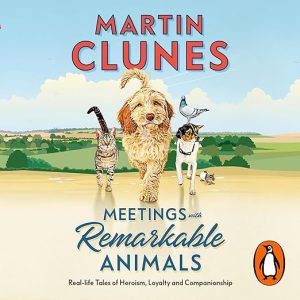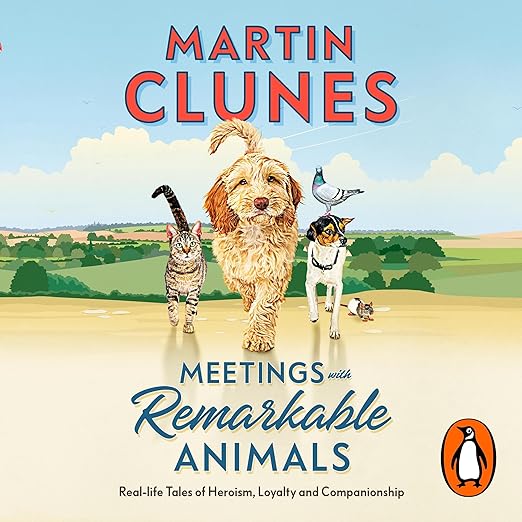
Meetings With Remarkable Animals begins with a phone call. After hearing guide dog owner Jaina speak on the radio about what would happen to her retired companion Laura when she left service, Martin Clunes picked up the phone and adopted the dog. That act of impulsive generosity opened a larger inquiry, and this audiobook - narrated by Clunes himself across just over eight hours - is the result. The book moves from Clunes' own life-changing encounters with animals to a history of what animals have done for humans across centuries and conflicts: guide dogs for the blind, mine-clearing Gambian Pouched Rats, war horses, carrier pigeons, and a wild dolphin called Jock who befriended a traumatized young woman in Australia. The structure sounds episodic, and it is, but the episodic quality works in the audiobook's favor - each story is complete enough to be genuinely satisfying, and the cumulative effect is something closer to a sustained argument than a collection of anecdotes.
Clunes, known internationally as the actor behind Doc Martin, has a natural storytelling facility that translates well to narration. His voice carries warmth without forcing it, and the material gives him consistent opportunities to use it well.
Clunes Frames Animal Labor as a Debt Owed
The book's organizing idea is that the standard human-animal relationship narrative - animals as companions, pets, working tools - drastically understates what other species have actually contributed to human survival and flourishing. Clunes is not making a polemical argument about animal rights; he is making a historical and observational argument about debt. The horses of the Light Brigade, the pigeons carrying messages across the Western Front, the rats clearing unexploded ordnance in Mozambique and Cambodia - these are stories of animals performing work that human beings could not do themselves, often at considerable cost to the animals involved. Clunes frames this without sentimentalizing it, which is the book's consistent strength.
The chapter on assistance dogs is the most personal section and the one that most directly connects the adoption of Laura to the broader argument. Clunes tracks the training, the bond formation, the specific ways in which guide dogs learn to navigate environments in partnership with their handlers, and the emotional complexity of retirement for both dog and owner. One reviewer who described the audiobook as particularly wonderful for animal lovers was responding to this section's unusual combination of practical detail and emotional honesty.
More Than Doc Martin Behind This Narration
Clunes as narrator is inseparable from the material in a way that makes the audiobook format the best version of this book. The self-deprecating openness about his own soft-touch relationship with animals - one more couldn't hurt, he tells himself before adopting Laura - is exactly the note that a third-party narrator reading the same sentences would flatten into mere information. When he describes his encounters with wild dolphins or his visits to working horse sanctuaries, the voice carries the weight of someone who was genuinely moved, not performing the emotion for effect.
One reviewer who noted being a longtime fan of Doc Martin and declaring themselves now a fan of the writer captures the pleasant surprise this audiobook tends to deliver. Clunes' prose is not what you would expect from an actor writing about a personal interest - it is organized, historically informed, and genuinely curious about the mechanisms of animal cognition and interspecies communication. The book rewards listeners who come in knowing only the BBC television work and find substantially more depth than they expected.
War Animals and a Dolphin Named Jock
The wartime chapters - covering the horses that served in World War I, the carrier pigeons of World War II, and the more recent history of mine-clearing rats in post-conflict zones - are the most surprising sections of the audiobook for listeners who come to it primarily from the domestic animal and assistance dog framing. These chapters make a more demanding argument about human reliance on animal labor under extreme conditions, and they are the sections that most justify the book's broader title claim.
The wild dolphin chapter, covering Jock's relationship with a traumatized young woman in Australian waters, is the most emotionally complex single story in the collection. Clunes handles it carefully, distinguishing between what is documented and what is interpretation, while still conveying why the encounter matters and what it suggests about cross-species empathy. It is the chapter that lingers longest after the audiobook ends.
Clunes' Voice Shifts Between History and Memory
What the audiobook does particularly well, and what the print edition cannot quite replicate, is the way Clunes' voice shifts when he moves between the historical material and his personal encounters. The historical chapters - covering the Light Brigade horses, the wartime pigeons, the Gambian Pouched Rats - carry a different register than the sections where he is describing his own experiences with animals, and that tonal variation is audible in a way that paragraph breaks on a page cannot achieve. The eight-hour runtime feels earned because Clunes uses it all, giving each of the remarkable animals the space their stories deserve.
History Buffs and Animal Lovers Both Get Rewarded
This audiobook rewards two distinct audiences. First, the obvious one: people who love animals and want a book that takes that love seriously rather than treating it as a slightly embarrassing preference. Second, and perhaps more unexpectedly: readers interested in the social history of warfare, exploration, and medicine who have not considered how comprehensively animals were integrated into those histories. James Herriot readers will find Clunes working in a warmer and more wide-ranging register. Those expecting a celebrity memoir will find the book more serious and historically grounded than that framing suggests.