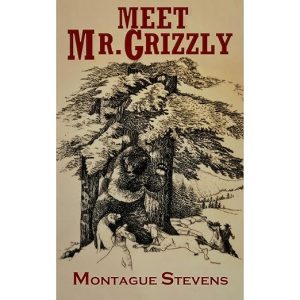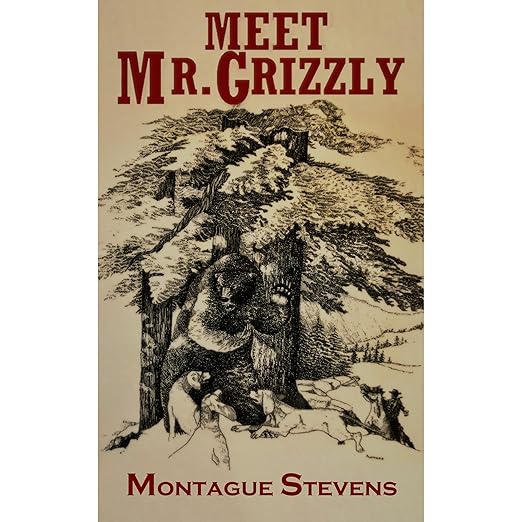
I came across Meet Mr. Grizzly while following a thread of recommendations from outdoor and hunting memoir readers. The book has the quiet reputation of a cult classic in its niche, the kind of title that gets passed around by people who have spent time in New Mexico's Gila country and recognize what Montague Stevens actually achieved out there in the 1880s. It is a book that almost defies categorization: part ranch memoir, part bear hunting manual, part meditation on dogs and men and the strange logic of frontier problem-solving.
Montague Stevens was a Cambridge-educated, one-armed Englishman who arrived in southwestern New Mexico in 1881, bought a ranch, and proceeded to reinvent grizzly bear hunting through sheer methodical ingenuity. The premise alone is remarkable. The execution, delivered in Stevens's voice, is even better.
Dry Wit and the Trick With His Horses
The book's central achievement is Stevens himself, rendered on the page with the dry, self-deprecating confidence of a man who has solved most problems through careful thought and refuses to be impressed by difficulty. His approach to hound training was, by multiple accounts, so far ahead of its time that practitioners still reference his techniques. The anecdote about cutting the tails off his horses to prevent theft is emblematic of his thinking: identify the constraint, find the simplest geometric solution, execute without fuss. There is something almost philosophical about the way he moves through the world, and the book is full of moments like that.
The chapters covering the grizzly hunts themselves are visceral without being gratuitous. Stevens writes about the hunts as tactical puzzles as much as physical encounters, and his relationship with his dogs is clearly the emotional core of the book. Reviewer Dan, who noted that the story soon evolves into a remarkable lesson on dogs, horses, and men, is exactly right. The bear hunting is the occasion; the relationship between the human and the animal is the subject.
Ten Hours of Warm, Conversational Company
The audiobook version opens up a classic text that might otherwise remain inaccessible to modern readers who lack access to the original. The narrative voice Stevens uses is conversational and warm, and even at nearly ten hours of listening time the material sustains attention because Stevens himself is genuinely interesting company. Multiple reviewers describe it as one of their favorite books, the kind of text that rewards rereading, and the anecdotal structure means you can return to individual chapters without losing the thread. Reviewer Rman's comment that it is guaranteed to thrill hunters, dog lovers, horsemen, and outdoor enthusiasts is not hyperbole for listeners in those communities.
AI Narration Can't Match Stevens's Comedic Timing
The AI narration is the significant caveat here. Stevens's prose has a specific register, slightly formal, laced with dry wit, carried by the understated confidence of a man who finds everything interesting and nothing particularly alarming. A human narrator with the right sensibility would bring enormous warmth to that voice. The Virtual Voice rendering is serviceable but flat, and it cannot deliver the comedic timing that Stevens's anecdotes occasionally require. Listeners sensitive to AI narration will notice it throughout. The book is old enough that its period attitudes about hunting, frontier life, and the Indian Wars reflect 19th-century perspectives that contemporary listeners should hold with appropriate context.
Working-Dog and Frontier Enthusiasts, With One Caveat
Anyone with a serious interest in working dogs, frontier history, bear hunting culture, or the old West generally will find genuine value here. Stevens's methods and observations hold up in ways that surprise readers expecting a historical curiosity. Those who loved texts like Aldo Leopold's Sand County Almanac for its combination of natural observation and philosophical weight will find a different but complementary sensibility in Stevens. The AI narration is a real limitation, and listeners who find that format difficult to sustain will do better with the text version. For everyone else, this is a quiet discovery well worth making. The book's reputation as a passed-around classic among people who know the Gila country is not misplaced. Stevens earned it with writing that is patient, funny, and genuinely original in its approach to both the land and the animals on it.
Questions Listeners Ask
How does the AI narration affect the listening experience for this particular book?
It is noticeable. Stevens's writing has a dry wit and conversational warmth that benefits from a skilled human narrator. The Virtual Voice rendering is clear and competent but cannot deliver the comedic timing or the character texture that this material deserves. It is the main limitation of this audio edition.
Is this book historically accurate, and how does it handle the Indian Wars context?
Stevens was a participant and eyewitness to frontier New Mexico during Geronimo's era, so the accounts carry firsthand authenticity. The perspective is necessarily that of a late 19th-century Anglo rancher, and contemporary listeners should read the Indian Wars references through that historical lens.