
- Voice: Barnaby Edwards delivers Forsyth's structured argument with measured authority; he maintains enough variation in pacing to keep analytical prose from flattening across eight hours.
- Big ideas: Customer orientation as marketing foundation, pricing as positioning, market research methodology and its limits
- Atmosphere: Structured and authoritative, classical in framework and clear in argument
- Worth it?: A disciplined fundamentals audiobook that builds from Drucker's customer-first premise with more conceptual rigor than most introductory marketing titles manage.
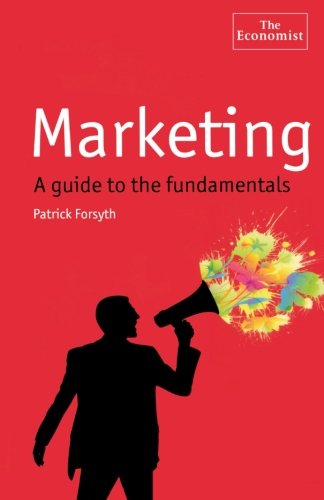
Marketing fundamentals audiobooks occupy a crowded shelf, and most of them fail in one of two ways: they either assume so much prior knowledge that genuine newcomers fall behind, or they reduce the subject to such basic observations that experienced practitioners feel their time was wasted. Patrick Forsyth's guide to fundamentals, narrated by Barnaby Edwards, avoids both failure modes with more discipline than I expected from a title this modestly packaged. This eight-hour audiobook does what its title promises: it covers the foundational principles of marketing, from the classic definition Forsyth borrows from Peter Drucker, looking at business through the customers' eyes, to practical techniques for the marketing mix, pricing policy, and market research methodology.
The Drucker definition that opens this audiobook is a deliberate choice, not just a decorative quotation. Forsyth builds his entire framework from the premise that marketing is fundamentally about understanding the customer's perspective, and that this orientation is both rarer and harder to maintain than it sounds. Organizations believe they are customer-focused, he argues, while actually remaining product-focused in their decision-making. The gap between those two orientations is where most marketing failures originate, and the guide is structured to close that gap through conceptual clarity rather than tactical checklists.
Pricing Is About Positioning as Much as Margin
The audiobook's core structure covers the marketing mix, pricing policy, and market research methodology. That is a deliberately classic framework, and some listeners will find it traditional to the point of being conservative. The marketing mix discussion covers the familiar four P's, product, price, place, and promotion, but Forsyth's treatment is not mechanical. He connects each element to the customer orientation argument that anchors the book, so the framework feels purposive rather than inherited.
The pricing policy section is the strongest in the audiobook. Forsyth covers the relationship between cost, value, and perception with a clarity that is unusual in introductory marketing texts. His explanation of why pricing decisions are as much about positioning as about margin gives listeners a more sophisticated framework than the cost-plus-margin model most business texts default to. For anyone who has ever felt uncertain about why their pricing did not land the way they expected, this section provides useful conceptual tools.
Market research methodology receives proportional treatment without becoming a statistics tutorial. Forsyth distinguishes between primary and secondary research, quantitative and qualitative approaches, and the kinds of questions each method can and cannot answer. For a general guide, this level of coverage is appropriate. Listeners who need deep methodology will need dedicated research resources, but this provides enough foundation to make those resources comprehensible.
Edwards Keeps the Delivery From Going Flat or Emphatic
Barnaby Edwards narrates with the measured delivery that long-form nonfiction requires. He has the ability to read analytical prose without flattening it, maintaining enough variation in pacing and emphasis to help listeners follow the argument's structure without being directed so explicitly that the listening feels condescending. For an eight-hour text that covers a fairly structured set of principles, that balance matters: too flat and the content blurs; too emphatic and the voice becomes the focus rather than the ideas.
The audiobook format works well for this kind of conceptual survey because the material is organized sequentially and builds on itself. Listeners can absorb a section on the marketing mix, process it, and move to pricing with the conceptual foundation already established. This is not a reference text that benefits from being flipped through; it is a structured argument that rewards linear listening.
For professionals moving into marketing roles from other functions, this audiobook provides the vocabulary and conceptual scaffolding to participate in marketing conversations with more confidence. The guide covers enough ground to give a working understanding of what the discipline actually encompasses, why customer orientation is harder than it looks, and what the standard tools of the trade are designed to accomplish.
Digital Marketing and Attribution Sit Outside the Scope
The guide is deliberately classical in its framework, which means it does not address digital marketing, content strategy, social media, or data-driven attribution in any depth. Readers expecting coverage of contemporary marketing channels, platform-specific advertising, or modern analytics will find significant gaps. Forsyth is teaching principles, not current practice, and the distinction matters. The principles will outlast any specific platform; the practical application requires supplementary current resources.
The single available rating for this audiobook is too sparse to provide a meaningful signal about audience satisfaction. Potential listeners should weight the content of the guide itself rather than the ratings data. The single reviewer who notes a 4-star experience does so without commentary, which is not particularly illuminating either way.
Drucker Reaches Senior Leaders Who Approve Budgets
This audiobook rewards people entering marketing roles without formal training, small business owners who handle their own marketing without a conceptual framework, and professionals from other functions who need to collaborate effectively with marketing teams. The Drucker-anchored customer orientation argument is also useful for senior leaders who approve marketing budgets without understanding what the discipline is actually designed to do.
Marketing professionals with formal training or significant experience will find this too introductory to be useful. And anyone expecting coverage of digital marketing channels, data analytics, or contemporary platform strategy will need to supplement this guide with more current resources. As a foundation for understanding what marketing is and why it works the way it does, this audiobook delivers with more clarity and discipline than the crowded fundamentals category usually manages.
Before You Listen
Does this audiobook cover digital marketing, social media, or content strategy?
No. Forsyth's guide focuses on classical marketing principles including the marketing mix, pricing policy, and market research methodology. Digital channels and contemporary platform strategy are not covered. The principles are durable; the practical application to modern channels requires supplementary resources.
Is this audiobook appropriate for someone with no prior marketing background?
Yes. Forsyth builds the framework from foundational concepts, starting with a clear definition of what marketing actually is and why customer orientation is harder to sustain than it sounds. No prior knowledge is assumed.
How does Barnaby Edwards' narration work for this kind of structured nonfiction audiobook?
Edwards handles analytical prose with enough pacing variation to maintain listener attention without over-dramatizing. The eight-hour runtime is managed well, and the sequential structure of the material suits the linear audio format.
Would experienced marketing professionals get value from this audiobook?
Professionals with formal marketing training or significant experience will find the content too introductory. The guide is designed for those building a foundational understanding rather than extending advanced practice.







