Quick Take
- Narration: Thomas L. Murray Jr. self-narrates with the practiced confidence of a working therapist, clinical enough to be credible, warm enough to feel like a conversation.
- Themes: Overcontrolled temperament and its effects on intimacy, psychological flexibility and vulnerability, using mindfulness and DBT approaches for sexual wellbeing
- Mood: Intellectually engaged and gently confrontational, like the better kind of therapy session where you realize you are the subject
- Verdict: A genuinely unusual book in this space, applying rigorous psychotherapy frameworks to sexual dysfunction caused by too much self-control, written with enough humor to keep the clinical content from feeling like coursework.
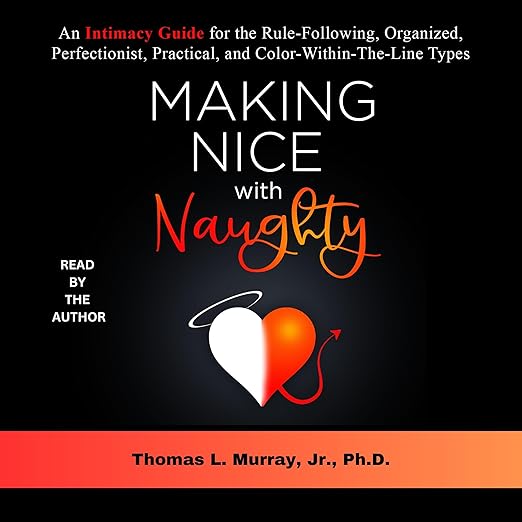
I started Making Nice with Naughty expecting a genre-standard intimacy guide and found myself somewhere considerably more interesting. Dr. Thomas L. Murray Jr. is a sexologist and psychotherapist, and he has written a book about a problem that most intimacy literature does not name: having too much self-control. That framing caught my attention immediately, because it inverts the usual assumption that sexual problems come from lack of discipline or awareness.
Murray’s central argument, articulated at length in the eight-plus hour runtime, is that what he calls the “overcontrolled temperament” creates specific and recognizable patterns of sexual and relational dysfunction. Compulsive structure, risk-aversion, emotional flatness, the pride in having a “stable mood.” These are not presented as virtues gone slightly too far; they are described as genuinely blocking the vulnerability that intimacy requires. That is a harder argument than it sounds, and Murray supports it with clinical frameworks.
The Therapies Behind the Claims
Murray is drawing on three specific psychotherapy approaches: radically open dialectical behavior therapy (RO-DBT), rational emotive behavior therapy (REBT), and acceptance and commitment therapy (ACT). For a trade nonfiction audiobook aimed at general listeners, this is an unusually rigorous theoretical underpinning. One reviewer who is a working psychotherapist noted the clarity with which Murray synthesizes these frameworks, describing herself as walking away with professional takeaways. Another specifically appreciated the checklists and exercises embedded in the chapters.
That exercise structure is worth noting in audio terms. Murray narrates the practical sections clearly, and his clinical background means the exercises are described with enough precision to be followed without visual aids. Unlike workbook formats that lose their interactive quality entirely in audio, Murray’s exercises are explanation-heavy enough to translate reasonably well.
Humor as Delivery Mechanism
The title itself signals the tonal strategy: Making Nice with Naughty is a phrase that sounds slightly playful for what is fundamentally a serious psychotherapy application. The humor Murray uses throughout is not decoration, it is functional. The material requires listeners to recognize themselves in descriptions of emotional rigidity, perfectionism, and sexual anxiety, and humor creates the psychological space to do that without defensiveness. One reviewer described it as using “directness” alongside humor, which is an accurate pairing. Murray does not let you off the hook, but he does not make the hook feel punishing.
The eight-and-a-half-hour runtime is significant. This is not a brief primer. The depth reflects Murray’s commitment to covering the psychotherapy foundations before applying them, which makes the practical sections more substantive than they would be otherwise. Listeners who want a shorter read may find the theoretical sections longer than they need; listeners who want to understand the why behind the recommendations will find the length justified.
The Self-Narration Dividend
Murray narrating his own work matters for this specific book. The material requires the listener to trust the guide, to believe that this person has sat with clients navigating these exact patterns and emerged with something useful to say. A professional narrator, however skilled, would put one degree of separation between that clinical authority and the listener. Murray reading his own case studies and exercises brings both the authority and the warmth that reviewers consistently mention.
Who Should Listen / Who Should Skip
High-achieving, emotionally regulated people who have noticed that their sexual and intimate lives do not reflect the quality of their professional functioning will find direct and specific company here. The book is also professionally useful for therapists working with perfectionist or overcontrolled clients. Listeners looking for simpler technique-focused instruction may find the theoretical depth more than they need, but those willing to engage with the psychological framework will find it earns its runtime.
Frequently Asked Questions
Do you need a background in psychology to follow the therapy concepts Murray uses?
No specialist background is required. Murray explains radically open DBT, REBT, and ACT in accessible terms before applying them. The book is written for general adult readers, though working therapists have noted its professional utility as well.
Is Making Nice with Naughty primarily about low sexual desire, or does it cover other sexual dysfunctions?
It covers a range: low desire, emotional distance in relationships, performance anxiety, perfectionism around sex, anorgasmia, and sexual pain disorders are all mentioned in the scope. The common thread is how overcontrolled personality patterns contribute to each.
How does Murray’s self-narration compare to a professionally produced audiobook in this genre?
Reviewers respond positively to his delivery, describing it as warm and grounded in lived clinical experience. The self-narration adds credibility to the case studies and exercises that a third-party narrator would struggle to replicate. The audio quality of a professional studio recording might be higher, but the authority feels genuine.
Is the content relevant to people who don’t identify as perfectionists?
The overcontrolled temperament as Murray describes it is broader than perfectionism. Risk-aversion, emotional flatness, discomfort with uncertainty, and compulsive need for order all fall under this umbrella. Someone who does not identify as a perfectionist but recognizes the other traits will still find the material highly relevant.