Quick Take
- Narration: George Newbern brings a radio-journalist quality to Nuzum’s prose, unhurried and clear, with the kind of voice that makes extended listening comfortable, which is appropriate for a book about audio storytelling.
- Themes: Podcast craft and structure, audio storytelling principles, audience empathy in content creation
- Mood: Authoritative and craft-focused, more interested in the art than the algorithm
- Verdict: The most substantive single-volume guide to podcast craft currently available in audio form, Nuzum’s NPR and Audible pedigree is visible on every page, and the principles he articulates are more durable than any platform-specific tactics guide.
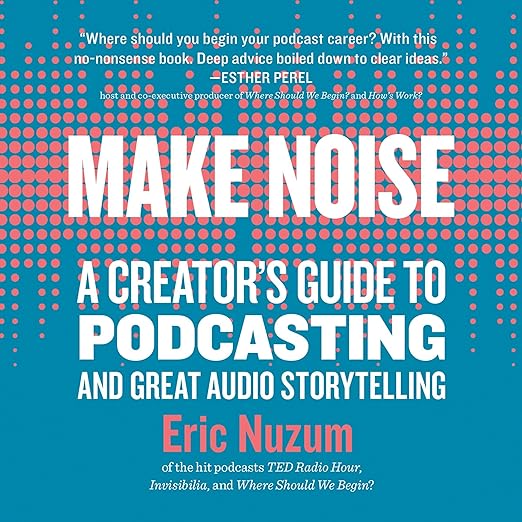
I was deep into a solo road trip, somewhere outside of Boise, when Make Noise moved from background listening to something I was taking notes on at rest stops. That is the test I apply to this kind of book: does it make me want to stop and write something down? Nuzum’s book passed it repeatedly, which is not something I say about most podcasting guides. Most of them are really marketing guides in disguise. Make Noise is actually about making audio that is worth listening to.
Eric Nuzum’s credential here is substantial. He spent years at NPR developing audio content, then moved to Audible where he was involved in launching more than 130 podcasts. That is an unusual combination of public radio training and commercial audio experience, and the book reflects it. Nuzum understands both what made public radio storytelling effective and what the broader podcast marketplace has done to those traditions, which habits transferred, which didn’t, and which principles were solid enough to survive the transition from appointment listening to on-demand audio.
The Ten Word Description and Why It Works
The book’s most practical contribution is the Ten Word Description exercise. Nuzum asks creators to articulate the essential purpose of their podcast in exactly ten words, not nine, not eleven, not a flexible range. The constraint forces clarity. I have seen similar exercises in other contexts, but Nuzum’s specific framing, ten words as the guiding document you return to throughout production, is more useful than the looser mission statement variations. The discipline of returning to ten words when you’re six episodes into a story and wondering whether this interview belongs in the series is real guidance, not inspirational rhetoric.
The instruction to think like the audience listens, to create empathetically, is developed more fully here than in most competitor texts. Nuzum is specific about what empathetic audio creation actually requires: knowing what your listener is doing while they listen, understanding the attentional environment of audio consumption, recognizing that the listener has no rewind button available when they’re driving. These are operational observations, not philosophical ones, and they shape the book’s practical advice throughout.
The Hemingway Principle and What Audio Requires
One of Make Noise’s most memorable pieces of advice is the instruction to be more like Hemingway than Faulkner in audio storytelling. Nuzum means that audio is a lean medium that punishes complexity of syntax and rewards clarity of image and action. Faulkner’s long, recursive sentences and nested perspectives, which work on the page because the reader can control pacing, collapse in audio because the listener cannot stop time to process them. Hemingway’s directness, his preference for specific concrete detail over abstract characterization, his short sentences and active constructions: these translate directly into effective audio writing.
This kind of craft-level observation is what distinguishes Make Noise from the tactical guides that fill the genre. Nuzum is not primarily interested in helping you grow your download numbers. He is interested in helping you make something worth listening to, with the secondary argument that if you make something genuinely worth listening to, audience growth becomes possible rather than just hoped for. The distinction matters.
George Newbern and the Audio Storytelling Feedback Loop
The choice of George Newbern as narrator creates a useful feedback loop: a book about audio storytelling should itself be a demonstration of audio storytelling done well. Newbern has the unhurried authority of a veteran radio presence, his pacing is spacious without being ponderous, and he handles both the instructional material and Nuzum’s illustrative anecdotes with equal ease. The chapters that draw on specific examples from NPR and Audible productions benefit particularly from Newbern’s narration; he has the voice of someone who has worked in that world, which makes the examples feel grounded rather than theoretical.
At eight hours, the book is long enough to develop its ideas fully without overstaying its welcome. The structure moves from conceptual principles to character and story development to the interview process to audience development, which is the right sequence for building a complete understanding of the medium. Listeners who work through it in sequence rather than jumping to specific chapters will get more from the way the later material builds on the earlier foundations.
Who Should Listen and Who Should Skip
Listen if you’re starting a podcast and want to build it on principles that will outlast any specific platform’s current preferences. Listen if you have an existing podcast that isn’t performing the way you hoped and want to diagnose whether the problem is structural. Listen if you’re interested in audio storytelling as a craft, regardless of whether you’re planning to produce content yourself. Skip if you want current platform-specific growth tactics, Nuzum deliberately operates above the level of algorithms and platform mechanics, and you will need to supplement this book with more tactically focused resources. Skip if you’re looking for equipment and software recommendations, this is a craft guide, not a technical setup guide.
Frequently Asked Questions
How does Make Noise compare to Podcasting for Beginners and similar entry-level guides?
Make Noise operates at a higher level of craft and ambition. Beginner guides focus on setup, equipment, and basic strategy; Nuzum focuses on what makes audio storytelling worth listening to, drawing on his NPR and Audible experience. The two books serve different stages of a creator’s development, beginners need setup guidance first, and Make Noise becomes most valuable once you’re past the mechanics.
Does the book cover the business and monetization side of podcasting?
Briefly, but it’s not the focus. Nuzum’s primary interest is in craft, audience empathy, and storytelling quality. Monetization and business model questions are addressed in the context of how they relate to audience building, but listeners who want dedicated business strategy content will need to supplement this.
Is the Ten Word Description exercise applicable outside podcasting?
Yes. The discipline of articulating a creative project’s purpose in exactly ten words applies to any content format, YouTube channels, newsletters, book pitches. It is the most transferable single idea in the book.
George Newbern narrates. Is his voice appropriate for an audiobook about audio craft?
It is an excellent match. Newbern has the unhurried authority of a radio-adjacent professional, and listening to him narrate a book about what good audio sounds like creates a kind of embedded demonstration. The narration itself models some of the qualities Nuzum argues for in the text.