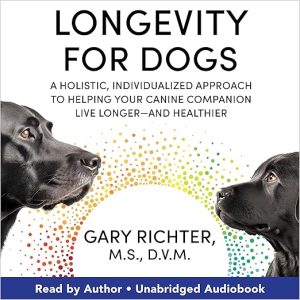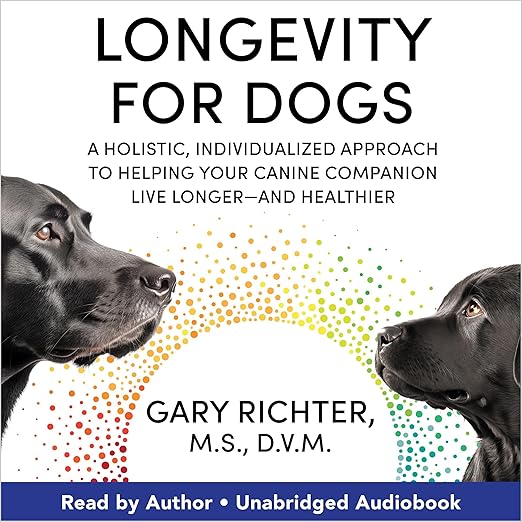
A puppy curled up at your feet today will, if you're lucky, still be sleeping in that same spot as a gray-muzzled senior a decade or more from now, and this audiobook is built entirely around extending and improving every year in between. Dr. Gary Richter, a working veterinarian billed here as America's Favorite Veterinarian, narrates his own guide to canine longevity science, walking through diagnostic testing, personalized nutrition and exercise, supplements, herbs, pharmaceuticals, and regenerative medicine, stage by stage from puppyhood through geriatric and end-of-life care.
Dr. Richter Narrates His Own Clinical Reasoning
Richter narrates his own material, and for a book this dependent on clinical specifics, dosing considerations, diagnostic panels, when to escalate from diet change to pharmaceutical intervention, that choice pays off. A professional narrator reading a veterinarian's script secondhand risks flattening the judgment calls into a list of options; a vet reading his own reasoning keeps the actual decision-making logic audible, the same way a good specialist explains a treatment plan out loud in an exam room rather than just handing over a printout.
The book includes a companion PDF with supporting material, available as a separate download, which matters for anyone who wants the diagnostic checklists or supplement dosing charts in front of them rather than only spoken aloud. Audio alone works fine for the book's actual argument and reasoning; it works less well as a standalone reference the next time a specific question comes up at the vet's office, which is exactly when a print or PDF companion becomes genuinely useful rather than optional.
Health span, the book's own term for years lived in good condition rather than simply years lived, is the organizing idea behind almost every chapter, and it's a meaningfully different goal than raw longevity alone. A dog that lives to sixteen but spends the last four years in pain is a different outcome than a dog that lives to fourteen active and comfortable throughout, and Richter frames nearly every recommendation, diet, exercise, supplement, or medical intervention, against that health-span standard rather than against lifespan alone.
The specific toolkit the synopsis lays out runs unusually wide for a single pet-care audiobook: diagnostic tests, personalized diet and exercise plans, supplements, herbal options, conventional pharmaceuticals, and high-tech regenerative medicine all get covered inside one book rather than split across a series. That breadth means the material occasionally shifts registers within a single chapter, moving from a straightforward diet recommendation to a more specialized regenerative-medicine option a general audience may never have previously considered available to their own dog.
One Resource Across a Dog's Entire Life
One reviewer, self-described as treating her dog as practically a firstborn child, says the book changed her attitude toward practices she had taken for granted, a specific, credible kind of praise since it describes behavior change rather than just enthusiasm. Another reviewer met Richter at an anti-aging conference where he presented part of this material directly, and calls the finished book 'a most eloquent and thorough job of defining how to help our little doggie Best Friends live longer and healthier lives,' a review from someone positioned to judge the finished book against Richter's own live presentation of the material.
The scope is genuinely comprehensive rather than narrowly focused on one life stage: puppy nutrition sits alongside end-of-life comfort care in the same book, with consistent nutritional and activity guidance as the throughline connecting every life stage in between. That range is a selling point for an owner who wants one resource to return to across a dog's whole life rather than a series of stage-specific guides bought separately as the dog ages.
Longevity science as a field has moved quickly in recent years, driven partly by research into aging itself rather than just individual diseases, and dog owners have increasingly become an audience for that research as veterinary medicine borrows tools and findings from human longevity studies. Richter positions the book at that intersection, translating research that wasn't originally written with dog owners in mind into diagnostic tests, diet choices, and treatment options an average owner can actually act on without a veterinary degree of their own.
More Science Than a Casual Pet-Care Book
A third reviewer, who loved the nutrition section specifically, flags that the book runs more scientific than expected and notes that veterinarians in general practice often lack the specific nutrition training to answer detailed diet questions, since nutrition isn't typically its own field of study in veterinary school. That's presented as a strength in this review, the book fills a real gap most general practice vets can't, but it's also a fair warning for a listener expecting a breezier, more casual pet-care audiobook: this one gets into carbohydrate, protein, and supplement-level detail.
Regenerative medicine, herbs, and supplements sit alongside conventional pharmaceuticals in the book's toolkit, and a listener whose own vet leans strictly conventional may find some of this material outside what their usual clinic offers or recommends. Richter's dual credential, working veterinarian and author, gives him standing to discuss both sides of that divide, but the audiobook itself can't substitute for a conversation with a dog's actual vet about which specific interventions make sense for a specific animal's health history.
Reviews currently attached to this listing skew heavily positive and enthusiastic, several explicitly emotional about their own dogs, which is worth keeping in mind alongside the more clinical, at times textbook-like tone the material itself takes once it gets past the introduction. A listener drawn in by the warm framing around loving a dog like family should be ready for the book to pivot quickly into diagnostic panels and supplement dosing once the emotional case for caring about longevity has been made.
Useful at Every Stage, Track Down the PDF
Dog owners at any stage, new puppy parents planning ahead and owners of aging dogs looking for concrete next steps alike, get real value here, and the book's stage-by-stage structure means a listener can return to the relevant chapter years later rather than needing to absorb everything in one sitting. Anyone frustrated by a general practice vet's limited nutrition guidance, per that third reviewer's specific complaint, will find the nutrition section alone worth the runtime, and the fact that Richter narrates his own reasoning rather than reading someone else's script keeps even the denser diagnostic chapters from feeling like a recitation.
Owners looking for a quick, breezy pet-care audiobook rather than something closer to a working clinical reference should reset expectations before starting; the tone leans instructional and detailed rather than casual throughout most of its five and a half hours. The PDF companion is worth tracking down for the diagnostic and dosing specifics, since committing supplement dosages or symptom checklists to memory from audio alone is asking a lot of any listener, however clear Richter's own delivery of the material actually is.