Before You Press Play
- Read by: Cheyenne Bryant narrates her own work, and the self-narration carries genuine authority; her coaching voice translates directly into audio and reinforces the book's core argument that this material comes from lived experience, not theoretical distance.
- At its heart: healing past trauma, the gap between external success and internal peace, faith-integrated psychology
- Vibe: Warm, urgent, and grounded in practical application
- Short version: Live Your Promise delivers a clear psychology-meets-spirituality framework that is more concrete than the genre average, and Bryant's self-narration makes the coaching relationship feel direct rather than mediated.
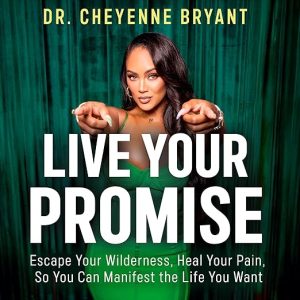
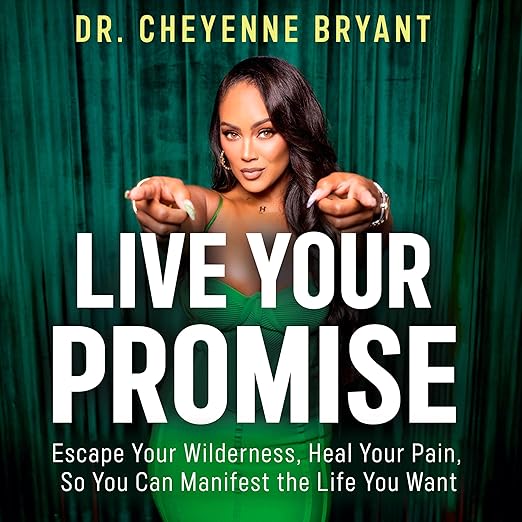
Dr. Cheyenne Bryant opens Live Your Promise by addressing a tension that most success-oriented self-help books pretend does not exist: that the people who most need her help are often the ones who, by every external measure, appear to have already made it. Bryant's audiobook, which she narrates herself across 5 hours and 33 minutes, is aimed at exactly those clients, the celebrities, athletes, CEOs, and pastors who populate her decade-long coaching practice. Her central argument is that success does not immunize anyone from unresolved trauma; in fact, the higher the climb, the more the unaddressed wounds threaten to destabilize everything built on top of them.
The audiobook includes a PDF companion with supporting material, available to download separately, and listeners who want to work actively with the frameworks Bryant presents will benefit from having that resource alongside the listening experience. This is not unusual for coaching-oriented audiobooks, and Bryant's mention of it in the production notes signals that the audio is designed as a full experience rather than a simplified version of a print book.
Bryant's Own Estate Proves the Wilderness Framework
Bryant's own story, woven through the book, is the framework's most persuasive evidence. Her journey from a multigenerational home she describes as chaotic but love-filled to building what she calls a multimillion-dollar estate is not presented as a blueprint for replication but as a demonstration that the psychological and spiritual work she advocates actually functions in a real life under real pressure. The self-narration amplifies this. When Bryant describes the specific moments where unhealed wounds threatened her own progress, she is not delivering a case study but a confession, and the intimacy of that delivery in audio is something a third-party narrator cannot replicate.
The book's structural framework draws on the biblical story of Moses, specifically the wilderness period between Egypt and the Promised Land. Bryant uses this as a metaphor for the in-between moments of life: the gap between where you are and where you are going that most people experience as failure or stagnation but that she reframes as the necessary terrain of genuine transformation. This is not a novel theological insight, but Bryant's execution of it is more psychologically specific than the typical faith-meets-coaching blend. She integrates clinical frameworks alongside the spiritual ones, and the combination is more coherent than it often is in this genre.
Seven Practices, Powered by a Decade of Coaching
The self-narration rewards the audiobook format specifically. Bryant's coaching voice, developed over a decade of direct client work with high-performance individuals, has a particular quality of focused calm that reads differently in audio than it would in print. She does not raise her voice to communicate urgency and she does not slow down to communicate depth; the pacing and register stay consistent because the material itself carries the weight. Listeners who have worked with coaches or therapists will recognize the register immediately. Listeners who have not will understand quickly why it is effective.
The seven practices the book outlines, including Investing in Your Best Self, Cultivating Courage, and Fostering Resilience among others, are framed with enough specificity that they function as working tools rather than aspirational categories. Bryant's practice with elite clients means the examples she draws on are not the generic small-business-owner anecdotes that populate most leadership-adjacent coaching books; the scenarios are higher-stakes, which makes the principles feel more robustly tested.
Faith Runs Structurally Through Every Practice
Listeners who are uncomfortable with faith-integrated frameworks should know that the biblical metaphor of Moses and the wilderness is not decorative. The spiritual dimension of Bryant's coaching method is structural rather than incidental, and the book assumes that psychological healing and spiritual growth are interrelated rather than separate tracks. This integration is handled without preachiness, but it is present throughout and shapes the framing of every practical tool the book offers.
At 5 hours and 33 minutes, Live Your Promise is a comfortable audiobook length that allows the seven practices to receive adequate attention without padding any of them. The PDF companion material should be treated as genuinely supplementary rather than optional for listeners who want to apply the frameworks actively; the audio alone carries the argument, but the written exercises complete the coaching experience the book is designed to provide.
Bryant's framing of the celebrity and elite-athlete clients who anchor her examples serves a specific argumentative purpose: it removes the excuse that material success makes psychological work unnecessary. The people in her examples have the resources, the time, and the professional support structures that most listeners do not, and the book's implicit point is that those resources did not protect them from the internal work the wilderness period demands. That argument is more persuasive in Bryant's self-narrated voice than it would be in a hired narrator's delivery, because the listener hears someone who has done that work themselves rather than someone reporting what someone else claims to have experienced.
When External Success Still Feels Hollow Inside
Live Your Promise is the right audiobook for listeners who have achieved recognizable external success and are experiencing the specific dissonance Bryant identifies: the gap between the life you have built and the peace you expected it to bring. It is also for listeners earlier in their careers who want the psychological frameworks before the wounds accumulate rather than after. Skip this one if you are looking for a purely secular psychology resource; the faith integration is not optional or light, and listeners who find that framing unhelpful will not get the full benefit of what Bryant is offering.
Common Questions
Does the Live Your Promise audiobook work without the PDF companion, or is the companion material essential?
The audio carries the argument fully on its own. The PDF companion adds written exercises and supplementary frameworks for listeners who want to work actively with the material, but the audiobook is complete without it.
How does Cheyenne Bryant's self-narration affect the Live Your Promise audiobook experience compared to what a professional narrator would provide?
The self-narration is an asset here. Bryant's coaching voice carries the authority of direct practice experience, and the intimacy of her delivery in the personal sections of the book is something a hired narrator could not replicate with the same authenticity.