At a Glance
- Read by: Virtual Voice handles the technical terminology adequately, though the AI-synthesized delivery is flat during module transitions and lacks the explanatory emphasis a human narrator would bring to procedural content.
- At its heart: Linux fundamentals, ethical hacking basics, shell scripting
- Vibe: Dense and instructional
- Short version: A broad entry-level survey of Linux and cybersecurity concepts that works best as a conceptual orientation for beginners, but falls short of the depth experienced practitioners need.
Two kinds of curiosity drive people toward cybersecurity for the first time. One is technical: the desire to understand how computers actually work beneath the surface of a user interface. The other is something closer to fascination with how systems fail, how they can be entered or broken or subverted by someone who understands their construction well enough to find the gaps. Both paths eventually lead to the same place: Linux. The question this audiobook tries to answer is which of those paths it is actually equipped to serve, and how well audio as a format can carry technical instruction of this particular kind for a beginner audience.
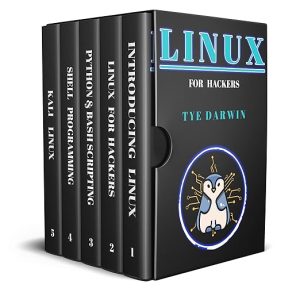
LINUX FOR HACKERS is the second book in Tye Darwin's Hackers Essentials series, packaged as five modules covering Linux philosophy, bash and Python scripting, shell programming, and an introduction to hacking tools including a segment on Kali Linux and Burpsuite. That is substantial scope for any format. In audio, delivered via Virtual Voice synthesis, it is particularly ambitious, because the moment a tutorial requires you to follow terminal syntax precisely, the audio medium starts working against the content rather than with it. Whether the conceptual material survives that tension is the central question of this review.
Tor and VPNs Explain Well Out Loud
The audiobook's strongest sections are the conceptual ones. The overview of Linux philosophy, the explanation of different distributions and why they exist, and the discussion of Tor networks, proxies, and VPN configurations are ideas that benefit from being spoken aloud. They are primarily conceptual rather than procedural, and a listener who had no framework for understanding why Linux matters in the security world will leave those sections with a clearer picture. One reviewer described the content as a useful listing of interesting subject areas, and that is accurate and fair. As an orientation map for a vast and complex landscape, the material works reasonably well for the beginner audience it is targeting.
Where things get considerably harder is in the scripting modules. Python and bash syntax does not travel well through audio. Reading variable declarations, loop structures, and function definitions aloud without a visual reference is an exercise in patience rather than genuine learning. The module on shell programming in particular asks listeners to retain structural logic that most people simply cannot hold in working memory without something written in front of them. A listener with some prior programming background will move through those sections faster, but a genuine beginner may find them very difficult to absorb in this format without a terminal open alongside the listening.
Flat Narration That Never Mispronounces a Term
The strongest case for this audiobook rests on its value as orientation content. If you are entirely new to Linux and cybersecurity and want a conceptual map of the landscape before investing time in hands-on courses or technical documentation, the listening experience provides that map with reasonable coverage. You will leave understanding that Linux distributions exist along a spectrum from general-purpose to security-specialist, that security work involves both offensive tools and defensive log management, and that scripting is a foundational skill worth building intentionally rather than picking up piecemeal from scattered tutorials.
The Virtual Voice narrator is functional without being expressive. Technical terms are pronounced consistently, which matters more than many listeners realize when the vocabulary is as dense as it is here. The delivery is flat by human-narration standards, but it does not mispronounce terms in ways that undermine the content's credibility. For purely conceptual sections, the narration serves the material adequately even if it lacks the explanatory emphasis that a skilled human narrator would bring to procedural instruction of this kind. Listeners who find AI narration distracting in general should know that going in.
Grammar Slips a Synthesized Narrator Can't Fix
Several reviewers have flagged that the writing shows signs of non-native English authorship, with occasional grammar irregularities that a professional copyeditor should have addressed before publication. This surfaces more noticeably in audio than in print because a synthesized narrator reads exactly what is on the page, including structural awkwardness, without the interpretive filtering a skilled human narrator applies. The title also promises more operational hacking instruction than the content ultimately delivers. The actual material stays much closer to foundational Linux literacy with a security orientation than to the offensive techniques the title implies. Readers expecting step-by-step exploitation guidance will come away disappointed by what is actually here.
The book covers a great deal of ground across its five modules, which means that no single topic receives exhaustive treatment. This is breadth-first instruction rather than depth-first, which is appropriate for a beginner orientation but means that listeners hoping to leave with actionable technical skills will need to treat this as a starting point and invest in more detailed resources for each area they want to pursue seriously over time.
Experienced Linux Users Should Look Elsewhere
This audiobook suits listeners who are complete beginners to Linux and cybersecurity and want a conceptual orientation before investing in hands-on labs or formal courses. It also works for curious learners who want to understand the general landscape of ethical hacking without committing to a deep technical curriculum quite yet. Experienced Linux users, working security professionals, and anyone seeking practical hands-on hacking instruction will find the content too introductory and the audio format too limiting for their current level and expectations. Treating it as a map rather than a manual produces the best results.