Quick Take
- Narration: Van Tracy’s delivery is warm and conversational, matching Groeschel’s pastoral voice without over-dramatizing the devotional content.
- Themes: Faith and digital distraction, social media and identity, Christian integrity online
- Mood: Pastoral and earnest, practically oriented
- Verdict: A faith-grounded examination of social media’s effect on Christian life, useful for church communities and individual believers navigating the gap between their online presence and their values.
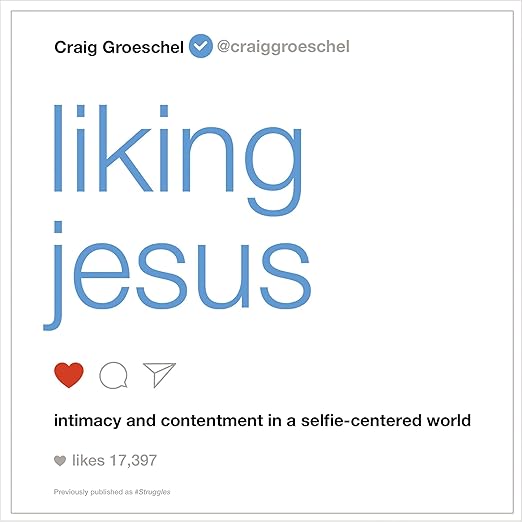
There is a particular kind of book that works best within a community: one that gives a group shared vocabulary for something they are all experiencing but have not yet named clearly. Liking Jesus is that kind of book. I listened to it on a quiet Thursday afternoon, and I kept thinking about who the intended listener was, not me, exactly, but someone in a congregation who keeps scrolling at night, feels vaguely bad about it, and wants a framework that connects that feeling to their faith life.
Craig Groeschel is the pastor of Life.Church, one of the largest multi-site churches in the United States, and his books sit in a specific genre that combines pastoral care, self-help, and cultural critique through a distinctly evangelical Christian lens. If you have read his other work, you know the voice: direct, accessible, warm, structured around practical application. Liking Jesus follows that pattern faithfully.
The Diagnosis: Comparison, Distraction, and the Curated Self
Groeschel’s critique of social media is not primarily technological or political; it is spiritual. He argues that the logic of social media, likes, followers, curated images, performance of happiness, is fundamentally at odds with the Christian call to authenticity, contentment, and genuine community. The person who feels “connected to more people than ever, but more alone than I can describe” is not suffering from a tech problem but from a soul problem that technology has made more acute.
This is a real and meaningful distinction from secular digital wellness literature. Newport or Harris diagnose social media’s effects on attention and wellbeing from outside any faith framework. Groeschel is asking what it means for a person who is trying to live according to Christ’s example to be spending hours constructing a public image of themselves for an audience’s approval. That question has genuine theological weight, and the book pursues it with more seriousness than the somewhat clickable title would suggest.
Reviewer Paul Kay highlights the speed-of-information section, noting Groeschel’s argument about how fast things travel “by word of mouth with the technology of today.” This is one of the book’s stronger moments: Groeschel is not just arguing against social media use but for a kind of moral caution that acknowledges the irreversibility of digital speech. Words shared online are not just words; they are permanent, amplified, and detached from context in ways that analog communication was not.
The “10 Commandments” Section and Practical Structure
The book’s practical sections, including the “10 Commandments of Using Social Media to Strengthen Your Faith” and “Creating Safeguards for Your Digital Devices”, are where Groeschel is clearly most comfortable. He is a pastor, and pastors work at the level of the specific and applicable. These sections will feel natural to readers who have been through small group curricula or sermon series; they have that same question-then-principle structure.
For secular readers, these sections may feel more like prescriptions than invitations. The book is not trying to persuade someone outside the faith tradition of its premises; it assumes a reader who already holds Christian commitments and wants help living them out in a complicated digital landscape. That is a legitimate and underserved audience, and Groeschel serves it well.
The review from Huggs that describes the book as “hard to put down” reflects the experience of someone reading from within that audience. For that reader, Groeschel is naming something real and offering a path forward that is both familiar and genuinely useful. The three five-star reviews in the dataset are consistent on this: the book resonates most with people who share its faith premises and are looking for accountability and clarity rather than a comprehensive cultural critique.
Van Tracy and the Pastoral Voice
At seven hours, the book is a comfortable length. Van Tracy’s narration is well-suited to the material, he finds the pastoral warmth in Groeschel’s prose without tipping into performance. For devotional content, that is exactly the right calibration. The voice feels like a conversation rather than a presentation.
Who Should Listen / Who Should Skip
Listen if you are a Christian wrestling with how your digital habits align with your faith values, or if you are a pastor or small group leader looking for a framework to discuss social media within a congregation. The faith-specific framing is not an obstacle but the point.
Skip if you are looking for a secular digital wellness argument or a sociological account of social media’s effects. This is not that book, and reading it as if it were will produce frustration. Also worth noting: readers familiar with Groeschel’s other work may find some ground familiar, though the social media focus is specific enough to justify the separate treatment.
Frequently Asked Questions
Is this book only for committed Christians, or would it speak to someone with a general interest in faith and technology?
The book assumes Christian faith commitments and frames its arguments in explicitly evangelical terms. Readers outside that tradition may find the diagnostic observations interesting but will likely find the prescriptive sections harder to connect with. It is most useful to readers who are already in a faith community and want a specifically theological framework for thinking about social media.
How does Liking Jesus handle the research on social media’s psychological effects?
Groeschel draws on existing studies about social media and anxiety, comparison, and loneliness, and uses them to support a spiritual rather than psychological diagnosis. The book is not a scientific deep dive; it uses research as evidence for a pastoral argument. Readers wanting more rigorous engagement with the empirical literature should supplement with academic or journalistic sources.
Does the book address specific platforms or is the advice more general?
Groeschel addresses social media broadly rather than platform-specifically, which means the advice travels reasonably well across different apps and will not feel dated by specific product changes. The principles around comparison, performance, and digital speech apply across platforms.
Is this suitable as a small group study or church curriculum?
Yes, very much so. The practical sections, including the Ten Commandments framework and the device safeguards, are structured in ways that translate naturally to group discussion. Groeschel’s other books have frequently been used in church settings, and this one follows the same pattern.