The Short Version
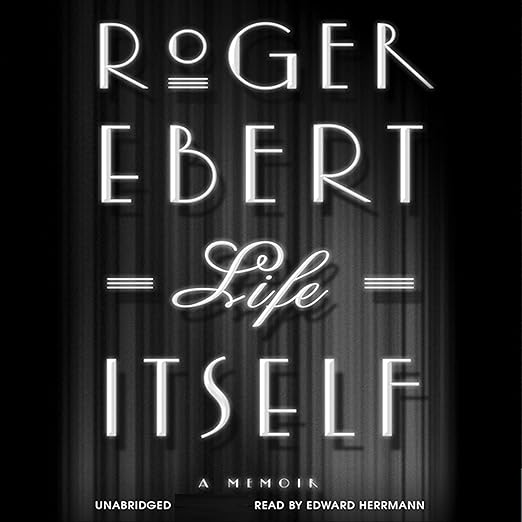
- Narration: Edward Herrmann's measured, intelligent narration is as close to hearing Ebert himself as any audiobook could come, the voice has the right weight and wit for the material.
- Themes: film criticism as vocation, alcoholism and recovery, mortality and meaning-making
- Mood: Candid and warm, moving between sharp humor and quiet grief
- Verdict: Edward Herrmann narrates Roger Ebert's memoir with such care that the audiobook becomes something close to a private conversation, one of the better biographical listening experiences in the genre.
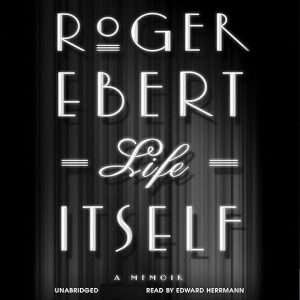
Roger Ebert wrote Life Itself after losing the ability to speak. That biographical fact alone changes how you receive the audiobook version of his memoir, narrated by Edward Herrmann across fourteen hours and sixteen minutes. The irony is not lost on Ebert himself, he addresses it with the dry wit that defined his critical voice for decades, and it gives the listening experience a layer of resonance that the print version cannot fully reproduce. Ebert was the first film critic to win a Pulitzer Prize, began reviewing films for the Chicago Sun-Times in 1967, and was, in the estimation of two generations of moviegoers, simply the best there was at the job. Life Itself is his account of how that happened, and what it cost him, and what it ultimately meant to have lived a life devoted to watching other people's stories unfold on a screen.
The memoir is structured in what one reviewer aptly described as vignettes, chapters devoted to stages of life and to specific people rather than to a linear timeline. His Catholic upbringing in Urbana, Illinois, shapes his worldview in ways he traces with precision and without nostalgia. His alcoholism and recovery are described without evasion and without the performative humility that mars so many addiction narratives in memoir. His marriage, his relationship with Gene Siskel, his years at the Sun-Times, and his final years writing more prolifically without a voice than most critics manage with one: all of it is here, told with the voice that readers and viewers spent decades trusting to be honest.
Real Disagreements, Real Friendship With Siskel
What makes Ebert a remarkable memoirist is the same quality that made him a remarkable critic: the ability to see clearly without losing warmth, to be honest without being cruel, and to make the reader feel that their own experience of the subject matter, whether a film or a life, has been enlarged rather than replaced by his interpretation. Life Itself does not perform modesty, but it is also not a vanity project. Ebert is genuinely interested in the people around him, his newspaper friends, the directors and stars he encountered, the woman he married late in life, and that interest gives the memoir a generous texture that self-absorption would have foreclosed.
One reviewer compared reading it to listening to him speak, which is high praise and accurate. The prose sounds exactly like Ebert's critical voice: direct, warm, precise, capable of turning on a single word. The memoir's treatment of the Siskel relationship is one of its finest sections. Their on-screen combativeness was genuine, the disagreements were real, but so was the mutual respect and the eventual friendship that formed beneath the television persona. Ebert writes about Siskel's illness and death with a grief that does not perform itself, which is harder than it looks and rarer than it should be in memoir.
Ebert Treats Wayne and Scorsese Alike
The sections on John Wayne and Martin Scorsese demonstrate how seamlessly Ebert moves between the personal and the critical, treating both modes of reflection as equally serious forms of engagement with human experience. For Ebert, film was never separate from life, it was one of the primary instruments through which life was understood and felt. That conviction runs through every chapter of the memoir.
Herrmann's Narration Becomes a Moveable Feast
Edward Herrmann's narration is one of the best decisions this audiobook makes. Herrmann had the range and the intelligence to inhabit Ebert's voice without caricaturing it, he brings gravity to the heavier passages about illness and loss and genuine warmth to the funnier ones about newspaper life and Hollywood encounters. The New York Times Book Review called the book a captivating, moveable feast, and that phrase captures something true about the audiobook specifically: it works in motion. One original reviewer specifically noted enjoying it on a drive, and the context makes sense. The memoir moves forward with enough momentum to suit listening while doing something else, while remaining rich enough to reward full attention whenever it receives it.
At fourteen hours and sixteen minutes, this is a substantial commitment. But the memoir earns the length. Ebert does not pad, and Herrmann does not stall. Named one of the hundred greatest film books of all time by The Hollywood Reporter, Life Itself adds, in audiobook form, a dimension the print version cannot provide: you are, in some meaningful sense, hearing a man who could no longer speak tell you his life.
The Catholic Chapters Are the Slow Start
The early sections on Ebert's Catholic upbringing and Illinois childhood are slower than what follows. One reviewer noted that the Catholic personal history felt dense early on, though ultimately informative about how religion shaped his work ethic and ideas. Listeners who push through the first few hours will find the pace accelerating as Ebert arrives at the Sun-Times and the life that defined his public identity. The memoir also does not attempt a chronological sweep, it circles back, returns to themes, approaches certain people from multiple angles across different chapters. That approach rewards patience but can frustrate listeners who expect linear narrative structure.
The Preferred Format Is the Audiobook Itself
Film lovers, critics, and anyone interested in the mechanics of serious journalism will find this essential. The memoir is also genuinely instructive for anyone thinking about how to live with illness without being defined by it, Ebert's approach to his cancer and its consequences is unsentimental and worth encountering. Skip it if you come expecting primarily film criticism; this is a memoir that uses film as one lens among many, not a critical retrospective of his reviews. Edward Herrmann's narration makes the audiobook the preferred format for this particular book, this is one of those rare cases where audio adds something the page alone cannot deliver.
Questions Listeners Ask
Does this audiobook focus mainly on film criticism, or is it a broader memoir?
It is a full memoir, Ebert covers his childhood, alcoholism and recovery, marriage, friendship with Gene Siskel, and his cancer alongside his career. Film is present throughout but functions as one thread in a much broader personal history rather than as the primary subject.
Is this audiobook accessible to people who are not film critics or cinephiles?
Yes. The film criticism serves as backdrop, but the memoir is primarily about a life, journalism, friendship, addiction and recovery, love, illness, and the question of what makes work meaningful. You do not need to know Ebert's reviews to be moved by the book.
Is the audiobook version of Life Itself the recommended format, or is the print edition better?
Given Ebert's loss of speech and the biographical context, the audiobook carries an extra layer of meaning that makes it the preferred format. Herrmann's narration gives the prose a living voice that the print edition cannot replicate.