Before You Press Play
- Performance: Pat Flynn narrates his own story with the easy warmth of someone used to talking directly into a microphone.
- What it covers: entrepreneurial reinvention, letting go of control, online business building
- Feel: Warm, personal, motivational
- Our call: A quick, sincere audiobook memoir that lands hardest with listeners who already know Pat Flynn's work.
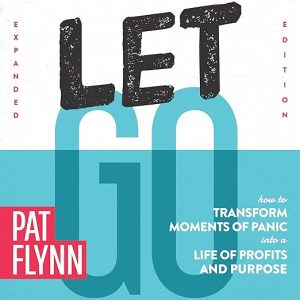
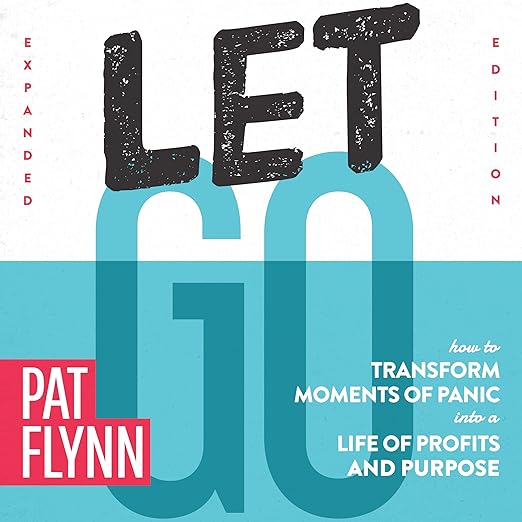
Getting let go from an architecture job during the worst of the last recession sounds like a career-ending sentence, not the opening line of a bestseller, so how did Pat Flynn turn that moment into this audiobook's entire thesis? Flynn, now one of online business's most recognizable voices through Smart Passive Income, narrates this expanded edition of Let Go himself, adding eight new chapters to the story he first told about forging his own path after that layoff. The book traces roughly eight years of his online business journey, the genuine highs alongside real setbacks, structured around the specific things Flynn had to let go of along the way: the compulsion to say yes to everything, the illusion that he could control every facet of his business, and a natural resistance to change that he had to work through repeatedly rather than overcome just once and for all.
Personal Story Comes Before Business Framework
This is memoir first and framework second, and knowing that going in sets expectations correctly. Rather than a structured business methodology with clear steps to replicate, Flynn's book moves through his own specific journey, architecture layoff, early tentative steps into online business, the slow accumulation of both audience and confidence, using his own experience as the primary teaching tool rather than abstracted principles. MS's review captures the book's dual audience precisely: it's written 'for two kinds of people: those who love Pat Flynn and those who want to be entrepreneurs,' and notes that '98% of one crowd belongs to the other,' a genuinely funny and accurate observation about how tightly Flynn's personal brand and his business content are fused together.
The eight new chapters in this expanded edition extend rather than simply repackage the original book, continuing Flynn's story further into his business journey rather than just adding commentary on the earlier material. Jordan Ring's review frames the book accurately: it's 'about Pat Flynn, first and foremost,' with the practical tidbits functioning as supporting material to the personal narrative rather than the other way around, which is a meaningfully different promise than most online-business titles make when they lead with tactics instead of a life story.
The book also stands apart from a lot of hustle-culture entrepreneurship content by its basic honesty about failure as a recurring, unresolved condition rather than a single obstacle overcome once on the way to permanent success. Flynn frames letting go as something he has had to practice repeatedly across eight years, not a lesson learned once in the aftermath of his layoff and never revisited again, which gives the book a more mature, less triumphant shape than the typical layoff-to-riches entrepreneurship narrative usually offers its audience.
Parasocial Credibility a Hired Narrator Can't Fake
Self-narration is essentially the whole product here. Flynn built his career on being an approachable, trustworthy voice through years of podcasting, and that same warmth and directness carries over cleanly into audiobook narration, since he's spent nearly a decade already talking through business lessons directly into a microphone for an audience that already trusts him. A hired narrator would deliver the same words with none of the parasocial credibility that makes Flynn's own story land as genuine rather than as a case study written about someone else at a distance.
Chris Cavert's review, notably from someone with an Ed.D., speaks to the book's broader credibility beyond just superfan appeal: Flynn's 'personal journey made it real,' and the book offers 'steps that we can expect along our own path' rather than an idealized, obstacle-free success story. That honesty about setbacks, not just the polished highlight reel version of entrepreneurship, is exactly what four hours of Flynn's own voice, rather than a ghostwritten and hired-narrator version of the same content, is best positioned to deliver convincingly to a listener who's weighing their own leap.
Four Hours Trades Comprehensiveness for Pace
If you're looking for a structured, step-by-step business framework you can implement chapter by chapter, this isn't quite that book; it's closer to inspirational memoir with practical lessons woven throughout than a how-to manual with clear, replicable action items. Listeners wanting concrete tactical guidance on building an online business should treat this as motivation and context rather than a standalone operating manual, and should expect to pair it with more tactical resources if that's specifically what they came looking for.
At four hours for eight years of material, this trades comprehensiveness for pace, and listeners already deeply familiar with Flynn's other content, his podcast, his blog, prior books, may find some specific stories and lessons repeated from those other sources rather than entirely new. The book's appeal is also genuinely audience-dependent, per its own MS review's observation; listeners with no existing familiarity with or interest in Flynn's persona specifically may find the personal-narrative-heavy approach less compelling than listeners already invested in his story and his particular brand of earnestness.
The eight years of distance between Flynn's original layoff and this expanded edition's additional chapters also means the book carries real perspective a real-time, in-the-moment account couldn't offer, though listeners should recognize that distance cuts both ways: some of the earlier business-landscape specifics, particular platforms, particular tactics that worked in the online business world of the early 2010s, will read as more historical than immediately actionable for someone building an online business under today's very different competitive conditions.
Smart Passive Income Fans Get the Fuller Version
This audiobook is a natural fit for the existing Smart Passive Income community and longtime Flynn listeners who want the fuller, updated version of his origin story, plus the eight new chapters extending it further. Aspiring online entrepreneurs looking for an honest, unvarnished account of what building a business actually feels like, including the parts that don't go according to plan, will find real value in Flynn's directness here too, especially in the chapters covering setbacks rather than just the wins he's better known for publicly.
Skip this one if you're looking for a rigorous, tactical business-building framework rather than a personal narrative with lessons embedded inside it, or if you have no existing context for or interest in Pat Flynn's persona specifically, since the book's appeal leans heavily on that existing relationship. Listeners wanting exhaustive detail rather than a brisk four-hour treatment should also know this favors pace over comprehensiveness throughout its runtime.
Common Questions
Do I need to already follow Pat Flynn's podcast to enjoy this audiobook?
No, but it helps. The book works as a standalone listen, though longtime Smart Passive Income listeners will likely connect with the personal-narrative approach more than complete newcomers to Flynn's work.
How long is this audiobook, and is that enough time to cover eight years of business lessons?
It runs about four hours, which favors pace and personal narrative over exhaustive detail, so listeners wanting comprehensive tactical coverage of those eight years should expect a brisk overview rather than a deep manual.