Quick Take
- Narration: Grant Tharp delivers clear, practiced narration with good technical vocabulary handling, an above-average performance for a technical primer in this space
- Themes: SQL fundamentals, MySQL setup and practice, database management for beginners
- Mood: Approachable and practitioner-friendly, like a patient teacher who has explained JOINs dozens of times before
- Verdict: One of the more reliable SQL introductions in audio format, buoyed by positive reviews from actual learners and a hands-on approach that distinguishes it from the overcrowded field of concept-only primers.
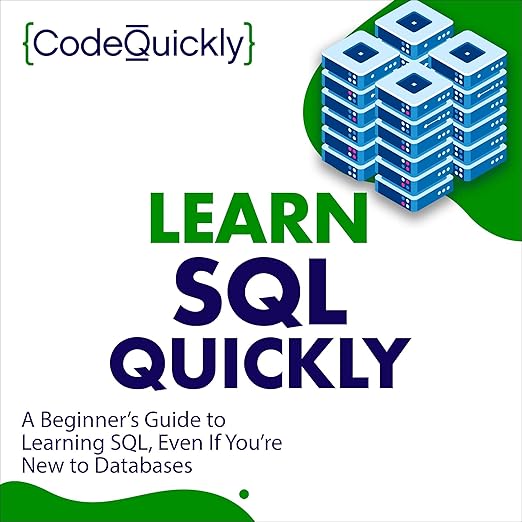
I was a literature major who came late to databases, and I remember very clearly the first time a colleague tried to explain SELECT statements to me and I stared at them blankly for about forty-five seconds before nodding as if I understood. There is a specific kind of SQL primer that exists for that experience, the one that does not assume you have a computer science background and is not embarrassed about starting from first principles. Learn SQL Quickly by Code Quickly, narrated by Grant Tharp, is squarely in that category and does it better than most.
The 200 ratings averaging 4.5 stars are the first thing that distinguishes this title in a crowded space. That is not a manufactured review surge; it is a sustained readership response across enough listeners to constitute a real signal. The critical reviews are present too, including one that calls it more of a scripting reference than a true course, but the preponderance of positive feedback from learners at different experience levels is genuinely encouraging.
Starting Where Beginners Actually Are
One reviewer, Kat Silva, came to this with fragments of SQL experience from an earlier career chapter in web development and described finding it a fun primer that brought everything together. A second reviewer, Martin, purchased it specifically to supplement a university textbook that covered theory without practice and praised it for explaining the how and why rather than just the what. A third, Christian P. Wright, described it as a good quick-start for experienced hardware professionals approaching SQL for the first time from a different engineering background.
That range of prior experience in the positive reviews is actually the most useful thing about the rating pool here. The book is landing well for learners who have fragments of SQL knowledge and want them organized, for students frustrated by theory-first university courses, and for experienced professionals in adjacent fields making their first serious approach to database querying. That is a broadly drawn but coherent audience, and the book is meeting it where it is.
What the Hands-On Approach Includes
One of the reviews specifically notes that the book opens with instructions for downloading MySQL to set up a local practice environment. This is a meaningful design decision. Telling a beginner to set up a database environment before they understand why they would want one is a common stumbling block in technical education. Doing it at the start of the book, with clear instructions, lowers the barrier to actually running the commands being described.
The core coverage includes database management system comparisons, MySQL setup, the origins and rationale of SQL as a language, data control and manipulation commands, query optimization basics, and real-life application examples. The series context, this is the fourth entry in the Crash Course With Hands-On Project series from Code Quickly, suggests a consistent pedagogical approach across the catalog, and the series title itself signals the hands-on intent accurately.
What the Format Handles Well and What It Struggles With
Grant Tharp handles the technical vocabulary with confidence and at a pace that allows terms like DBMS, aggregate functions, and JOIN clauses to register before the explanation moves on. That is not a trivial narration achievement in SQL content. The natural tendency when reading technical documentation aloud is either to rush through familiar terminology or to over-enunciate it so heavily that it sounds condescending. Tharp navigates this well.
The limitation that one reviewer identified, the scripting reference character of some sections, is a real one. The book does include what reads as an API-reference style treatment of certain SQL clauses and commands, organized by function rather than by use case. For learners who prefer to learn in context, working from a problem toward the syntax needed to solve it, these sections are less effective than the narrative introduction portions. Whether this is a limitation or a feature depends on what the listener is bringing to the book and how they process technical material.
A Practical Assessment for Audio Learners
SQL tutorials are most effective when you can run the code being described. Audio format always has this limitation. Learn SQL Quickly addresses it better than most comparable titles by front-loading the MySQL setup and consistently framing commands in terms of what they accomplish rather than just what they are. At six hours and fifty-seven minutes, the runtime is long enough to give each concept real breathing room without feeling padded. This is not a subtitle in the same space as SQL Data Analytics Made Easy, where the critical reviews describe circular content with no code orientation. This one delivers on its practical intent.
Who Should Listen and Who Should Skip
Listen if you are new to SQL or have fragmented prior experience and want a clear, practical introduction that covers MySQL setup, core commands, and real application examples. The 200-rating baseline and the consistent positive response from learners at different experience levels make this a reliable recommendation in its category.
Skip if you already have intermediate SQL skills and are looking for advanced query optimization, window functions, or complex indexing strategies. This is a beginner-to-intermediate primer and does not attempt to be more than that.
Frequently Asked Questions
Does Learn SQL Quickly include hands-on exercises or code examples?
Yes. Reviewers specifically note that the book includes instructions for downloading and setting up MySQL, allowing learners to run the SQL commands being described. The series is called Crash Course With Hands-On Project, which reflects the practical orientation. This distinguishes it from SQL primers that stay at a purely conceptual level.
Is this book better suited to complete beginners or learners with some prior SQL exposure?
Both groups are represented in the positive reviews. Complete beginners benefit from the clear conceptual foundation and MySQL setup guidance. Learners with fragmented prior experience, such as some SQL work from earlier in their career or studies, tend to find the book pulls their knowledge together usefully. It is less suited to intermediate practitioners who already write queries regularly.
How does Learn SQL Quickly compare to SQL Data Analytics Made Easy?
The difference is significant. Learn SQL Quickly has 200 ratings at 4.5 stars, with reviewers consistently praising its practical MySQL instruction and hands-on approach. SQL Data Analytics Made Easy has multiple critical reviews specifically noting the absence of concrete code examples and repetitive circular content. For learners who want to actually write SQL, Learn SQL Quickly is the more reliable choice.
Does Grant Tharp’s narration handle technical SQL terminology well?
Yes. Tharp handles the technical vocabulary, including database management system comparisons, aggregate function descriptions, and command syntax, at a consistent pace that allows the terms to register before the explanation moves on. Reviewers do not flag the narration as a problem, which is notable for a genre where technical pronunciation inconsistencies are common.