Key Details
- Narration: Ann Hood self-narrating her own edited collection brings earned intimacy and tonal precision across twenty-seven very different essays.
- Themes: Craft as emotional processing, grief and recovery through making, the writing life alongside the hands-on life
- Mood: Moving and varied, with genuine comedy alongside real sorrow
- Verdict: A literary essay collection that earns its 7-hour runtime through consistently excellent writing and Hood's perceptive, warm narration.
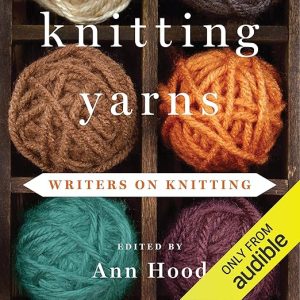
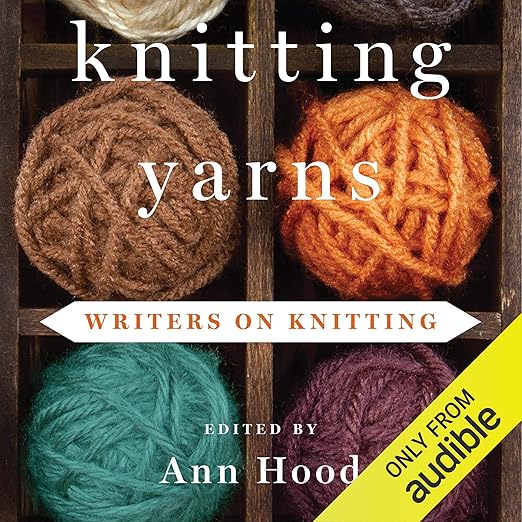
Ann Hood's collection arrives with an unusual credential: it has made readers cry and laugh in the same sitting, often over morning coffee, in what one reviewer described as a story-a-morning ritual. Knitting Yarns, edited and narrated by Ann Hood, gathers twenty-seven essays by writers including Barbara Kingsolver, Ann Patchett, Elizabeth Berg, Sue Grafton, and Andre Dubus III - all circling knitting as a central metaphor and actual practice. This audiobook earns its literary credentials while remaining accessible to anyone who has ever picked up a pair of needles, and Hood's decision to narrate her own edited collection is a significant part of why it succeeds as an audio experience over its 7 hours and 48 minutes. The collection has a breadth that a single-authored book cannot achieve, and Hood's editorial shaping gives it a coherence that prevents it from feeling like a scattered anthology.
Hood Narrates Patchett's Scarf of Loved and Lost
Hood narrating her own edited collection is the right call. She introduces the project with an affection that a hired narrator could approximate but not match, and her reading of her own introduction sets the tone for what follows: honest about both the "triumphs and disasters" of knitting and of life, and committed to the idea that the two are not as separate as they might appear. Patchett's essay - tracing her life through knitting, specifically through a scarf "that knits together the women she's loved and lost" - is one of the best pieces in the collection and one of the most difficult to narrate, because its emotional arc is long and requires a reader who can sustain grief and affection simultaneously over many paragraphs. Hood handles it with the restraint of someone who has worked with this material long enough to know where the power lives and where to stay out of its way.
Kingsolver's essay about shearing a sheep for yarn operates in a completely different register - physical, specific, faintly comic - and Hood shifts accordingly without any sense of strain. Berg's essay on the frustration of failing to knit is wry and self-aware, and Hood reads it with timing that suggests she recognizes every moment of it from personal experience. Grafton's essay about her passion for knitting is the most relaxed piece in the collection, and Hood gives it a slightly more conversational approach that makes it feel like overhearing a private confession. The variation across twenty-seven pieces is the collection's principal strength, and Hood serves that variation rather than flattening it into a single tonal register.
Knitting as a Sidebar to Grief and Patience
Reviewer mariasofia describes the essays as sharing "a common thread of honest and deep reflection" that "carried me to a spectrum of feelings from grief to celebration and all the emotions in between," noting that "knitting itself becomes a sidebar in the reflections of each of the authors." That observation is precise: the best essays in this collection are not really about knitting as a craft. They are about the way repetitive, tactile work creates space for thinking that more demanding activities foreclose. Dubus's essay about knitting a Christmas gift for his blind aunt, and what that process did for his relationship with his then-girlfriend, is about patience and the physical language of care. These are subjects that gain from a slow, attentive listening pace, and the audiobook format rewards that approach particularly well.
Reviewer Amazon Customer describes reading "a story each morning over coffee" and finding that "some of them made me cry (in a good way) and some made me laugh out loud." That cadence - the collection taken in small doses rather than consumed in a single sitting - is available to audiobook listeners as well: each essay is self-contained, and Hood's narration opens and closes each piece with natural pauses that make the stop-and-return format easy. Seven hours and forty-eight minutes spread over a week of morning listening is a different experience than seven hours in a day, and this collection is one of those rare audiobooks that works either way without losing coherence or momentum.
Five Patterns You Cannot Actually Knit From Audio
The five original knitting patterns by Helen Bingham, which appear in the print edition, exist in the audio version as Hood reading the pattern text aloud. This is genuinely not practical for actually knitting from the patterns, and listeners who want to use the book as a pattern resource should have a print or e-book copy for that purpose. The audio experience of the pattern sections is brief, and Hood moves through them efficiently without dwelling on content that cannot land in audio form. Reviewer imisswi notes that even the print edition has no photos of the finished objects, so the pattern resource is incomplete in any format. This is worth knowing if patterns are a primary motivation for the purchase rather than a secondary feature.
Hood is an author and editor rather than a trained audiobook narrator, and listeners with high technical expectations of narration may notice occasional moments that reflect the author-narrator dynamic. The tradeoff is real intimacy and editorial authority. Most listeners find that tradeoff worth it, as reflected in the 4.2 average across 479 reviews. The lower end of that average reflects listeners who came primarily for knitting instruction and patterns; the higher end reflects those who came for literary essays narrated with genuine feeling and a literary editor's sense of what each piece is doing.
Knitters Who Read Literature Get the Perfect Gift
Knitters who are also literary readers will find this the closest thing to a perfect gift audiobook in its category. The combination of celebrated writers - Kingsolver, Patchett, Grafton, Berg, Dubus - and the genuinely moving quality of many essays makes this a collection that holds up in the audio format because the prose is good enough to carry without visual support. Non-knitters who are curious about what this craft means to the people who return to it through grief, joy, boredom, and creative need will find the collection illuminating rather than exclusionary. Hood's narration is warm and engaged, and she has assembled writers who take the question seriously rather than treating knitting as an endearing eccentricity. Listeners looking primarily for craft instruction or pattern content should choose a different source.
Questions Listeners Ask
Is this audiobook worthwhile for non-knitters?
Yes. Reviewer mariasofia notes that knitting becomes almost incidental in the best essays - the real subjects are grief, love, friendship, failure, and the specific pleasure of making something with your hands. The contributors are accomplished literary writers, and their essays work on their own terms whether or not you have ever held a needle.
How does Ann Hood's narration compare to what a professional narrator would bring to this audiobook?
Hood brings authorial and editorial authority that a third-party narrator could not replicate. She knows why each piece is in the collection and reads her own introduction with a specificity of feeling that frames the whole project. The tradeoff is that she is an author rather than a trained audiobook narrator, and listeners with high technical expectations of narration may notice occasional moments of lower polish.
Which essays are standouts in this audiobook?
Ann Patchett's essay about a scarf connecting the women she has loved and lost is consistently cited as one of the most emotionally powerful pieces. Barbara Kingsolver's essay on shearing a sheep is more grounded and physical, offering strong tonal contrast. Andre Dubus III's piece on knitting for his blind aunt addresses the relational dimension of craft-as-care in ways that resonate beyond the specific story.