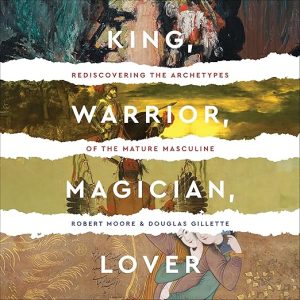
- Themes: Four archetypes of adult behavior, mature versus immature masculinity, Carl Jung's concepts, character
- Mood: Systematic, declarative, argumentative by implication
- Verdict: A framework with real reach, on a listing that names neither its reader nor its contents.
The reader credit is simply absent here. This audiobook ships with an empty narrator field, the description says only that descriptive copy is not yet available from the publisher, and the release date reads September 15, 2026, which falls seven months after the most recent written response on the page. So this is a page for a recording that had not arrived when its own column was written, attached to a book that has plainly existed for a long time. Twelve hours, HarperOne, and four archetypes named in the title. That is the entirety of the disclosed information.
Customers Naming the Co-Author the Publisher Omitted
Customers have done more work here than the publisher has. One response names a second author the byline omits, writing that Dr. Moore and Mr. Gillette created the framework together and brought Carl Jung's concept to life as something tangible. It lists four companion volumes, The King Within, The Warrior Within, The Magician Within and The Lover Within, each expanding a single archetype. And it names the publisher of those companions as William Morrow, while the field on this record reads HarperOne. Set that beside an author field carrying one name, and series fields carrying nothing at all, and you have a listing disclosing less about this book than a single customer managed. The cost is practical: anyone wanting to follow the work further holds half the search terms and no route to the rest of it.
In the absence of a description, the title has to carry the argument. Four nouns, named in order, each standing for a way of being in the world: authority, action, knowledge, connection. That is a schema rather than a story, and schemas of this kind either click into place immediately or read as astrology with a better vocabulary. Nobody in the written column rejects the framework outright, whatever else they say about it, which is worth knowing before committing twelve hours, because a framework you cannot accept makes for a very long twelve hours indeed.
That empty description deserves naming rather than working around. A record admitting that descriptive copy is not yet available from the publisher is telling you the page was assembled before anybody wrote for it, and on a book with an established readership that gap is genuinely unusual. It also means every impression you form here comes from a handful of customers and a title. Nothing summarizes the argument, nothing indicates the structure, and nothing states which edition of the text this recording uses.
Twelve Hours of Abstraction With No Narrator Named
Parenting is how one response arrives at the book. That reader has repeated to their children that the most memorable thing about a person is their character, specifically how they treat others, and found getting them to practice it a Herculean effort. The book offered a different strategy: helping them identify behaviors and where those behaviors come from. Which is a good working summary of what this framework is for. It supplies names for patterns people already run, and naming a pattern is the step immediately before changing one.
Whoever reads it will be carrying twelve hours of abstraction with no narrative to lean on. A book of archetypes has no scenes, no chronology and no characters to differentiate, so the entire burden falls on making a conceptual distinction audible: which of four things is under discussion, and which version of it. That is genuinely difficult work, and the field where a reader's name belongs is blank, so you cannot check who has been handed the job or what they have done before.
Runtime is worth weighing on its own. Twelve hours, stated as a flat figure with no minutes attached, which is itself a small sign of a value entered by hand rather than measured off a finished file. For a framework book that length implies elaboration rather than summary, so anybody expecting a brisk statement of a memorable idea should recalibrate before buying. This is the long version, whatever the long version turns out to contain once the page fills in.
Wishing for Campbell's Storytelling Instead of a Schema
Dissent comes from one grade on the page, and it is also the most concrete. Easy and useful, that reader says, but not fascinating, and the disappointment is specific: they had hoped for some storytelling. Archetypes, the same account argues, become a great deal more interesting when Joseph Campbell handles them, because the mythopoetic approach keeps story at its heart. A fair complaint, and a useful warning. This book explains a system rather than dramatizing one, and twelve hours of explanation is a different proposition from twelve hours of myth.
Chronology is a problem in this column too. Responses on this page span more than a decade, and every one of them was written about a book available in print, while the recording is dated later than all of them. Not one of these readers has heard this file. Which is no criticism of the readers. It does mean the enthusiasm gathered here endorses a text, and the text is only part of what you would be buying if you pressed the button today.
Last, the filing, a small puzzle of its own. This record sits under health and wellness alongside politics and social sciences, tagged for psychology and mental health. The psychology tag fits comfortably. Politics is harder to justify from anything visible on the page, and the pairing will put the book in front of browsers expecting something else entirely. Combined with a blank reading credit and a description admitting it was never written, the impression is of a page assembled from whichever fields happened to be populated.
A Breath of Fresh Air for Feminists Too
Framing for the audience comes from one response, in the terms this book's readers tend to reach for: a breath of fresh air amid talk of toxic masculinity and patriarchy, drawing a line between immaturity and a positive, mature masculinity, and recommending it to men, women and especially feminists. Take that at face value and it tells you something useful. This book holds a position, it knows which argument it is entering, and it is being read as an intervention in that argument rather than as neutral psychology.
Approach it, then, if you want a vocabulary for adult behavior and can tolerate a schema applied with confidence. Give it a miss if narrative is what you want, because a system is not a story and this one never pretends otherwise. And whatever you decide, wait for the page to fill in before spending anything. A listing with no reading credit and no description asks you to commit twelve hours on the strength of a title alone, and on abstract material the reader's identity is the fact that decides whether those hours are bearable.
Questions Listeners Ask
Who narrates the King, Warrior, Magician, Lover audiobook?
The record does not say. The narrator field sits empty, and no producer, studio or cast detail appears elsewhere to fill the gap. The practical move is to check the listing again nearer the release date, since a credit added later will not change the price but will change whether twelve hours of abstraction is worth attempting.
Who published this audiobook and how long is it?
HarperOne, at twelve hours flat with no minute count attached. Both series fields sit empty, so nothing on the page connects the title to a wider sequence. For a book of this length the absence of a chapter list also means you cannot preview how the four archetypes divide the runtime.