Quick Take
- Voice: Virtual Voice handles this title, which is a significant limitation for a story that depends on emotional intimacy with both human and canine characters. The synthesized performance flattens the affective range the subject demands.
- Big ideas: Search and rescue, cold-case investigation, the bond between dogs and handlers
- Atmosphere: Measured and quietly suspenseful
- Worth it?: The underlying story is genuinely affecting, but the Virtual Voice narration creates a barrier between listener and content that dedicated audiobook listeners will find frustrating.
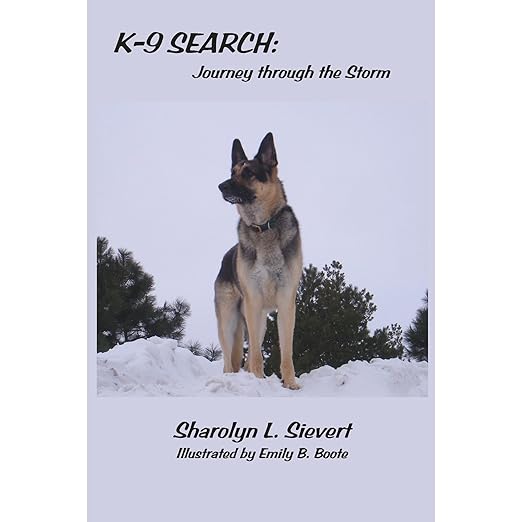
Sharolyn Sievert's K-9 Search: Journey Through the Storm arrives at a premise that has immediate pull: two years after Tom's disappearance, a new witness has come forward placing someone matching his description near old mine pit lakes. Time does not neutralize all evidence equally, and the specific claim that death leaves a scent that does not fade is the book's governing premise and its narrative hook. The investigation has gone cold, witness memories have faded, but what does not fade, as Sievert's opening makes clear, is the scent of death, and that is where the dogs come in. This audiobook, running nine hours and thirty-four minutes, is narrated by Virtual Voice, which is the most significant caveat to place upfront before discussing what the book itself accomplishes.
Working Dogs and a Cold Case That Rings True
The core material is strong enough to earn the affection it receives from readers. Sievert writes about search and rescue work with the specificity of someone who knows the practice from inside rather than from research. The dogs in this audiobook are not props or scenery. They are characters with distinct personalities, working styles, and the kind of presence that makes one reviewer describe feeling as though the dogs were hers. That level of attachment speaks to something real in the writing: Sievert renders the human-canine working relationship with enough concrete detail that the bonds feel earned rather than assumed. A reviewer noted the emotional investment generated by the way the author writes about the animals, describing laughter and tears within the same reading experience.
The cold-case structure gives the book a procedural rhythm that holds the narrative together across its nine-plus hours. The two-year gap since Tom's disappearance, the way cold witness testimony interacts with physical evidence that does not age, and the particular discipline required to work with dogs in search conditions that have long since lost their urgency, all of this gives the book a texture that distinguishes it from more straightforwardly plotted thrillers. One reviewer specifically noted that the book avoids the fairy-tale ending, and that honest restraint is genuinely unusual in this subgenre. The story earns its conclusion through fidelity to how search work actually resolves rather than how narrative convention demands.
The Patience of Search Work Given Room to Breathe
The book's strengths are most accessible in the scenes that slow down and inhabit specific moments of search work. Sievert has a talent for the kind of patience required in the field: the hours of methodical coverage before any indication, the relationship between handler instinct and dog behavior, and the emotional management that allows someone to keep searching when the most likely outcome is a recovery rather than a rescue. A reviewer described the book as teaching calm, not-easily-seen lessons, and that quality comes through specifically in how Sievert handles the technical and emotional dimensions of the work simultaneously. The lessons are not instructional; they emerge from character and situation.
The nine-hour runtime allows the story to breathe in ways that shorter books about search and rescue often cannot. Sievert does not rush from set piece to set piece. The sections some reviewers describe as occasionally slow are more accurately described as deliberately paced. The rhythm mirrors the reality of the work being depicted, and for listeners who engage with the subject rather than just the plot mechanics, that fidelity to actual search cadence is an asset rather than a problem. The last rescue sequence, which a reviewer described as heartwarming and sad in equal measure, is the most emotionally concentrated part of the book and arrives with the force that only patient setup can generate.
Virtual Voice Narration and a Misleading Genre Label
The Virtual Voice narration requires honest acknowledgment. Synthesized narration has improved considerably, but for material that depends on subtle emotional shifts, the intimacy of the handler-dog relationship, and the weight of grief and persistence running through a long cold-case investigation, the artificial voice creates consistent distance. The moments that should land with specific emotional force, a handler's quiet communication to a dog, the restrained aftermath of a difficult recovery, arrive without the inflection that human narration would provide. This is not a minor limitation for a book that asks listeners to form genuine attachment to its characters and dogs.
The genre tagging of this book can mislead potential listeners. This is not a light companion-animal narrative. It is a crime-adjacent procedural with genuine stakes and a realistic emotional register. The animals are working dogs in a serious investigative context, and the tone throughout reflects that seriousness. Listeners who come expecting something cozy will find the book's demands more significant than anticipated. The print or e-book version would deliver this story more effectively for those who respond to emotional resonance.
Search-and-Rescue and Cold-Case Readers Fit Best Here
Listeners with a specific interest in search and rescue operations, K-9 handler methodology, or cold-case investigation will find the subject matter well served by Sievert's writing despite the narration limitations. Those who have found Virtual Voice narration workable in nonfiction or information-dense audiobooks should approach this title with more caution, since the emotional dimension of the story is where that narration type falls shortest. Readers who have appreciated procedural fiction with a strong animal-human partnership, in the tradition of Sue Henry's Alaska mystery series or Nevada Barr's park ranger novels, will recognize what Sievert is doing and may find the audiobook format manageable given that investment. For listeners without that specific subject interest, the format decision deserves careful consideration before purchase.
Common Questions
Is the Virtual Voice narration in this audiobook a significant problem for the listening experience?
For a book this dependent on emotional intimacy with dogs and handlers, yes. Virtual Voice manages straightforward prose adequately but struggles with the subtle affective shifts that make the human-canine working relationship feel real. Listeners who find synthesized narration consistently manageable will fare better than those sensitive to the format.
Does the audiobook require prior knowledge of K-9 search and rescue work?
No. Sievert explains the working methodology as the story develops, and the technical details are embedded in narrative rather than delivered as exposition. Listeners new to the subject will find the book informative without feeling lectured at.