In Brief
- Voice: Clear and methodical delivery suits this instructional content well, with the measured pacing appropriate for material listeners may want to process between training sessions.
- Big ideas: fear and reactivity in dogs, trauma-informed training philosophy, building confidence through incremental exposure
- Atmosphere: Patient and encouraging, with the practical clarity of someone who has helped hundreds of dogs through this exact process
- Worth it?: One of the most psychologically sophisticated resources available for people living with and working with fearful or reactive dogs.
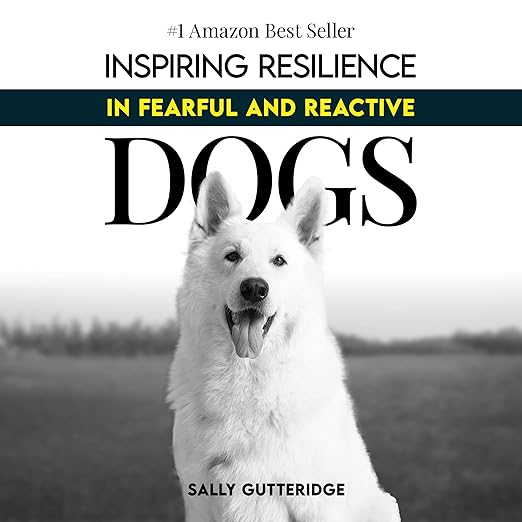
I have spent more time than I care to admit around dogs whose anxiety makes their lives smaller than they need to be and more difficult than they should have to be. The fearful dog who cannot complete a leash walk without triggering into reactive behavior that exhausts the owner and distresses the dog, the rescue animal whose history means that ordinary domestic life is a continuous stream of threatening stimuli requiring constant management, the dog whose fear has been addressed through suppression and flooding rather than treated at its neurological root, these are animals I have watched with genuine concern. When I encounter a resource that takes their psychology seriously rather than treating fear as a behavioral problem to be corrected through pressure and correction, I pay attention with unusual care. Inspiring Resilience in Fearful and Reactive Dogs by Debbie Jacobs is one of the more serious and substantive treatments of this subject available in audio form.
Jacobs works from a trauma-informed framework that understands fear in dogs not as disobedience or stubbornness or insufficient socialization but as a neurological and physiological state that actively shapes perception and behavior in ways that simple behavioral correction cannot effectively address and may actively worsen. Her approach draws on the science of fear and stress responses with the kind of accessibility that makes it genuinely useful to non-specialists while maintaining enough precision to be informative for the trainers and behaviorists who make up a significant portion of her intended audience. The practical implications of her framework for how you approach a fearful dog, what you ask of them at different stages of their development, what you consider a meaningful measure of success, and how you sequence exposure to previously threatening stimuli and recovery time after arousal are worked out carefully and specifically throughout the audiobook.
Understanding the Stress Threshold in Fearful Dogs
The sections on the neuroscience and physiology of fear responses are where the audiobook most clearly earns its strong reputation among trainers who have grown frustrated with behavior modification frameworks that fail to account adequately for what is actually happening inside the dog they are working with. Jacobs explains the stress response, its documented effects on learning capacity and cognitive function, and the specific implications of these effects for training protocols with real clarity and without the oversimplification that makes some popular dog behavior books less useful than they appear. She is particularly strong and precise on the concept of the stress threshold and the critical distinction between a dog working below threshold, where learning is neurologically possible and retention is likely, and a dog above threshold, where behavioral correction is not only ineffective at producing the intended learning but may actively reinforce the association between the triggering stimulus and the aversive experience.
Resilience, Not Just Reduced Reactivity
The book's central organizing concept, resilience rather than simply reduced reactivity or behavioral compliance, reflects a genuine and carefully considered philosophical commitment in how Jacobs understands both the goal and the meaning of working successfully with fearful dogs. The aim she describes and works toward is not to produce a dog that suppresses its fear response more effectively under pressure or more reliably complies with behavioral cues despite ongoing internal distress. It is to build the internal neurological and psychological resources that allow the dog to encounter previously threatening stimuli and recover from the resulting arousal more quickly, more completely, and with less cumulative cost. That distinction has practical implications for how you measure progress over time and what specific interventions you choose to support it, and Jacobs is careful to ground the resilience concept in observable behavioral indicators rather than leaving it as an inspiring aspiration without operational content.
Why This Works Best as an Audiobook of Ideas
Training content presents a specific and well-known challenge for the audiobook format: the most practically useful instructional material often involves demonstrations and visual reference that audio cannot carry, and listeners need to retain technical information for application in contexts that are quite different from the listening environment and often separated from it by days or weeks. Jacobs addresses this challenge by writing with enough verbal precision that the key conceptual and practical distinctions can be understood and retained without visual illustration, and by organizing the material so that the most important distinctions are reinforced through repetition and example rather than stated once and assumed to be absorbed. The audiobook functions best and most naturally as a conceptual and philosophical resource that changes how listeners think about their dogs, which is appropriate given that this is where Jacobs' primary contribution actually lies rather than in any novel behavioral protocol or training technique.
For Frightened Owners and the Trainers Who Guide Them
Inspiring Resilience in Fearful and Reactive Dogs works best for two primary audiences who approach it with different needs and different backgrounds. The first is people who live with fearful or reactive dogs and who want a genuinely deeper understanding of their animals' psychology and neurological experience, not simply a collection of techniques to apply but the framework that makes the techniques make sense and allows them to be adapted intelligently to changing circumstances. The second is trainers and behaviorists who want a resource that engages seriously with the science of fear and whose clients would benefit from a more sophisticated account of what is actually happening neurologically when their fearful dogs encounter the stimuli that trigger reactive behavior. For the first audience, this is one of the most genuinely illuminating resources available for building a productive long-term relationship with a frightened dog. For the second, it is a valuable professional resource.
Frequently Asked Questions
Is this audiobook appropriate for someone with no professional training background who just has a fearful dog?
Yes. Jacobs writes for both professionals and committed lay owners, and the conceptual material is accessible without specialist background. The framework she offers for understanding fear is genuinely useful regardless of your training experience.
Does the audiobook cover specific training exercises or primarily conceptual frameworks?
Both, but the balance leans toward conceptual framework. The book is strongest as a resource for understanding how fear works and why standard behavioral approaches often fail with fearful dogs. Specific exercises are covered but are not the primary value proposition.
Is this audiobook useful for dogs with mild anxiety or primarily for severely reactive or traumatized animals?
The framework is applicable across the full spectrum of fearful and reactive behavior, from mild anxiety to severe reactivity with a trauma history. The concepts scale from everyday management of anxious dogs to working with animals with significant behavioral histories.