Quick Take
- Narration: Jill Blackwood delivers a warm, practical tone that matches the book’s friendly-but-serious register – she makes the checklists feel like advice from a knowledgeable friend rather than a legal document.
- Themes: Estate settlement, family conflict over possessions, proactive planning for aging parents
- Mood: Calm and practical with unexpected emotional undercurrents
- Verdict: A genuinely useful listen for anyone who has ever stood in a parent’s house after a death and felt completely lost – though listeners expecting a decluttering guide in the vein of Marie Kondo will find the focus is squarely on estate logistics and family dynamics.
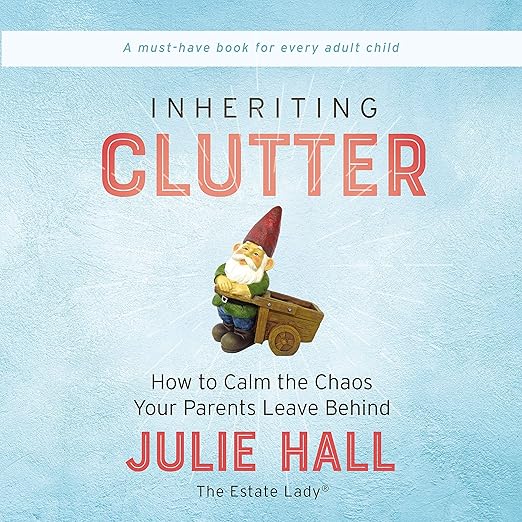
My mother-in-law passed away three years ago, and the months that followed were a tutorial in things no one teaches you. What do you do with forty years of accumulated furniture, costume jewelry, dishes, and paperwork? How do you have that conversation with a sibling who wants everything and will fight over the small stuff? I wish I had listened to Julie Hall’s Inheriting Clutter before any of that happened rather than after.
Hall is a professional estate liquidator who goes by the name The Estate Lady, and the expertise is evident on every track. This is not a book about tidying up in any aspirational sense. It is a practical, structured guide to navigating what happens to a household full of possessions when someone dies or can no longer manage their home independently. Hall has seen hundreds of families come apart at the seams over stuff, and her goal here is to arm you before you get there.
Our Take on Inheriting Clutter
The book’s great strength is its willingness to address the emotional reality of estate settlement without losing its practical spine. Hall is clear-eyed about why siblings fight over a dining table that none of them actually want or like – it is not about the table. She gives specific, actionable guidance for having conversations with aging parents about their wishes while framing it in a way that acknowledges how difficult those conversations actually are to initiate. The chapter on clearing out a family home in thirty days or fewer is among the most useful things I have heard on the subject.
One reviewer purchased four copies at once: one for herself, two for sisters, and one for her parents at ninety, reasoning that it was time to start thinking about this together. That is about as strong an endorsement as a practical nonfiction book can get, and it captures the book’s spirit well. Hall is not morbid about death; she is matter-of-fact about the logistics that follow it, and that tone is genuinely reassuring rather than clinical.
Why Listen to Inheriting Clutter
The audio format suits this material particularly well because the checklists and step-by-step guidance land differently when read aloud by a warm, engaged narrator. Jill Blackwood gives the book exactly the right register – she sounds like someone who has worked through this process herself, not like a professional speaker reciting bullet points. The companion PDF, available as a download alongside the audiobook, provides the actual checklists in printable form, which means you are not stuck trying to write things down while driving.
Hall draws on her own case files throughout, and the stories she tells from client estates ground the abstract advice in real human situations. These vignettes do the emotional work that pure how-to writing cannot. You understand why it matters to get a professional appraisal on grandmother’s jewelry not because Hall tells you it matters, but because you have heard what happens when families skip that step.
What to Watch For in Inheriting Clutter
One reviewer flagged a mismatch between the title and the content, and the critique is fair enough to pass along. The word clutter implies the kind of everyday accumulation you might address while everyone is still living. The book is actually about estate liquidation and distribution – the process of dividing and clearing a household after a death or major life transition. Valuables, family heirlooms, and contested items get more attention than the question of what to do with thirty years of old magazines. If you are specifically looking for advice on decluttering a living home, you will find some useful material here but not the primary focus.
The book also leans toward situations where one or more parents have already died or are in the process of estate planning. Listeners dealing with a sudden or recent loss may find some sections more useful than others depending on where they are in the process.
Who Should Listen to Inheriting Clutter
This is essential listening for anyone who is currently an executor, who expects to become one, or who has aging parents and wants to have a plan before a crisis forces the conversation. It is also genuinely useful as a gift – several reviewers mention buying copies for siblings or adult children. Those in the middle of active estate settlement will find the thirty-day framework and the sibling-conflict strategies immediately actionable. Listeners looking for minimalism inspiration or interior-design decluttering motivation are looking at the wrong book. But for anyone who has ever realized they have no idea what to do with a household full of someone else’s life, Hall’s voice is a welcome and steady guide.
Frequently Asked Questions
Does the book cover digital assets and online accounts, or only physical possessions?
The book’s primary focus is on physical estate contents – furniture, jewelry, household goods, valuables, and the logistics of clearing a home. Digital assets and online accounts are not a central topic. Listeners dealing specifically with digital inheritance may need to supplement this with more current resources.
Is the audiobook companion PDF worth downloading, and what does it contain?
Yes, it is worth downloading. The companion PDF contains the checklists and resource lists that Hall references throughout the audiobook, including what needs to be done immediately after a loss and how to approach the estate settlement process in stages. Having it on hand while listening lets you take notes against a concrete framework.
How does Jill Blackwood’s narration handle the emotional passages about grief and family conflict?
Blackwood keeps a warm, measured tone throughout. She does not overplay the emotional material, which is the right call – this book is designed to be practical, and narration that leaned heavily into grief would undercut Hall’s steady, reassuring voice. Blackwood makes the advice feel approachable rather than clinical.
Can this book help if I am still living with my parents and trying to start the decluttering conversation now, before any crisis?
Yes, and Hall specifically addresses how to have conversations with living parents about their wishes before it becomes urgent. The book is partly designed as a prevention guide, not just a response to an existing crisis. The chapter on talking with your parents is one of the more nuanced sections in terms of emotional intelligence.