Quick Take
- Narration: Rush Stone reads with the friendly, unhurried pace of someone walking you through a plant nursery, approachable and never condescending.
- Themes: beginner plant care confidence, the psychological benefits of green spaces, identifying and treating common household plant problems
- Mood: Encouraging and practical, genuinely designed to prevent anxiety rather than perform enthusiasm
- Verdict: A reliable starter guide for the plant-curious who have previously kept their distance from houseplants due to past failures, though experienced plant owners will find little they do not already know.
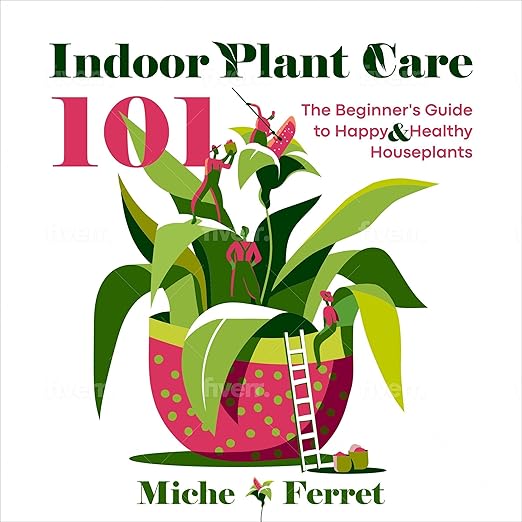
I bought three plants in January of last year and killed two of them by March. Not dramatically: no sudden collapse, no visible crisis. Just a slow decline that I kept believing I could reverse by adjusting something. By the time I accepted the inevitable, I had convinced myself I simply did not have the particular combination of intuition and patience that successful plant ownership requires. Indoor Plant Care 101 arrived in my listening queue around this point, recommended by someone whose windowsills are visibly thriving, and I approached it with the skepticism of someone who has recently failed at something they thought would be easy. What I found was not a revelation, but something more useful: a straightforward diagnostic of the most common reasons people kill houseplants, packaged in a way that makes the right behaviors concrete rather than aspirational.
Why Most Beginner Plant Guides Miss the Point
The central failure of most plant care advice, whether online or in book form, is that it tells you what plants need without explaining how to recognize when those needs are being met or missed. Miche Ferret structures Indoor Plant Care 101 differently. The book prioritizes identification and diagnosis before prescription. Understanding what kind of plant you have, what conditions it evolved for, and how to read its signals is presented as the foundation from which all other guidance follows.
This approach is particularly valuable in the pest and disease sections. The book covers how to spot fungal infections, how to identify common infestations, and how to treat them with home remedies rather than chemicals. One reviewer specifically praised this section, noting the practical utility of having natural treatment options organized clearly. These are the situations where most beginner plant owners panic or give up, and having a clear decision tree for them makes the difference between a recoverable problem and a dead plant. This is the book at its most practically useful.
The fifty-plus plant profiles are the book’s most substantial practical resource, covering light requirements, watering frequency, common failure modes, and propagation guidance for each species. For audiobook listeners, this section has some inherent limitations: plant identification is a visual process, and some of the profile information works better as a reference you can return to than as a linear listen. The absence of photographs was noted as a limitation by at least one reviewer, and in audio that limitation is naturally amplified. For this section in particular, the print edition alongside the audio is a more useful combination.
The Science Behind Why Plants Make Life Better
Ferret includes a chapter on the documented psychological and physiological benefits of indoor plants, and it is one of the more grounding sections of the book. The data on improved concentration, reduced stress and anxiety, and better air quality is genuinely backed by research, and presenting it early helps the listener understand that plant care is not merely a hobby but a practice with measurable returns. This reframing from plants as decorative objects to plants as environmental tools is practical rather than sentimental, and it gives the whole enterprise a more solid motivational foundation than simple aesthetic appeal.
The statistic that over 33 million US households already grow plants indoors lands differently when you are in the process of reconsidering your own reluctance. You are not attempting something rare or particularly skilled. You are joining a widespread practice that most people manage successfully, and the reasons you have not are almost certainly correctable rather than inherent to you as a person.
Rush Stone and the Companion Quality of the Narration
Stone reads with the conversational warmth of a patient explainer rather than a lecturer. This is the right tonal choice for a guide aimed at people who have experienced failure and are approaching the subject with some anxiety. He does not perform expertise or condescend to the beginner listener. The pace is unhurried without being slow, and the technical sections on soil composition, drainage, and fertilization are delivered with enough patience that you can actually absorb them rather than losing the thread while he moves on.
At just over five hours, the audiobook is the right length for its subject: long enough to be comprehensive, short enough to complete in a weekend of commutes. The organization is logical, moving from foundational principles through species-specific guidance to problem-solving, which means you can return to sections as needed rather than relying on memory from a single listen through.
The propagation section is worth specific mention because it addresses something most plant guides treat as an advanced topic: how to make new plants from existing ones for free. Ferret demystifies this process for the plants most amenable to it, and the result is a section that changes the economics of plant ownership for listeners who take it seriously. The difference between spending money on new plants whenever one fails and having a self-sustaining cycle of cuttings and divisions is significant over time, and framing it as a beginner-accessible practice rather than an expert skill is one of the more genuinely useful moves in the book.
Right Reader, Wrong Reader
Anyone who has wanted to incorporate plants into their home but has been held back by uncertainty or past failure will find this book directly useful. It is structured around the actual fears and failure modes of beginners, which makes the advice more targeted than generic gardening guides that assume a baseline of enthusiasm and competence the reader may not yet have. New plant parents who want a systematic introduction rather than trial and error will get measurable value from working through this methodically.
Experienced plant owners who already know their Philodendrons from their Pothos, who have established watering routines and understand soil drainage, will find very little new information here. This is explicitly a 101, not a 201, and the depth reflects that honestly. The book does not pretend to be something it is not, which is itself a form of respect for the reader it is actually written for.
Frequently Asked Questions
Does the audiobook format work well for a book with fifty-plus plant profiles?
The profiles are useful in audio but work best in combination with the print edition for the specific species details. Identification information and care specs are easier to reference and return to in print. For the conceptual and motivational sections, audio is fully effective.
How does this book handle plant identification for complete beginners who cannot name the plants they own?
It includes a chapter on plant identification and distinguishes between common species clearly enough for most houseplant beginners. The profiles cover the most widely kept indoor plants. For very unusual species, the book recommends consulting additional resources, which is an appropriately honest acknowledgment of its scope.
What makes this guide different from the general plant care information freely available online?
The organization and sequencing. Online resources tend to be reactive rather than preventive, answering specific questions after something has gone wrong. This guide builds a foundational understanding of plant biology and common failure modes first, which makes the specific guidance more useful because it fits into a coherent framework.
Is this book useful for apartment dwellers with limited natural light?
Yes, directly. Ferret covers low-light plant selection explicitly and includes species that thrive in indirect or minimal light conditions. The book acknowledges real-world space and light constraints rather than assuming ideal growing conditions, which makes the advice applicable to a wider range of living situations.