Quick Take
- Narrator: Miranda Hart narrating her own memoir is the only version that makes sense, her timing, warmth, and self-deprecating precision are inseparable from the material.
- Subjects: chronic illness and recovery, hidden grief, rediscovering joy after a difficult decade
- Tone: Gently funny and genuinely moving, with passages of hard-won honesty
- Bottom line: Hart's decade of difficult truths becomes an audiobook of rare warmth, funnier than you expect, braver than it pretends to be.
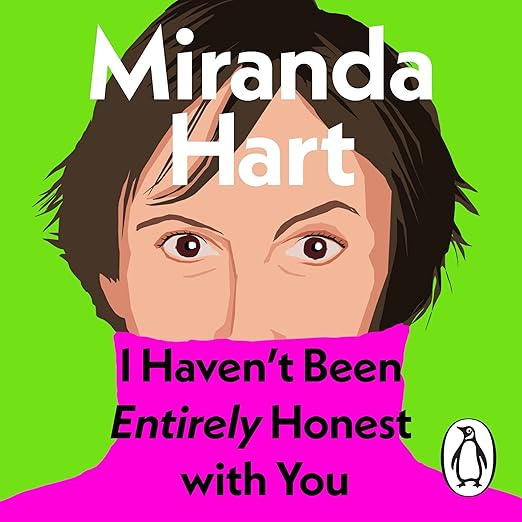
Miranda Hart has spent most of her public life making people laugh. The character she played in her BBC series, the clumsy and enthusiastic Miranda, became a British cultural institution in part because Hart understood that self-deprecation, done right, is its own form of courage. I Haven't Been Entirely Honest with You, the audiobook version of her 2024 memoir, narrated entirely by Hart herself, is about what happens when the comedy persona is no longer adequate to the reality underneath it. She has, it turns out, been through a great deal more than her public cheerfulness suggested, and the ten-hour audiobook is her full accounting.
Earned Recovery, Not Performed Gratitude
The memoir's central premise is an accounting. Hart describes an unexpectedly difficult decade, one that included serious chronic illness, deep revelations about herself, and the kind of prolonged low that public figures rarely discuss openly while it is happening. The book's frame is one of earned recovery rather than performed gratitude. She is not writing from a place of restored ease about difficulties that feel distant. She is writing from the early-middle of a better life, which gives the honesty a quality of uncertainty that purely retrospective memoirs often lose.
The treasures she describes, the practical tools gathered from scientists, neuroscientists, therapists, and other practitioners, could easily have become the scaffolding for a self-help text dressed up as memoir. Hart avoids that. The tools are present and specific, but they are embedded in personal narrative rather than extracted from it into a program. One reviewer who was in the mood for funny but real life truths found the audiobook aligned with her expectations while delivering more emotional depth than anticipated. Another describes relating so strongly to Hart's experiences that she bought both the audio and physical versions, a decision that speaks to how much this memoir rewards multiple modes of engagement.
Hart, on What It Looked Like for Me
Hart's self-narration is essential to the audiobook's effect. She has a comedian's command of rhythm and pause, and she applies that command to difficult material in ways that keep the book from tipping into either self-pity or forced cheerfulness. When she is funny, and she frequently is, the humor feels like the authentic reflex of someone who processes pain through laughter rather than a strategic choice to lighten a heavy text. The ten-hour runtime feels intimate rather than exhausting because Hart's voice carries the lived quality that distinguishes genuine storytelling from performed sincerity.
The book carries press reviews from The Times, Daily Mail, and Guardian, all noting its emotional honesty and warmth. The Guardian's description, proof that happiness is possible even in the most trying times, is accurate but incomplete. What Hart offers is not proof in the reassuring sense but demonstration in the specific sense: this is what it looked like for me, here are the things that helped, I am still in it. That distinction matters. Listeners who need their recovery narratives to end in unambiguous resolution will find this slightly less tidy than they might want. Listeners who need honesty about the ongoing nature of recovery will find it rare and valuable.
Resonant Even Across the British Cultural Gap
The book has been reviewed as raw and poignant and also as genuinely funny, and both assessments are accurate in different passages. Hart does not sustain a consistent tone across the full ten hours, the book moves between humor and genuine difficulty in ways that might feel uneven if you are not prepared for the shifts. One reviewer explicitly notes arriving expecting comedy and finding something considerably more emotionally demanding. That is not a criticism of the book but a fair description of its range, and the audiobook experience amplifies the tonal shifts because Hart's voice changes texture when she moves between registers.
The British context is worth noting for international listeners. Several reviewers mention needing to look up references, and Hart's world, BBC television, British cultural touchstones, the specific social geography of public life in England, is genuinely embedded in the narrative rather than incidentally present. American listeners and others outside the British context will still find the emotional substance fully accessible, but some references will require context that the audiobook does not pause to provide. One reviewer who knew Hart primarily from Call the Midwife found the memoir deeply resonant despite the cultural gap, which suggests the personal material travels well even when the references do not.
Bring Your Willingness to Be Surprised
Listeners who have followed Miranda Hart's career, her sitcom, her stand-up, her public persona, will find this audiobook a genuinely surprising and rewarding extension of what they thought they knew. Listeners dealing with chronic illness, prolonged low periods, or the specific challenge of maintaining a public self through private difficulty will recognize something true in Hart's account. Anyone who has ever wondered what sustained public performance costs the person performing it will find an honest reckoning here across the full ten hours.
The audiobook is less suited to listeners seeking pure comedy or self-help structure. Hart delivers real tools and real laughs, but the frame is always personal narrative, and the emotional demands of that narrative are real. Give it ten hours and bring your willingness to be surprised by how much a memoir can carry when the person at the center of it is brave enough to be actually honest.