Quick Take
- Narration: Virtual Voice narrates this title, which is a significant liability for a book whose central argument is about human empathy and emotional intelligence in data work. The synthetic delivery strips out the warmth the content genuinely demands.
- Themes: People-first data strategy, organizational change management, empathy in analytics
- Mood: Optimistic and conversational, occasionally academic
- Verdict: The Five Cs framework offers real value for data leaders who want to move beyond tools and metrics, but the Virtual Voice narration works directly against the book’s own thesis.
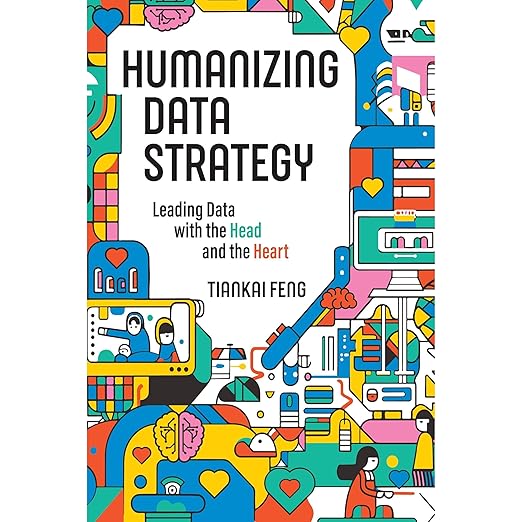
I picked this one up on a Tuesday morning commute, curious less about the framework and more about the author. Tiankai Feng is one of those rare figures in the data world who became internet-famous by doing something no one expected: rapping about data governance. His “Governors of Data” parody songs built a following among people who felt the field had lost its human dimension somewhere between the data warehouse and the dashboard. Humanizing Data Strategy is where that personality meets a structured argument.
The book’s premise is immediate and honest. Feng opens by acknowledging what most data strategy texts paper over: the tools and methodologies are rarely the obstacle. People are. Emotional, inconsistent, politically motivated, sometimes resistant to evidence, always complicated. He doesn’t treat this as a problem to be solved through better communication tactics. He treats it as the actual substance of data strategy itself.
The Five Cs as Genuine Framework, Not Acronym Dressing
The backbone of the book is the Five Cs: Competence, Collaboration, Communication, Creativity, and Conscience. This kind of framework often exists in business books as scaffolding for content that doesn’t really need it, but Feng earns his structure here. Each pillar is linked explicitly to business objectives and to observable human behaviors that derail data initiatives. Competence isn’t just technical literacy; it encompasses the ability to ask the right questions of data. Conscience, the fifth C, is where the book does something genuinely unusual for the genre: it takes ethics seriously not as a compliance checkbox but as a strategic lever that affects trust and therefore adoption.
Reviewer Tom Redman, himself a well-regarded voice in data quality circles, notes that the book answers questions practitioners actually have: how to engage people, what they need from a data initiative, how to build them into strategy rather than around it. Feng’s approach to this is specific enough to be actionable. He’s not simply arguing that soft skills matter. He’s mapping those soft skills onto the practical mechanics of getting a data strategy to stick.
The Uncomfortable Irony of Who Is Doing the Talking
Here is where I have to be direct. Humanizing Data Strategy is narrated by Virtual Voice, Audible’s AI narration system. The irony is so complete it’s almost instructive. Feng’s book is a sustained argument that empathy, human connection, and emotional intelligence are what make data work actually work. The blurbs from Sol Rashidi, Laura Madsen, and Robert Seiner all emphasize the human warmth of the writing. Yet the audio experience itself delivers this content through a synthetic voice that can approximate cadence but not conviction.
This matters more here than it would for a technical reference book. Feng writes with personal anecdotes and professional storytelling. He relies on rapport between reader and author. When a reviewer describes the book as “thoughtful and heartfelt,” they’re describing a reading experience, not a listening one. For this particular title, the gap between print intent and audio delivery is wide.
Who This Book Is Actually For
Set aside the narration question for a moment and consider the audience. Feng is explicit: this is written for everyone from CxOs to operational staff, from data experts to business stakeholders who sit in rooms wondering why the data team keeps producing outputs nobody uses. That breadth is both the book’s strength and its challenge. At just over two hours in audio form, there isn’t space to go deep on any single organizational context. The senior data leader who already knows the people problems are real will find the Five Cs a useful vocabulary. The business stakeholder who has never thought structurally about data culture may find it revelatory. The technical practitioner looking for implementation detail will likely want more.
What the book does well, consistently, is reframe. It takes problems that organizations tend to treat as execution failures and repositions them as framing failures. If people aren’t using your data products, it asks not “how do we train them better” but “did we build something they actually need, and did we involve them in deciding that?”
Listener Guidance
Listen to this one if you’re a data leader, a change manager, or a business partner embedded in a data team. The Five Cs give you language for conversations that are often difficult to structure. Skip it if you’re looking for technical depth on tools, architecture, or implementation; this book operates entirely in the strategic and interpersonal register. And honestly, if you can read the print version instead, I’d recommend it. A book this explicitly about the human side of work deserves a human voice.
Frequently Asked Questions
What is the Five Cs framework Tiankai Feng introduces in this book?
Feng’s Five Cs are Competence, Collaboration, Communication, Creativity, and Conscience. Each represents a dimension of human behavior that shapes whether a data strategy succeeds or fails. The framework is designed to connect these human factors directly to business objectives rather than treating them as supplementary soft-skills content.
Is this book technical enough for a practicing data engineer or data scientist?
Not really. The book operates at a strategic and organizational level, not a technical one. Data engineers and scientists may find the people-strategy framing interesting as a complement to their technical work, but they should not expect coverage of data architecture, tooling, or technical methodology. It’s aimed at building shared understanding across technical and business teams.
Why is the Virtual Voice narration a particular problem for this title specifically?
Feng’s central argument is that human empathy, emotional intelligence, and personal connection are what make data strategy work. The book is written with personal anecdotes and deliberately warm language. A synthetic narrator cannot convey the emotional register that the content requires, which creates a tension between the book’s message and the listening experience itself.
How does this book compare to other data strategy titles like Scott Taylor’s Telling Your Data Story, which is cited in the synopsis?
Taylor’s book focuses on data communication and the art of building narrative around data for stakeholders. Feng’s book is broader in scope, addressing the organizational and cultural conditions under which any data communication becomes possible. They sit on a similar shelf and the authors clearly know each other’s work, but the angles are different enough that reading both is worthwhile for anyone leading data culture change.