Quick Take
- Narration: Ryan North narrates his own book, and his comedy writing background gives the self-narration an easy, conspiratorial warmth that the material requires.
- Themes: Cutting-edge science explained through supervillain logic, technology and human ambition, existential risk framed as comedy
- Mood: Absurd and gleeful, with genuine scientific substance beneath the premise
- Verdict: A science communication book disguised as a villain’s manual, North makes real questions about longevity, climate control, and network security genuinely entertaining.
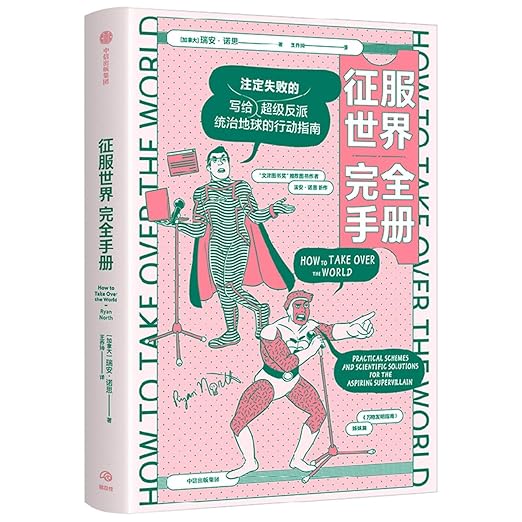
I should say upfront that the synopsis currently listed for this audiobook is in Mandarin Chinese, which suggests this listing may be for an international edition. The English-language edition of Ryan North’s How to Take Over the World: Practical Schemes and Scientific Solutions for the Aspiring Supervillain is a different product, published by Riverhead Books, and narrated in English by North himself. I am reviewing the book based on what I know of the English edition and its content, while noting the edition discrepancy for any listener arriving here expecting one and finding the other.
I came to this one on a Saturday morning with low expectations and ended up genuinely entertained for two hours before I had to stop and do other things. North is best known as the writer of Dinosaur Comics and the writer behind various Marvel comics runs, and he brings to this book exactly the tone those projects suggest: an enthusiasm for absurdist premises that are secretly about real things, and a gift for making technical content feel like a punchline setup that actually pays off.
The Villain’s Manual as Science Communication
The premise of the book is that it is a practical guide to world domination, structured around questions a supervillain would reasonably ask: Where should I build my secret floating base? How do I fund my ambitions through strategic industrial sabotage? How do I control the weather? How do I destroy the internet? How do I live forever? Each chapter takes one of these absurd questions seriously, which means doing the actual science: researching where floating structures could plausibly be built, understanding what the internet’s physical infrastructure looks like and where its vulnerabilities actually are, surveying the genuine science of longevity and life extension.
The joke is that the book is not really about villainy at all. It is about what we actually know about extreme weather modification, network architecture, aging biology, and the practical challenges of governance at scale. North has described it elsewhere as a book about “the most interesting problems facing humanity, framed through the lens of what a supervillain would want to do about them.” That framing does real work. It is much easier to ask “could someone actually destroy the internet?” than “what are the systemic vulnerabilities of global internet infrastructure?”, even though these are the same question. The villain premise gives North license to be direct about threat models and failure points that more sober treatments tend to soften.
North’s Self-Narration
Ryan North has been writing and talking about science and comics for years, and his narration of the English edition reflects that experience. He sounds genuinely amused by his own material, which is the right register for this kind of book: too deadpan and the comedy deflates, too performative and the science gets lost. He finds the balance by treating the absurd framing with complete seriousness while letting the incongruity carry the humor. The result is closer to listening to a very funny and well-informed friend explain something than to a formal audiobook performance.
At just over ten hours, the book has enough room to let each topic develop properly rather than surfing across them. North is interested in depth, not breadth for its own sake. The chapters on longevity and on controlling the weather are the most substantial, because the science is both most developed and most genuinely strange in those areas. The internet chapter will interest listeners who want to understand network architecture without reading a textbook about it.
Who Should Listen and Who Should Skip
Listen if you enjoy science communication that takes the joy of absurdity seriously. Listen if you want to understand real questions about longevity research, weather modification, network vulnerability, and the practical limits of individual power, wrapped in something that is genuinely funny. Listen if you read What If? by Randall Munroe and want something with a slightly darker, more geopolitical edge. Skip if you need the Chinese-language edition to be listed differently, confirm you have the English version. Skip if you want a book that makes only the jokes and skips the science, or one that does only the science and skips the jokes. North needs both to work.
Frequently Asked Questions
Is this the Chinese-language edition of How to Take Over the World?
The current synopsis is in Mandarin Chinese, suggesting this listing may be for an international edition. English-language listeners should confirm they are purchasing the English edition narrated by Ryan North before buying.
Does Ryan North’s narration of his own book work well?
Yes. His comedy background gives him a natural timing for the absurdist premise, and he sounds genuinely engaged with the material rather than reading at it. The self-narration adds warmth that a professional narrator might not replicate.
Is the science in the book rigorous, or is it mostly jokes?
Both. Each chapter uses a villainous premise as an entry point to real science, longevity research, weather modification technology, internet infrastructure vulnerabilities, and more. The jokes are the delivery mechanism, not a substitute for content.
How does this compare to Randall Munroe’s What If? books?
Both use absurd questions to explore real science, but North is more interested in systems, power, and scale, the questions trend toward geopolitical and existential rather than purely physical. The tone is darker while remaining comic, and the chapters are longer and more developed.