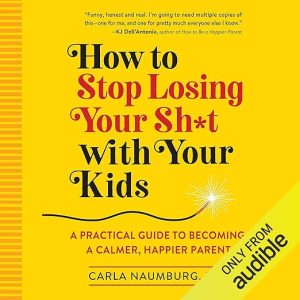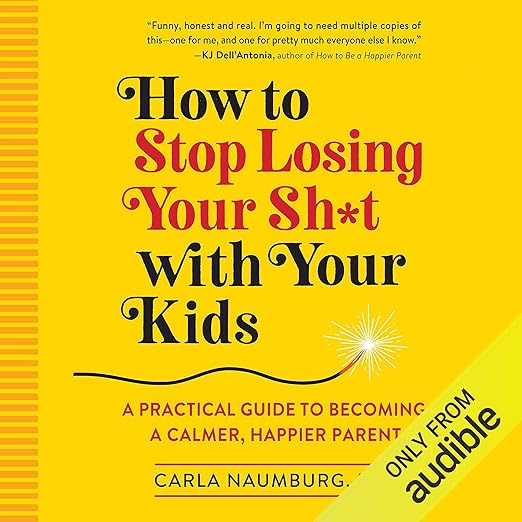
I do not have children, but I have friends who do, and I have watched enough of them cycle through parenting books to have developed a theory: most parenting books address the wrong problem. They tell you what to do with your child without addressing what is happening inside you when everything goes sideways. Carla Naumburg's book, to its considerable credit, goes directly at the second problem. The title tells you exactly what the subject is: not how to raise a perfect child, but how to stop being the version of yourself that yells.
I put this on one evening while doing some administrative work, and I had to stop pretending I was multitasking within the first twenty minutes, because the opening sections on what Naumburg calls triggers, the specific conditions that push a parent from functional to reactive, kept landing in ways I recognized from my own non-parenting life. The book draws on evidence-based practices, as the synopsis notes, which in this context means mindfulness research, polyvagal theory, and cognitive behavioral frameworks translated into language that does not require any prior familiarity with those concepts.
First, the Big Picture
What Naumburg has managed is genuinely rare in self-help literature: a book that is simultaneously funny and serious about its subject. The humor is not decorative. Reviewer Audrey Shepherd, who describes re-reading the book multiple times, notes that the fun and humorous tone guides the reader toward curiosity about psychological and physiological concepts, which is exactly right. The comedy makes the self-examination more bearable, because what Naumburg is asking you to do, take honest inventory of your stressors, your triggers, your physical state in the moment before you lose it, is not comfortable.
Reviewer Karen Tucker's observation that the advice is practical and applicable not just to parenting but to being less reactive and irritable overall speaks to something important about the book's underlying framework. Naumburg is teaching emotional regulation skills that are valuable for any adult, and the parenting framing is almost incidental. She is writing for parents because that is the context in which the stakes of losing it are highest, not because the skills themselves are parent-specific.
What Makes How to Stop Losing Your Sh*t with Your Kids Worth Hearing
Patricia Rodriguez's narration is warm and direct in a way that matches Naumburg's own voice in the text. The book has a personal quality, Naumburg writes as someone who has herself lost her composure with her children and is sharing what she learned from the aftermath rather than pronouncing from authority, and Rodriguez preserves that quality rather than making it more formal. At six hours and twenty-three minutes, the audiobook is well sized: substantial enough to cover the material with genuine depth, not so long that it becomes one of those books you intend to finish and never do.
The accompanying PDF, noted in the publisher's description, includes worksheets referenced throughout the audiobook. Listeners who want the full experience should know this supplementary material exists and download it through their Audible library. The audiobook works without it, but the worksheets add a practical layer for those who want to do active exercises alongside the listening.
What Might Not Land
Reviewer Reader and Shopper raises the book's strongest practical tension: Naumburg's central advice about not multitasking when children are present collides with the reality that household tasks need to happen. The reviewer is right that this is the book's most idealized recommendation, the one most difficult to implement without structural changes to daily life. Naumburg is not wrong about the underlying principle, divided attention is a significant contributor to parental reactivity, but the prescriptive version of that principle does not fully grapple with the constraints most parents actually operate under.
This is a book about self-awareness and emotional regulation rather than about children's behavior, which means it will frustrate parents who want prescriptive guidance on specific child management situations. If your five-year-old is having meltdowns and you want a script for what to say, this is not that book. It is a book about what is happening in you in the moment before you respond, and that framing is either exactly what you need or not what you came for.
Should You Listen to How to Stop Losing Your Sh*t with Your Kids?
Parents who find themselves cycling through guilt after losing their composure, who know intellectually that yelling is not effective but cannot seem to stop in the moment, will find this genuinely useful. Reviewer Audrey Shepherd calls it the only mindful parenting book you would ever need, and while that is a strong claim, it reflects the book's unusual combination of psychological substance and practical accessibility.
Non-parents who deal with high-stress caregiving situations, or who simply want better emotional regulation skills in any context, will also find the underlying framework valuable. The parenting examples are the delivery mechanism, not the limit of the book's applicability.
Before You Press Play
- Narrator: Patricia Rodriguez delivers the book's blend of humor and earnest practical advice with a warmth that makes the more difficult self-reflection sections feel supportive rather than accusatory.
- Subjects: Parental stress and reactivity, self-compassion in caregiving, the physiology of emotional regulation
- Tone: Funny, grounded, and gently accountable, like a good friend who also happens to hold a PhD
- Bottom line: One of the more genuinely useful parenting audiobooks in recent years, because it addresses the parent's inner state rather than just prescribing child management techniques.
Common Questions
How does Patricia Rodriguez's narration handle the book's shifting tones between humor and earnest psychology?
Rodriguez maintains the warmth of Naumburg's personal voice throughout, which allows the tonal shifts to feel natural rather than jarring. The humorous sections land without being over-performed, and the more serious self-reflection sections are delivered with appropriate earnestness. The narration consistently feels supportive rather than clinical or preachy.
Is the PDF companion material important for the audiobook experience?
The audiobook works as a standalone listening experience, but the accompanying PDF includes worksheets that supplement the exercises Naumburg describes in the text. Audible listeners can access it directly through their library. Listeners who want a more active, exercise-based engagement with the material will benefit from downloading it; those doing purely passive listening can skip it.