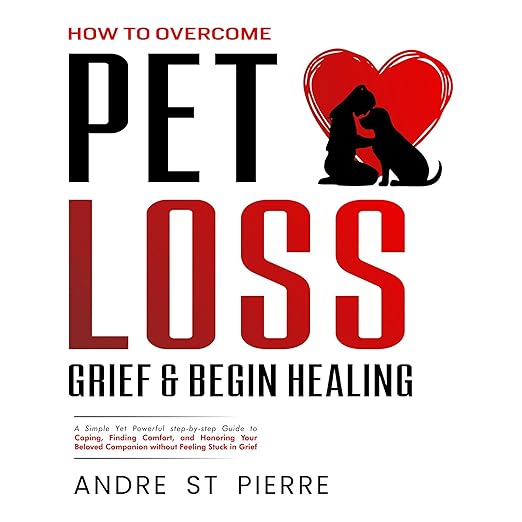
Pet loss is one of the more misunderstood forms of grief in this audiobook's territory. The loss is real, the bond was real, and the void it leaves is real, but the cultural permission to mourn fully is often withheld. Andre St Pierre's guide on pet loss and healing begins from the premise that this dismissal is wrong and that the grief of losing a companion animal deserves the same respect and care as any other form of bereavement. That foundational stance, your pet was family; your grief is legitimate, runs through every chapter and is the reason so many listeners rate this guide so highly.
Ashley Chavez's narration carries the material with appropriate warmth. She reads the more emotional passages without pushing sentiment, and handles the practical sections with clarity. For a guide that listeners will often come to in an acute phase of grief, the even-keeled quality of her delivery is an asset: she does not dramatize, which means the content can be absorbed rather than performed at. Chavez understands that her job here is to be a steady presence, not a compelling performer, and she makes that choice consistently and well.
Moving Forward Without Moving On From Your Pet
St Pierre structures the guide around a step-by-step approach, but the steps are more like waypoints than a strict program. The emphasis throughout is that grief has its own schedule and that there is no correct timeline for healing. This is a more sophisticated position than many grief guides take, which often imply that you should be following a sequence of stages and moving through them at a measurable pace. St Pierre is clear that your process is your own, and that moving forward does not mean leaving your pet behind. That distinction, between moving forward and moving on, is one of the guide's most useful contributions.
The book addresses several of the specific burdens that pet loss carries and that other grief resources rarely discuss: guilt, particularly the guilt around euthanasia decisions; the experience of other people failing to understand the depth of your loss; and the particular emptiness of routines that were built around a living animal. If you walked a dog every morning at seven and now that seven o'clock slot is simply hollow, St Pierre has language for what that hollowness is and where it comes from. That precision matters when you are in the middle of it. One reviewer described the book as containing lots of stories of loss and many ideas to help through the grieving process, which is an accurate summary of the balance it strikes.
Ashley Chavez's Steady Delivery Through Six Hours of Grief
The audiobook format works well for this material. Grief tends to interfere with the sustained concentration that reading on the page requires; listening allows you to receive the content without the effort of tracking text. At just over six hours, the guide is substantial enough to feel complete without being exhausting. Reviewers consistently note that it can be returned to: one described the step-by-step approach as offering comfort without being overwhelming, which suggests the material holds up through multiple listens rather than being consumed once and set aside.
St Pierre draws on both personal experience and a broadly compassionate framework that does not require any particular spiritual or religious belief. The guide is secular in its approach to healing, which makes it accessible to a wider range of listeners. At the same time, it does not dismiss the meaning-making that people naturally do after loss, including the stories they tell about their pets and the ways they choose to honor their memory. The opening quote, that the love of a pet lives on in the stories we tell and the lessons they taught us, sets a tone that is both emotionally honest and practically grounded.
Uniformly Positive, But Not Afraid of Hard Truths
The guide's reviews are uniformly positive, which may raise the question of whether it avoids difficult territory to stay affirming. In practice, it does engage with the harder aspects of pet loss, including the grief of watching an animal decline before death and the complicated feelings that can follow euthanasia. It acknowledges that some grief is not resolved by any number of steps, but it also does not leave listeners without direction. The balance between honesty and hope is one of the guide's genuine strengths.
Listeners who are looking for clinical depth, such as an examination of the neuroscience of human-animal bonding or the psychological literature on disenfranchised grief, will find this guide more experiential and practical than academic. It is not a research-driven text; it is a compassionate companion. That is what its high rating reflects, and it is worth knowing which kind of resource you are looking for before beginning. For listeners who want the experiential companion rather than the academic overview, it is very well matched to its purpose.
When People Keep Underestimating Your Grief
Anyone navigating the death of a pet will find something useful here. The guide is particularly valuable for listeners who feel that people around them are underestimating their grief, and who need both validation and practical frameworks for moving through it. It is also useful for family members or friends who want to better understand what someone they care about is experiencing after losing a companion animal. The compassionate, non-judgmental tone makes it accessible regardless of the type of pet lost or the circumstances of the death. Listeners who need a clinical or research-based resource rather than a compassionate guide should look elsewhere, but for the audience this audiobook is written for, it delivers with consistency and genuine care.
Questions Listeners Ask
Is this audiobook helpful for grieving the loss of any type of pet, not just dogs or cats?
Yes. St Pierre addresses the loss of companion animals broadly rather than species-specifically, and the emotional and practical frameworks apply regardless of what kind of pet you lost.
Is this the right audiobook for someone who is in acute grief right after losing their pet?
Several reviewers listened to it during acute grief and found it immediately helpful. The step-by-step structure and the audiobook format, which requires less active concentration than reading, make it accessible during even the most difficult early days.
Does the audiobook require any particular religious or spiritual beliefs to be useful?
No. The approach is secular and compassionate, drawing on emotional and practical frameworks that do not depend on any specific belief system. It honors the meaning-making that grief naturally produces without requiring a particular framework for it.