Quick Take
- Narration: Lily Barkley reads with calm authority, the right tone for training content that needs to feel reassuring rather than prescriptive.
- Themes: positive reinforcement, developmental timelines, fear-free and separation-anxiety-certified methods
- Mood: Calm and reassuring, structured and clear
- Verdict: For new puppy owners drowning in contradictory internet advice, this humane, behavior-science-backed guide offers a rare combination of realistic expectations and practical steps.
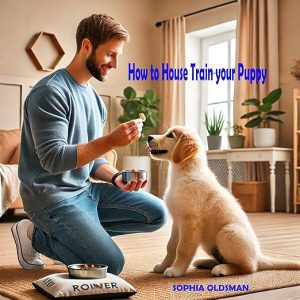
I did not have a puppy when I listened to this book. I had a friend who did, a four-month-old golden retriever named Biscuit who had successfully turned her apartment into a disaster zone, and I listened partly on her behalf and partly because the 15-hour runtime for a puppy housetraining book is unusual enough to make me curious about what could possibly fill it. The answer, it turns out, is quite a lot: not just how to train your dog, but why the methods work at a behavioral level and what to expect at each developmental stage.
Sophia Oldsman holds a Master of Science in behavior analysis and certifications in both fear-free training and separation anxiety treatment. That professional background is the first thing that differentiates this guide from the hundreds of general pet care books on Audible. She is not offering anecdotal tips from a lifetime of dog ownership. She is applying a scientific framework to a problem that most new puppy owners approach with a combination of desperation and contradictory Reddit advice.
Our Take on How to House Train Your Puppy
The book covers more ground than its title suggests. Yes, there are detailed sections on potty schedules, cue words, and how to reward behavior in ways that produce faster results. But Oldsman also addresses accident management with the kind of specificity that matters in practice: not just the standard instruction to clean it up and move on, but why certain cleaning products undermine training, how to prevent repeat accidents in the same spot, and what to do when you have done everything right and the puppy still has accidents. She addresses apartment-specific challenges, travel training, and nighttime management.
The developmental stage framework is particularly useful. One reviewer specifically highlights the realistic timeline approach: Oldsman tells you how long housetraining actually takes at each age, and those expectations are calibrated to actual behavior science rather than the aspirational timelines that training books sometimes promise. That honesty is rarer than it should be in this genre.
Why Listen to How to House Train Your Puppy
The 15-hour runtime will raise eyebrows for a subject that could be covered in a long pamphlet, and that is a fair question to ask. The length reflects Oldsman’s decision to explain the behavioral science behind each recommendation rather than simply issuing instructions. For a listener who wants to understand why a training approach works so they can adapt when the dog does not follow the script, that depth is genuinely valuable. For a listener who just wants a quick-start checklist, it may feel like more than they need.
Lily Barkley’s narration suits the material well. She reads with calm authority rather than the exaggerated warmth that sometimes afflicts pet care narration. The tone is closer to a competent teacher than an enthusiastic cheerleader, which is appropriate for content that asks listeners to be patient and consistent over weeks and months.
What to Watch For in How to House Train Your Puppy
The review base is very thin, with one detailed review at the time of this writing, which limits the picture of how different dogs and households have responded to Oldsman’s methods. Different breeds have genuinely different housetraining timelines and challenges, and while Oldsman does address individual variation, a book with a larger review base would give more confidence about how the advice generalizes across, say, a toy breed versus a working breed. The approach is well-grounded in behavior science, which suggests it should generalize, but listeners with breeds known for slower housetraining should factor that in.
This is a February 2025 release from an independent publisher. The production quality does not appear to be a concern based on available reviews, but the infrastructure of editing and quality control that major publishers provide is worth keeping in mind for independently produced titles.
Who Should Listen to How to House Train Your Puppy
This is best suited for first-time puppy owners who want to understand the reasoning behind the methods they use, not just follow instructions. The behavioral science foundation means the advice can be adapted intelligently when the specific recommendation does not match your dog or apartment layout. It is also particularly appropriate for apartment dwellers and urban dog owners, as the potty pad and travel sections are detailed and practical. Experienced dog owners who already have a system that works do not need this. Anyone who has been failed by punishment-based methods or vague online advice will find the humane, structured approach here a significant upgrade.
Frequently Asked Questions
Is this guide appropriate for all dog breeds including small or toy breeds?
The behavioral science principles apply broadly, and Oldsman addresses individual variation. However, toy breeds often have smaller bladders and longer housetraining timelines. The developmental stage framework should still be useful, but listeners should factor in breed-specific challenges.
Does the book cover apartment-specific housetraining challenges?
Yes. The potty pad section is specifically designed for apartment living and bad weather conditions, and the reviewer who highlighted this section is clearly an urban dog owner.
Why is the runtime 15 hours for a housetraining guide?
Oldsman explains the behavioral science behind each recommendation rather than simply issuing instructions. That depth allows you to adapt when the situation does not match the script exactly, but listeners who want a quick-start guide may find it more than they need.
What are Sophia Oldsman’s credentials?
She holds a Master of Science in behavior analysis and certifications in fear-free training and separation anxiety treatment, professional credentials that distinguish this from anecdote-based pet care books.