Quick Take
- Narration: Gal Beckerman reads his own work with the measured cadence of someone who has thought these ideas through for years, adding intellectual presence rather than performance.
- Themes: Moral courage, authoritarian drift, the private roots of public dissent
- Mood: Urgent and lucid, with moments of genuine historical electricity
- Verdict: A philosophically serious and practically urgent book that earns its timeliness without being consumed by it.
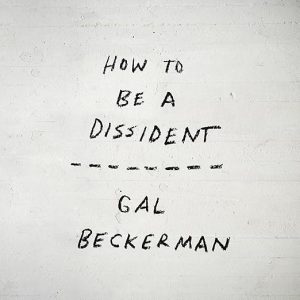
There is a certain kind of book that arrives exactly when it needs to, and How to Be a Dissident feels like that kind of book. I listened to the first three chapters on a morning walk when I had been thinking about nothing more elevated than what to have for breakfast, and by the end of the Socrates section I had stopped walking entirely and was just standing on the pavement taking notes into my phone. Gal Beckerman has written something that is simultaneously a work of intellectual history, a practical philosophy, and something close to a letter of encouragement.
Beckerman structures the book around ten qualities of dissidence, among them instructions to be pessimistic, be funny, be reckless, and be immortal. The framework sounds almost aphoristic at first, but it holds up under the intellectual weight he places on it. Each quality is illustrated through the lives of historical figures ranging from Socrates and Hannah Arendt to Ai Weiwei, and the movement from ancient philosophy to contemporary digital surveillance is handled with enough care that the connections feel earned rather than forced. At five hours, this is a short book that reads longer because of how much it makes you stop and think.
Our Take on How to Be a Dissident
What makes this book unusual in the current market for political urgency titles is Beckerman’s refusal to treat dissidence as either heroism or pathology. The figures he examines did not start as martyrs. They started as ordinary people who found a point at which they could not make the compromise the world was asking of them. The chapter drawing on Iris Murdoch’s philosophy of moral attention is the most philosophically rich section of the book, and the least likely to appear in the marketing copy. Murdoch’s argument that seeing clearly is itself a political act, that most of what enables authoritarian drift is the human capacity for self-deception and wilful simplification, runs quietly through everything else Beckerman writes here.
The book is explicit about its contemporary American context. Beckerman is writing in response to a specific political moment, and the framing around political lies and the erosion of shared factual ground is stated plainly rather than left to implication. Whether you read that as the book’s core strength or as a limitation of its range will depend on your perspective. For listeners who want a text that is simultaneously historically grounded and politically engaged, the framing is honest and the argument is coherent. For listeners who prefer their intellectual history without explicit contemporary application, the topicality will feel like an intrusion.
Why Listen to This Instead of Reading It
Beckerman narrates his own work, and that turns out to be the right choice. He does not perform the text in the way that some author-narrators do, leaning into emotional inflections to signal importance. Instead he reads with the quieter authority of someone presenting an argument he has tested against his own doubts. The effect is conversational without being casual. The five-hour runtime moves quickly: each chapter is crisp, and the through-line of the ten qualities gives the listening experience a clear structural rhythm. There is no section that feels padded or digressive. This is the kind of audiobook that rewards focused listening rather than background play.
What to Watch For in This Audiobook
No published reviews were available at the time of listening, given the April 2026 release date, so the calibration here is based on the text and Beckerman’s established track record. His previous book, The Quiet Before, examined the history of small communication technologies and social movements, and readers familiar with it will recognize the same quality of research and the same willingness to complicate a thesis rather than flatten it. The ten-qualities structure is the one element that carries some risk. A few of the chapters feel more fully realized than others, and the asymmetry becomes apparent by the midpoint. The sections on pessimism and humor are the strongest. A couple of the later qualities lean more on biographical summary than on original argument. That is a minor friction in a book that is otherwise remarkably concentrated.
Who Should Listen to This Audiobook
Readers drawn to works like Timothy Snyder’s On Tyranny or Masha Gessen’s writing on autocracy will find How to Be a Dissident a valuable intellectual companion. Those interested in the philosophical traditions behind civil disobedience, from Thoreau through Arendt and into the present, will appreciate Beckerman’s command of the intellectual history. Listeners looking for a practical guide to activism in the most literal sense may find the book operates at a more philosophical register than they want. It is less a handbook than a study of the interior conditions that make resistance possible.
Frequently Asked Questions
Is How to Be a Dissident primarily a political book about specific politicians, or does it have broader historical scope?
Both registers are genuinely present. Beckerman is explicit about the contemporary American political context, but the bulk of the book is intellectual history drawing on figures from Socrates to Ai Weiwei, with extended engagement with Hannah Arendt and Iris Murdoch. The contemporary framing serves as lens rather than as the primary subject.
Does Gal Beckerman’s self-narration work for a philosophical and historical text?
It works particularly well. Beckerman reads with the measured, conversational authority of someone presenting a carefully tested argument rather than performing enthusiasm. The effect is more lecture-with-a-thoughtful-friend than audiobook performance, which suits the material.
How does this book compare to Timothy Snyder’s On Tyranny in terms of approach?
Snyder’s book is a short list of precepts aimed at immediate action. Beckerman’s is more expansive and historically grounded, examining the interior psychology and philosophical traditions behind dissidence rather than providing tactical instructions. The two books complement each other well, but Beckerman is working at a slower, deeper register.
What does Beckerman mean by the instruction to be pessimistic as a quality of dissidence?
The pessimism Beckerman describes is not despair but a refusal of comfortable illusion. He draws on the tradition of thinkers who insisted on seeing power clearly rather than hoping it would self-correct, and argues that this clear-sightedness is a prerequisite for effective resistance. It is an argument against the passivity that optimism can sometimes enable.