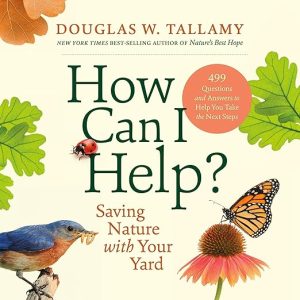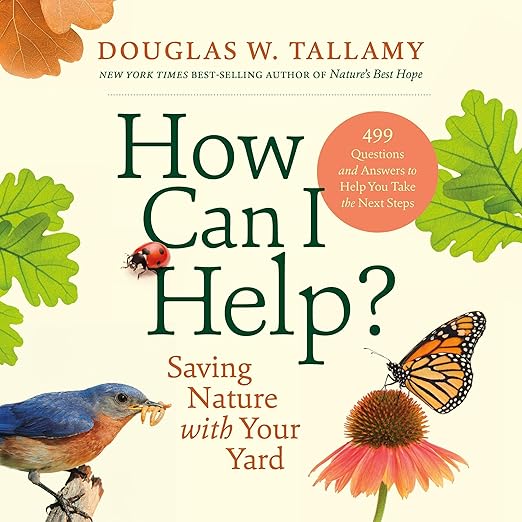
I have been a Douglas Tallamy reader since Bringing Nature Home, which I picked up on a recommendation from a friend who had just pulled out half her lawn and replaced it with native grasses. That book changed how I see every suburban yard I walk past. Nature's Best Hope deepened the argument. How Can I Help? is something different from both: it is the book that answers the questions the previous two generated, in the voice of someone who has spent years doing exactly that, answering them, at lectures and Q&A sessions across the country.
I listened to most of this one while gardening, which Tallamy would probably approve of. Adam Barr's narration was company rather than background noise, which is the highest compliment I can give a nonfiction reader.
Homeowners Control the Land Institutions Cannot Save
Tallamy, a professor of entomology and wildlife ecology at the University of Delaware and a New York Times bestselling author, has built his public profile around a single core claim: that the ecological crisis is not only addressable by individuals, but dependent on them. The large institutions, parks, wildlife reserves, conservation organizations, cannot preserve biodiversity alone because they do not control most of the land. Homeowners do.
How Can I Help? is structured around the questions Tallamy hears most often at his lectures: What do I do first? Does one oak tree really matter? What about my neighbor's invasive plants? Can I still have a lawn? He answers each with specificity and scientific grounding, but never in a way that closes the door on imperfect action. Reviewer Mike Barnett called him "the consummate educator," and the description is apt. Tallamy has a talent for making ecological complexity feel navigable.
Questions and Answers, Built for Pausing Mid-Listen
The Q&A format is genuinely well-suited to audio. These are the questions you would ask a knowledgeable friend over a long walk, and Tallamy answers them in that register, direct, responsive to the anxiety behind the question, free of the condescension that sometimes afflicts expert-to-layperson nonfiction. Reviewer Charles G. Kjos outlines the core food-web argument Tallamy makes about native plants and insect larvae and nestling birds, and it is one of those ecological chains that once you understand it, you cannot look at a yard the same way again.
At twelve hours and forty-two minutes, this is a substantive listen, but the format prevents it from feeling monolithic. Because it is organized around discrete questions, you can pause at natural stopping points and return without having lost a thread. For a book about conservation, that accessibility is not incidental, it is part of Tallamy's broader argument that doing something is better than doing nothing, and doing something should not feel overwhelming.
Eastern Native Plants, Assuming You Already Started
Readers outside the eastern United States may find some of Tallamy's plant recommendations less directly applicable than the book implies. Reviewer Dan Mock notes the book "talks Eastern Native Plants," which is accurate. Tallamy's ecological framework is universal, but his specific planting guidance is most detailed for the eastern North American context where most of his research has been conducted. Western US, Canadian, and international readers will need to adapt the principles rather than follow the specifics.
The book also assumes you are starting from some level of engagement with the subject. If you have never thought about the difference between native and non-native plants, the opening chapters will orient you, but listeners completely new to ecological thinking might benefit from beginning with Bringing Nature Home, where Tallamy builds the conceptual foundation more slowly.
Built for Readers Who Already Own a Yard
Already-engaged conservation gardeners who have read Tallamy before and want answers to their specific questions will find this most immediately useful. It also works well for anyone who feels the scale of the ecological crisis but has not yet found a personal entry point, Tallamy specializes in making individual action feel meaningful rather than futile. Landscape designers and horticulturalists will find the specific plant and insect content worth taking notes on. If you have no interest in your own outdoor space, the Q&A format may feel less relevant than a straight argument book.
Do you need to have read Tallamy's previous books to get value from How Can I Help?
Not strictly, but Bringing Nature Home provides the conceptual foundation that this book builds on. How Can I Help? assumes you are already asking the questions; the earlier books answer why you should be asking them at all.
Is the book useful for gardeners in the western United States or outside North America?
The ecological framework is broadly applicable, but Tallamy's specific plant recommendations are most detailed for eastern North America. Western US and international readers will need to identify local analogues for the native species he discusses.
How does Adam Barr's narration handle the scientific terminology?
Well. Barr reads the entomological and botanical vocabulary with confidence and does not stumble over Latin plant names in a way that would break the flow. His tone keeps the material conversational rather than academic.
What is the single most important change Tallamy recommends for homeowners?
Reducing lawn and introducing native plants, particularly oak trees, which support more caterpillar species than any other North American tree and thereby anchor the food web that supports bird populations. The book covers many interventions, but the oak and the lawn reduction are his most consistent entry-point recommendations.