Quick Take
- Narration: Jeremy Carlisle Parker brings warmth to both leads, though his rendering of Yael’s nonbinary identity feels more comfortable in casual scenes than in emotionally heightened ones.
- Themes: inherited expectations versus chosen paths, cozy magic, slow-burn found romance
- Mood: Greenhouse-warm and deliberately low-stakes, with occasional flickers of genuine tension
- Verdict: A pleasant adult debut for two established YA voices that succeeds on coziness more than it does on dramatic stakes.
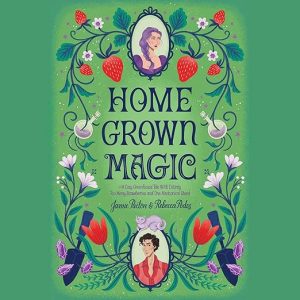
I picked up Homegrown Magic on a rainy Saturday morning when I wanted something that would not demand too much of me. Jamie Pacton and Becca Podos both have strong YA track records, and their co-written adult debut had been described to me as a queer romantic fantasy with greenhouse magic and found family. That combination is more or less a guarantee of a particular kind of reading atmosphere: warm, lush, and invested in small pleasures. I made tea, found a comfortable spot, and let the book do what it promised it would.
Yael Clauneck is on the run from a predetermined life, fleeing their own graduation party on a mechanical horse, uncertain of what they want except that it is not whatever their powerful family has arranged. Margot Greenwillow is running her family’s struggling magic remedies business from a greenhouse, fighting to keep what remains of the Greenwillow legacy alive. When Yael rides back into Margot’s life, both of them have to reckon with what they have been avoiding, in themselves and in each other.
Our Take on Homegrown Magic
The strongest reviewers of this book identified the same thing that I found most genuinely satisfying: the fact that queerness is not the crisis. In Pacton and Podos’s world, Yael’s nonbinary identity and Margot’s attraction to women are simply features of who they are, not sources of conflict with the world around them. One reviewer described this as refreshing, and it is, especially in a genre where LGBTQ+ romance so often carries the weight of social friction as plot engine. Homegrown Magic refuses that weight and spends its energy on other kinds of conflict instead: the Clauneck family’s political machinations, the Greenwillow business’s precarity, the specific texture of two people circling each other when they have history and unspoken feelings.
The magic itself is botanical and domestic in the most appealing sense. Margot grows remedies, tends her greenhouse, understands plants the way some people understand people. The garden magic is tactile and specific, grounded in the sensory details that cozy fantasy does best. The mechanical horse that appears in the opening pages is a delight and functions as a kind of wry declaration of the book’s tonal register: this is a world where the magical is whimsical without being weightless.
Why Listen to Homegrown Magic
Jeremy Carlisle Parker is a competent narrator who serves the material without defining it. His Margot is warmer than his Yael, and that slight asymmetry actually works within the characters’ dynamics: Margot is the more settled of the two, Yael more volatile and uncertain, and the narration reflects that distinction in register if not always in technique. At ten hours and fifty-six minutes, the book is a comfortable single-weekend listen.
Pacton and Podos write with the ease of co-authors who genuinely like each other’s instincts. The prose is not reaching for anything beyond its ambition, which is a feature rather than a limitation. This is a book that knows what it wants to be.
What to Watch For in Homegrown Magic
The 3.7 average rating tells you something the five-star reviews obscure: this book divides readers along a predictable fault line. Those who came for plot will find the conflict mechanics undercooked. The Clauneck family antagonism is more implied than dramatized, the resolution comes more easily than the setup suggests it should, and the romantic tension resolves with a swiftness that leaves some readers wanting more friction. One reviewer who found it sweet but just okay noted that the predictability was the primary issue, and that the prose became over-descriptive in stretches.
This is a legitimate critique. The book’s strength is atmosphere and character warmth, not structural tension. If you need your romantasy to generate genuine suspense, Homegrown Magic will feel too soft. If you want a few hours in a greenhouse with two appealing people figuring out they love each other, it delivers that very well.
Who Should Listen to Homegrown Magic
Ideal for readers who love the cozy end of romantasy, think Legends and Lattes more than The Bridge Kingdom, and who want queer representation that does not carry the weight of social struggle. Also suitable for established Pacton or Podos readers curious about their adult transition. Skip it if you need your fantasy conflicts to feel genuinely dangerous or your romantic tension to sustain across the full runtime. Come to it when you need the listening equivalent of a warm afternoon in a plant-filled room.
Frequently Asked Questions
Is Homegrown Magic suitable for readers who are not regular fantasy listeners?
Yes. The magic system is light and intuitive, never requiring prior genre knowledge. The story is structured more like a contemporary romance than a high fantasy, and the world-building is conveyed through atmosphere rather than exposition.
How does Jeremy Carlisle Parker handle Yael’s nonbinary identity in the narration?
He uses they/them pronouns consistently and naturally throughout. The narration is more assured in casual, lighter scenes than in emotionally intense moments, but the representation itself is handled respectfully across the full listen.
Is this a standalone or part of a series?
It is listed as a standalone. The ending resolves the central romantic and family conflict completely, with no apparent setup for a sequel.
How does the co-authorship between Pacton and Podos affect the voice consistency?
The prose feels unified throughout, which suggests a smooth collaboration. There are no jarring tonal shifts between chapters that would signal different authorial voices. The book reads as a single coherent voice rather than a visible seam.