The Short Version
- Read by: Virtual Voice narration keeps the delivery functional rather than warm, the prose is calm enough that the synthetic quality rarely intrudes, but a human narrator would have served the meditative tone better.
- At its heart: Sustainable self-sufficiency, mindful DIY, urban accessibility to land-based living
- Vibe: Calm, purposeful, and encouraging without being preachy
- Short version: A genuinely accessible entry point for listeners who want to build sustainable habits without needing acres of land or prior agricultural experience.
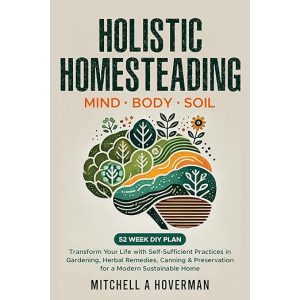
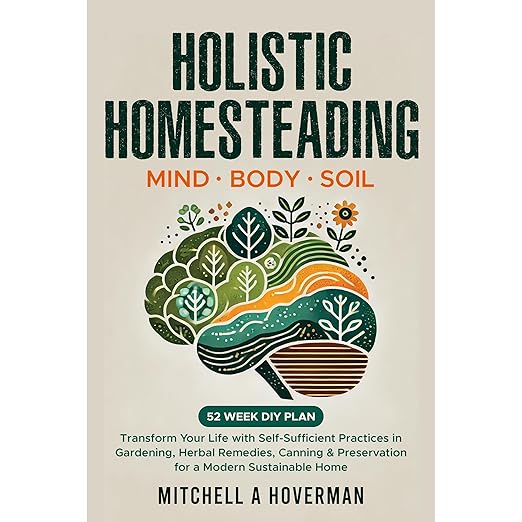
Holistic homesteading has become one of those phrases that can mean almost anything, from a Montana ranch with chickens to a Brooklyn apartment with a windowsill herb garden. Mitchell Hoverman's audiobook, Holistic Homesteading | Mind Body Soil, earns points immediately for refusing to limit itself to one version of the lifestyle. The book's central premise, 52 weekend-friendly projects that work whether you live in the city or the countryside, is not a marketing hedge but a genuine design principle. The projects are scaled for different levels of space, time, and experience, which makes this a more useful listening experience than the average sustainability guide, many of which quietly assume you have outdoor access and flexibility that most working adults do not actually have.
The structure is the book's clearest strength. Organized around a 52-week framework, each project is designed to be completed over a single weekend, which removes the most common obstacle to this kind of lifestyle writing: the assumption that sustainable living requires a complete restructuring of your life before you can begin. Hoverman breaks that assumption deliberately and builds an alternative, one small weekend project at a time. One reviewer described finishing a session and feeling instantly tranquil. Another praised how much information is packed into the book without it ever becoming overwhelming. Those are not small accomplishments for a practical guide operating in a space that often produces anxiety rather than calm.
Yoga Beside Composting, One Integrated Practice
What distinguishes this title from the crowded field of sustainable-living guides is the explicit integration of wellness with land practice. Most homesteading books treat the body as a tool for the work rather than a subject of the work itself. Hoverman includes composting and container gardening alongside yoga and breathwork, treating them as parts of the same practice rather than separate tracks. The Mind Body Soil framing is not just a subtitle but the book's actual organizing logic, and that integration is either the thing that makes this audiobook essential for you or the thing that tells you it is not your title. Knowing which listener you are before you start will save you the frustration of expecting a pure gardening manual.
The coverage is broad across its four-hour, forty-six-minute runtime. Container gardening, vertical growing, herbal remedies, fermentation, wellness product crafting, skill-sharing with neighbors, and seasonal meal preservation all appear. The audiobook does not go deep on any single subject. This is a survey and an introduction, not a technical manual, and listeners who need step-by-step instruction on building a specific composting system will need supplementary reading. What the audiobook provides is context, motivation, and a structured entry point, and it provides those things with clarity and without condescension.
Synthetic Narration That Suits a Windowsill Practice
The audio format works reasonably well for this material because Hoverman's prose is calm and conversational. The book reads the way a knowledgeable friend might explain a project over tea rather than the way a technical document reads, and that tone translates to listening without friction. The Virtual Voice narration is synthetic but not distracting in this context. The delivery is steady and clear, and the meditative pacing of the content means the narrator does not need to carry emotional range to do the job effectively. The material carries its own atmosphere.
The urban accessibility angle is worth emphasizing for listeners who may assume this genre is not for them. Hoverman specifically addresses people who only have a windowsill to work with, and that is not a throwaway reassurance. Several of the 52 projects are genuinely executable in small urban spaces, with alternatives built in for different levels of outdoor access. For city-based listeners who feel locked out of sustainability culture because they do not own land or a backyard, this audiobook is one of the more honest and practical invitations in the genre.
Diagrams Worth Downloading, an Entry-Level Ceiling
The companion PDF download is worth seeking out alongside the audio. Some of the projects involve visual references, garden layouts, planting diagrams, and preservation instructions that work better on a page than in spoken form. Hoverman's prose descriptions are clear, but the PDF adds a practical dimension the audio alone cannot fully replace. If you are listening without access to the PDF, plan to take notes or revisit certain sections with paper nearby when you intend to act on what you hear.
The book's breadth is also its limitation. Listeners who already have a year or more of homesteading experience will find most of this familiar ground. This is emphatically an entry-level guide, and it does not pretend otherwise. If you are looking for advanced technique or deep expertise on any single topic, this audiobook is the beginning of a reading list rather than its conclusion.
Busy People, Blocked by Scale or Complexity
This audiobook is best suited for listeners who are curious about sustainable living but have felt blocked by the scale or complexity of most resources in the space. The 52-project structure is specifically designed for busy people with limited outdoor space, and it executes on that design with genuine care. Experienced homesteaders will find it basic. Anyone burned out on wellness content that demands wholesale lifestyle transformation before offering anything actionable will find Hoverman's incremental approach genuinely refreshing. If you want to start composting or growing herbs this weekend and need a guide that treats that as a legitimate and worthy place to begin, this is the audiobook for that moment.
Does the Holistic Homesteading audiobook work without the companion PDF?
It works, but the PDF adds meaningful value for the more hands-on projects. Some visual references, including planting layouts and preservation guides, are easier to follow on a page. The audio stands alone, but listening with access to the PDF is the fuller experience.
Is this audiobook suitable for people with no homesteading experience at all?
Yes, it is explicitly designed as an entry point. The 52 projects are structured to be achievable by complete beginners, and Hoverman explains concepts without assuming prior knowledge of gardening, fermentation, or herbal practice.
How does Virtual Voice narration affect the listening experience for this kind of practical audiobook?
The synthetic delivery is noticeable but not disruptive for this material. Hoverman's prose is calm and conversational, which suits the format reasonably well. The narration lacks human warmth, but for a project-based practical guide rather than a memoir, it functions adequately.