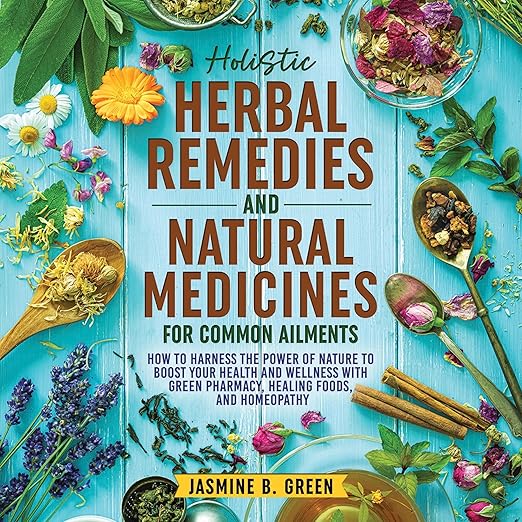
Quick Take
- Narration: Liz May Brice delivers a clean, instructional performance that keeps the practical sections usable without making the material feel clinical.
- Themes: Herbal medicine traditions, DIY remedies, plant-based wellness philosophy
- Mood: Practical and unhurried, like an afternoon in a well-stocked herb garden
- Verdict: For listeners who want a thorough, beginner-to-intermediate herbal medicine reference with enough historical and scientific context to use it confidently, this delivers more depth than its genre neighbors.
I came to this one skeptically. The herbal remedies shelf, whether in a physical bookstore or an audiobook catalog, is densely populated with titles that promise ancient wisdom and deliver thin lists of plants and their supposed benefits. I have read enough of them to have developed reflexive doubt. Jasmine B. Green’s book earned a different response, partly because of how it sequences information and partly because of what Liz May Brice does with the narration.
Published in July 2024 as part of The Complete Herbalism Series, this has accumulated 232 ratings at a 4.8 average, which is remarkably consistent for a nonfiction wellness title where the audience typically includes both fervent believers and skeptical newcomers. The breadth of that positive reception is itself informative. Green has written something that manages to satisfy readers who come with prior knowledge and readers who arrive knowing nothing.
Our Take on Holistic Herbal Remedies and Natural Medicines for Common Ailments
The architecture of the book is its main asset. Green organizes content around ailments rather than around ingredients, which is a decision that sounds simple but has significant practical consequences. If you are dealing with an inflammation issue, you want to know which plants address inflammation, not to scan through an alphabetical list of herbs hoping to find relevant entries. Organizing by ailment means the book functions as a reference as well as a cover-to-cover listen. One reviewer specifically praised this organization, noting it made information easy to find when needed rather than when being studied.
The content covers the science behind herbal medicine, foraging ethics, ten essential kitchen herbs and spices, and techniques for making teas, decoctions, and tinctures from over forty herbs. The step-by-step remedy guides are detailed enough to be actionable. Multiple reviewers reported having made infusions and tinctures directly from the instructions, which is the kind of verification that matters for a practical guide. Books that produce inert readers are not doing their job. This one produces listeners who go into their kitchens and try things.
Why Listen to Holistic Herbal Remedies and Natural Medicines for Common Ailments
Liz May Brice’s narration is well-suited to instructional content. She reads with authority and clarity, moving through lists and steps without the rushed quality that makes some practical audiobooks unusable for active learning. The pacing allows you to absorb what is being described before the next element arrives. For content that is partly reference material, this matters considerably. Brice does not perform the wellness philosophy sections with excessive enthusiasm, which keeps the credibility intact. She reads Green’s material as competent instruction, not as promotional copy.
The book integrates historical context with current scientific perspective. Green describes the evolution of herbal medicine practices, connects traditional uses to modern research where that research exists, and is appropriately careful about where the evidence is strong and where it is more suggestive. One reviewer, a self-described longtime interest in herbal medicine, noted that knowing the source of a plant matters more than buying it in tablet form because you lose context along with the supply chain. That observation reflects something Green argues throughout: the relationship with the plant itself is part of what gives herbal medicine its particular value.
What to Watch For in Holistic Herbal Remedies and Natural Medicines for Common Ailments
The title and marketing copy carry some language that belongs to the wellness category’s worst habits. Phrases about discovering the incredible power of herbs and unlocking the full potential of nature’s medicine cabinet are the kind of framing that makes skeptical readers distrust the content before it has a chance to make its case. The actual content is more careful and measured than the promotional surrounding it. Listeners who push past the cover copy will find a more nuanced book than the marketing suggests.
The companion PDF mentioned in the synopsis, which includes charts pairing herbs with complementary ingredients, is formatted for the Audible library rather than for print. Listeners who prefer physical reference material may find this limitation relevant, particularly for a book whose practical value depends partly on having charts accessible during actual remedy preparation.
Who Should Listen to Holistic Herbal Remedies and Natural Medicines for Common Ailments
The ideal listener is someone who has been vaguely interested in herbal medicine but has never had a clear entry point: enough science to feel credible, enough tradition to feel grounded, and enough practical instruction to actually do something with the information. Green provides all three, and at just under six hours the book does not outstay its welcome.
Readers who are already well-practiced herbalists may find the early foundational sections too basic, but the remedy sections and the 30-day superfood challenge component offer enough new material to remain useful. This is a book that travels well with multiple levels of prior knowledge, which is a genuine and uncommon achievement in the wellness nonfiction category.
Frequently Asked Questions
Does the book require listeners to already know about herbal medicine, or is it accessible for complete beginners?
It is explicitly designed for beginners and spends considerable time establishing foundational knowledge before moving to techniques. Multiple reviewers with no prior background described the explanations as encouraging rather than overwhelming. More experienced readers will find value in the remedy sections and practical guides.
Can you actually use the remedy instructions from the audiobook, or do you need the companion PDF?
The step-by-step instructions are delivered in the audio. The companion PDF provides charts and visual aids that supplement rather than replace the audio content. Many listeners reported successfully making infusions and tinctures directly from the narrated instructions without needing to pause for the PDF.
How does Liz May Brice’s narration handle the technical content like tincture preparation steps?
Brice paces the instructional sections clearly and without rushing, which makes the practical content followable during a single listen. The delivery is authoritative without being overly clinical, which suits a book that balances science with traditional practice.
Is the book’s wellness philosophy scientifically grounded or primarily tradition-based?
Green works to integrate both. She references the science behind herbal constituents where that research exists and is reasonably careful about distinguishing established evidence from traditional use. The approach is more evidence-aware than most wellness titles, though it is ultimately written from a pro-herbal-medicine perspective rather than from neutral scientific ground.