Quick Take
- Read by: Helen Keeley brings a warm, measured presence to Sue Johnson's clinical material, appropriate for content that asks listeners to be vulnerable about their own relationships.
- At its heart: Emotional attachment in adult relationships, the seven conversations that reshape relational bonds, Emotionally Focused Therapy
- Vibe: Intimate and reflective, designed to be processed slowly rather than consumed quickly
- Short version: One of the most substantively useful relationship audiobooks in the self-help space, though the audio format limits the interactive exercises that are central to how the book is meant to work.
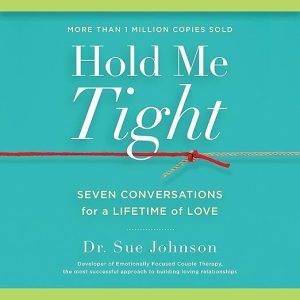
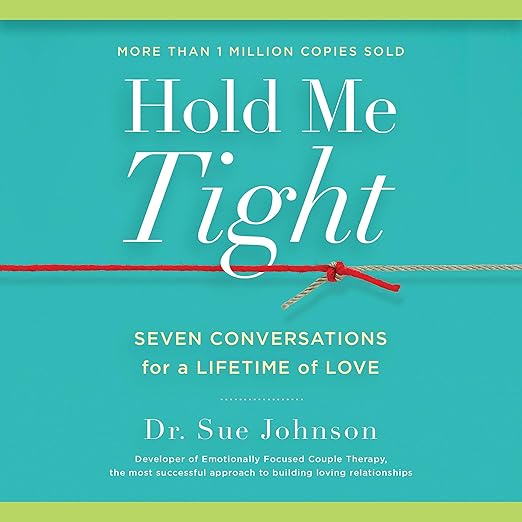
I'm going to tell you something about Hold Me Tight that the effusive one-line reviews don't: it's a book you probably need to read twice, or at least to sit with across multiple sessions rather than consuming it straight through. The first time, you absorb the framework. The second time, or during a deliberate re-listen, you actually apply it to the specific dynamics of your own relationship. That distinction matters enormously for whether you get value from this audiobook or finish it feeling vaguely moved but essentially unchanged.
Sue Johnson developed Emotionally Focused Therapy, and this book is her accessible distillation of that therapeutic approach for a general audience. The central argument is deceptively simple: adults are emotionally attached to and dependent on their partners in ways that closely parallel how children depend on parents for safety and soothing. When that attachment is threatened, the behaviors that result, criticism, withdrawal, escalation, shutdown, make perfect sense as distress signals even when they look like failures of communication or character. Understanding that framework changes what you do when the signals appear.
Seven Conversations and Keeley's Warm Narration
The book organizes its therapeutic work around seven conversations, each targeting a specific dimension of relationship vulnerability. Recognizing the Demon Dialogues, the destructive patterns that activated attachment fears produce. Finding the Raw Spots, the specific sensitivities that trigger disproportionate reactions. Revisiting a Rocky Moment with new emotional intelligence. Forgiving Injuries that have calcified into resentment. Keeping Love Alive when daily routine has eroded intentionality. These aren't vague affirmations. They're specific processes with identifiable steps and exercises attached.
Helen Keeley's narration handles this material with the right tone. She's warm without being saccharine, and she manages the case study material, real couples from Johnson's practice, with a sensitivity that doesn't feel performed. The cases are the book's most valuable content, because they show what the seven conversations actually look like in the room rather than on the page. Keeley gives them the gravity they deserve.
Pausing for Exercises Meant to Be Shared
Here's the honest structural challenge: Hold Me Tight is built around exercises that couples are meant to do together. The book repeatedly invites you to pause and work through prompts with your partner. That invitation is significantly harder to honor in audio format. You can pause a recording, but the fluidity of a shared listening experience where both partners can engage with an exercise simultaneously requires more deliberate setup than most audio consumption allows.
One reviewer who listened to the CD version specifically noted feeling like the narration felt "read by a computer" and poorly edited, and while that review predates the current Keeley narration, it flags a real concern: relationship self-help listened to alone, or even together but passively, extracts less value than the book's design intends. If you're serious about applying Johnson's framework, supplementing the audio with a print copy for the exercises is worth considering.
Why You're Saying It, Not What to Say
The strongest review in the dataset came from a reader who described himself as a highly educated man whose wife had surprised him with a divorce after twenty years. He called Hold Me Tight the best relationship book he'd ever read, one that would "forever change his understanding of relationships for the better." That's a significant claim from someone with graduate degrees and experience with self-help literature. What it points to is that Johnson's approach operates at a different level than the communication-skills books that dominate the relationship section.
Most relationship books teach you what to say differently. Johnson is asking why you're saying what you're saying at all, and specifically what emotional need is driving the behavior that's creating distance. That's a fundamentally different entry point, and it's one that explains why readers describe the book as a shift in understanding rather than a set of new techniques to practice.
For Couples Willing to Do the Work
This audiobook is most valuable for couples who are willing to engage with it actively rather than passively, meaning both partners are curious about their relational patterns and open to the vulnerability the seven conversations require. It's also useful for individuals who want to understand their own attachment patterns better, even if they work through the exercises on their own.
If you want a quicker read or prefer concrete, step-by-step communication scripts over a theoretical framework, this may not be your best starting point. But for listeners who are genuinely committed to understanding what's happening underneath their relationship conflicts rather than just managing the surface, Johnson's approach is among the most rigorous and compassionate available in the self-help space.
Frequently Asked Questions
Can individuals benefit from Hold Me Tight, or is it specifically designed for couples to read together?
The book is designed primarily for couples and the exercises work best when both partners engage. However, individuals reading alone gain a strong understanding of their own attachment patterns and the dynamics that commonly arise in close relationships. The solo benefit is real, though incomplete compared to working through it with a partner.
How does Helen Keeley's narration compare to the earlier CD version that one reviewer found poorly edited?
The earlier review referenced a different production. Keeley's narration for the current edition is described by reviewers as warm and well-suited to the material. The clinical content benefits from her measured, empathetic delivery rather than anything that sounds automated.
What is Emotionally Focused Therapy, and do I need to understand it before listening to this book?
No prior knowledge of EFT is needed. Johnson explains the framework clearly for a general audience. EFT is a structured therapeutic approach centered on adult attachment theory that Johnson developed and has studied extensively in couples therapy settings. The book is her accessible translation of that clinical work.
Does Hold Me Tight work as an audiobook for the exercises, or should I get the print version?
The explanatory content and case studies work well in audio. The exercises are harder to engage with actively in audio format. If you want to fully use the seven conversations as Johnson intends, having the print book alongside the audio, or using the audio for context and the print for the exercises, is the more effective approach.