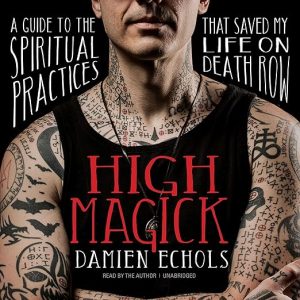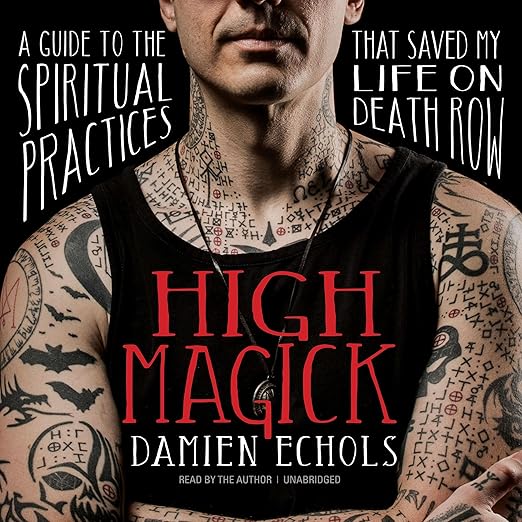
Craft writing demands attention to the sentence before the argument, and Damien Echols opens this audiobook with exactly that kind of care. His voice is quiet, almost conversational, and that restraint is the whole point. He is not performing mysticism. He is describing, with the matter-of-factness of someone who has literally bet his life on these practices, what High Magick is and why it works. I put on the first track during a long afternoon walk and found myself still listening two hours later, sitting on a park bench because I did not want to stop moving and risk losing the thread.
Echols spent eighteen years on death row for a crime he did not commit. He was exonerated in 2011. Between sentencing and release, he taught himself a Western esoteric tradition that he credits not just with sustaining him psychologically, but with literally manifesting his freedom. That backstory is not separate from this audiobook. It is the entire credibility structure of what follows. A magick guide written by someone comfortable in their suburban study would be a very different book. This one carries weight.
The Review
Echols is direct about what he is presenting: an accessible, practical entry into ceremonial magick rooted in the Western tradition, comparable in scope and seriousness to Eastern practices like Buddhism or yoga. He clears away the pop-culture noise immediately, distinguishing between stage illusions, Hollywood witchcraft, and the genuine tradition he is teaching. The Four-Fold Breath, the Middle Pillar, the Qabalistic Cross, and the Lesser Rituals of the Pentagram are laid out in sequence, building on each other with genuine pedagogical logic.
What is unusual here is the synthesis of autobiography and instruction. He does not just explain what these practices are. He explains why he needed them, how he learned them under conditions of extreme isolation, and what they did for him when he had nothing else. That makes the instruction feel grounded rather than abstract. One reviewer, a scientist who described initial skepticism, called it the most curious book in her collection and found the approach to energetic magick surprisingly rigorous. A ten-year practitioner of witchcraft who encountered this said it really changed her perspective and led her toward ceremonial magick as a distinct path.
The self-narration here is essential, not incidental. Echols has a measured, unhurried delivery that suits the material precisely. He is not trying to excite you into belief. He is sharing something he has lived inside for decades, and that lived-in quality comes through in every pause. Eddie Vedder, who contributes the foreword, brings a different energy, warmer and more overtly emotional, which serves as a useful frame before Echols settles into his own register.
For listeners new to Western esotericism, the explanations are genuinely accessible. Echols distinguishes between the Hermetic tradition he is drawing on and the more theatrical presentations of magick in popular culture. He positions it alongside Taoism, Buddhism, and yogic practice without claiming superiority, which suggests intellectual honesty rather than salesmanship. The practical exercises are described in enough detail to actually attempt, which separates this from books that gesture toward practice without actually delivering it.
What to Watch For in High Magick
Listeners unfamiliar with Kabbalah, Hermeticism, or ceremonial traditions may find some of the technical vocabulary requires patience. The Qabalistic Cross and the Lesser Banishing Ritual of the Pentagram have specific symbolic structures that Echols explains, but the framework assumes a certain willingness to engage with it on its own terms. If you approach this as a skeptic looking to debunk, you will not get much from it. If you approach it as a learner curious about what this tradition actually contains, the entry point is generous.
The runtime of just over five hours is relatively short for the scope of material covered. Echols covers a lot of ground efficiently, which means some topics, working with thoughtforms and angelic beings in particular, receive less development than the foundational techniques. For listeners who want to go further, this book functions well as a structured starting point rather than a comprehensive reference. A reviewer with existing practice confirmed that even after years in witchcraft, the ceremonial frame here changed her perspective significantly, suggesting the book has genuine value even for intermediate practitioners.
One dimension of the book that reviewers consistently highlight is the foreword by Eddie Vedder, which is not a celebrity endorsement in the usual sense. Vedder and Echols have a documented relationship rooted in the campaign to free the West Memphis Three, and Vedder's presence here is contextual rather than promotional. He situates Echols within the world of people who watched someone survive the unsurvivable, and that frame, before Echols' own voice takes over, primes the listener for material that asks more than most spiritual books ask. You are not being sold a practice. You are being shown what one particular person did with it under conditions of genuine extremity.
Who It's For
Listeners drawn to esoteric spirituality, ceremonial practice, or the Western occult tradition will find this one of the more honest and practically structured introductions available. Echols' personal history gives the material authority that most introductory guides lack. The self-narration is a significant asset, and the foreword by Eddie Vedder adds a cultural anchor for listeners who know Echols through the West Memphis Three case rather than his spiritual writing.
Listeners who need scientific validation for spiritual claims, or who are looking for a neutral survey of occult traditions, will find this book asks too much buy-in upfront. It is a practitioner's guide, not a comparative religion text. Those already deep in ceremonial magick may find the beginner-level framing too introductory, though the autobiographical context adds value even for experienced practitioners. If you are even slightly curious about what this tradition actually involves, Echols is a credible and articulate guide into it.
Frequently Asked Questions
Is the self-narration by Damien Echols an asset in this audiobook?
Yes, significantly so. His delivery is quiet, measured, and free of performative mysticism. Hearing him describe practices he developed under years of solitary confinement on death row gives the instruction a weight that an outside narrator could not replicate.
How does this audiobook differ from other introductions to occult or Wiccan practice?
Echols positions High Magick specifically within the Western Hermetic tradition, distinct from Wicca, neo-paganism, or pop-culture witchcraft. The focus is on ceremonial techniques rooted in Kabbalah and Hermeticism, comparable in his framing to Eastern contemplative traditions rather than folk magic.
Is this audiobook suitable for someone who approaches spirituality from a scientific background?
At least one reviewer with a scientific background found it surprisingly approachable, but Echols does not make empirical claims or seek external validation. He presents the practice on its own terms. Skeptics looking for peer-reviewed support will not find it here, but intellectually open listeners may find the framework more coherent than expected.