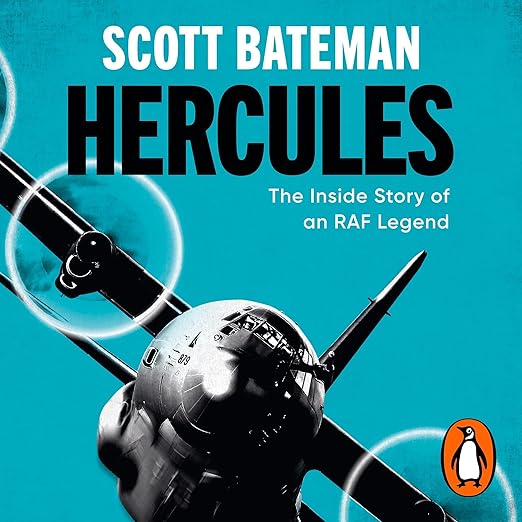
I came to Hercules knowing essentially nothing about the C-130 beyond the silhouette, and I finished it 12 hours later with a genuine appreciation for why people who have flown this aircraft develop the loyalty that borders on devotion. Scott Bateman, former RAF captain with five thousand hours across multiple crew positions on this platform, knows what most aviation writers don't: that the interesting story is not in the glamorous machinery but in the unglamorous work, the freight runs, the emergency extractions, the aerial refueling over places that don't appear on civilian maps, the precise drops into zones where precision is the difference between supply reaching its destination and killing the people you're trying to supply.
The C-130 Hercules has been in RAF service from 1967 to its retirement in 2023, which gives this book an extraordinarily long historical frame. Bateman covers that arc with 47 Squadron as his primary lens, moving from the aircraft's arrival in British service through deployments in Antarctica, Iraq, Afghanistan, and the Falklands. The range of theater is part of what makes the book so engaging. This is not one conflict story. It is a portrait of an aircraft that has been everywhere the RAF has operated, in every role from troop carrier to spyplane, and has consistently performed beyond what its unglamorous reputation would suggest.
The book's central argument, implicit rather than stated, is that the Hercules has been systematically undervalued because it looks wrong. It is large and lumbering and functional in ways that don't photograph dramatically. The fast jets get the attention. The Hercules gets the job done. Bateman makes this case through accumulated mission detail rather than polemic, which is the right approach. By the time he has taken you through enough drops and extractions and Antarctic operations, the argument has made itself. You understand why a former operator with five thousand hours describes this book as loving and respectful, because the love for the aircraft comes through in every specific technical detail Bateman includes.
The detail density is real and worth naming for potential listeners. This is not a war memoir that uses aviation as color. It is an aviation book that uses military context to explain what the aircraft actually did. Listeners who want character-driven narrative with operational hardware as backdrop may find the technical specificity more than they bargained for. Listeners who came looking for exactly this level of insider knowledge, the kind of detail that only comes from someone who was qualified across three of the five crew positions, will find it enormously satisfying.
Why It Works in Audio
Covering the C-130's RAF service from 1967 to retirement in 2023 within a single audiobook requires structural choices. Bateman organizes the material around deployments and capabilities rather than strict chronology, which is the right decision for a story this long. A straight timeline would feel like a service record. The thematic approach, moving between Antarctic operations and the Falklands, between aerial refueling and combat gunship roles, creates a portrait of versatility that is the book's real subject.
Angus King's narration handles the shifting contexts well. The technical aviation terminology comes across as natural rather than read, which requires a narrator with enough familiarity with the material to not stumble over specialized language. The endorsement from John Nichol, himself a well-known RAF author and broadcaster, is meaningful calibration: Nichol describes it as an engaging and revealing read, which is the assessment of someone who knows this territory from the inside and has no need to be generous for politeness.
What to Watch For in Hercules
Bateman is writing about his own aircraft and his own service, which means this is necessarily a book of institutional affection. The RAF and 47 Squadron are treated with pride that is documented rather than invented, but it is pride nonetheless. Readers looking for critical assessment of RAF decision-making or institutional failures will not find it here in any sustained form. This is an operator's love letter to an aircraft and a service, and it wears that identity plainly. That's not a weakness, but it is a fact about what kind of book this is.
The international reach of the reviews, with readers in the United States, Italy, and Australia all responding with equal enthusiasm, suggests the C-130 story travels well beyond RAF audiences. The aircraft has served in air forces around the world, and operators from other national contexts clearly find Bateman's account of British operations recognizable and valuable.
Who Will Get the Most From It
The 4.7 rating across 265 reviews is consistent with what the book actually delivers. Aviation enthusiasts who want insider knowledge rather than glamorized storytelling will get it here. Military history readers interested in the operational texture of RAF deployments from the 1960s through the 2020s will find the historical scope valuable. Casual listeners who want a general-interest story about an underappreciated aircraft will find the technical detail demanding but rewarding if they commit to it. Those who want character-driven memoir or dramatic personal narrative should look elsewhere. Bateman's voice is authoritative and engaged but not confessional, and the book is richer for that restraint.
Common Questions
Do I need a background in military aviation to follow the technical content in Hercules?
Background helps but isn't required. Bateman explains operational concepts as they arise rather than assuming specialist knowledge. A reviewer with 5000 hours on the platform found it respectful and accurate; general readers report finding it accessible and entertaining.
How does Angus King's narration handle the aviation terminology?
Comfortably and without stumbling, which matters considerably in a book with this level of technical specificity. The terminology comes across as natural rather than phonetically read, suggesting King has genuine familiarity with the material.
Is the book organized chronologically across the Hercules's 1967-2023 RAF service, or thematically?
Primarily thematically, organized around deployments and capabilities rather than strict timeline. This allows Bateman to build a portrait of the aircraft's versatility, covering roles from aerial tanker to spyplane to precision bomber, without the narrative feeling like a service log.
The book focuses on RAF 47 Squadron. Will it be interesting to readers from outside the UK military context?
Yes, as the international reviews indicate. The C-130 has served worldwide, and Bateman's insider account of British operations resonates with operators and enthusiasts from other national contexts. The core story is about the aircraft and what it can do, which transcends national service.