Quick Take
- Narration: Claire Rushbrook navigates Linda’s chaotic interiority with commendable control, though the material’s repetition works against sustained engagement.
- Themes: Identity deception and faked death, second chances and self-destruction, trust after betrayal
- Mood: Frenetic and occasionally exhausting
- Verdict: A premise strong enough to pull you through the first half, though the pacing issues reviewers flag are real. Approach it as a puzzle rather than a character study.
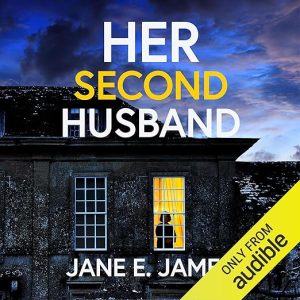
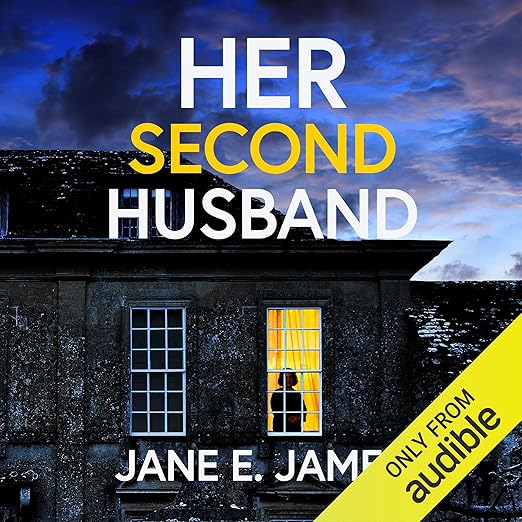
The hook for Her Second Husband is genuinely excellent. Linda signs up for a dating app for the over-50s, hoping for connection after a cascade of personal disasters, and receives a message from a man who is unmistakably her second husband Marcus, except Marcus drowned off the coast of Corfu eight months ago. I was cooking dinner when that setup landed on me through my earbuds, and I nearly burned the pan. Jane E. James knows exactly what she’s doing with that premise.
Linda herself is a complicated figure to spend ten hours with. She begins the story as someone who, in her own words, had it all, a devoted husband, two daughters, a gorgeous home, and threw it away chasing an impossible dream. The novel opens with her penniless and alone in a shabby rental flat, which is already a more morally complex starting point than domestic thrillers often allow. She is neither entirely sympathetic nor particularly easy to root for, and different reviewers have landed in very different places on her. One compared her to a screwball comedy character; another found her genuinely interesting despite their reservations. That split is probably the most honest signal of what to expect.
Our Take on Her Second Husband
The strength of this novel is its tonal unpredictability. James operates somewhere between psychological thriller and darkly comic domestic chaos, and the combination occasionally produces something genuinely surprising. The mystery at the center, who is Marcus, what was he hiding, and what does he want now, unfolds across a genuinely inventive set of reveals. When the synopsis promises that Marcus had been keeping very dark secrets, that is not hyperbole. The backstory is more layered than you anticipate from the setup, and one reviewer who described the twists as so numerous they were hard to keep up with is not exaggerating.
The novel also makes an interesting structural choice: the person most positioned to help Linda is her first husband, the man she abandoned for Marcus. That dynamic, estranged ex as unlikely ally against a dead husband who may not be dead, gives the story a kind of screwball thriller energy that is, at its best moments, genuinely propulsive. Claire Rushbrook understands this tonal register and delivers a narration that keeps the pace sharp when the material supports it.
Why Listen to Her Second Husband
If you’re drawn to domestic thrillers that unsettle their premises rather than confirming them, this delivers. The premise is so strong that it earns significant goodwill, and the mid-section twists are legitimately surprising. Readers who enjoy watching protagonists they cannot quite trust navigate situations they partially created will find Linda more interesting than frustrating. The mature-age protagonist is also a welcome departure from the genre’s typical demographic range, and James gives her intelligence and agency even at her most chaotic. At nearly eleven hours, the book gives this material room to breathe, sometimes too much room, which is exactly the problem reviewers identify, but the investment in the world and its characters is not superficial.
What to Watch For in Her Second Husband
The reviews are honest about where this stumbles. The repetition problem flagged by multiple reviewers is real, certain emotional beats and revelatory moments are returned to in ways that diffuse rather than deepen their impact. The ending has also divided listeners: some found it satisfying and unexpected, while others felt it arrived too quickly given the complexity of what preceded it. This is also explicitly adult content with strong language and sexual material, as the publisher advisory flags from the outset. Listeners who need their thriller endings to feel proportionate to the setup’s intelligence should calibrate expectations accordingly, the resolution is less intricate than the mystery it concludes.
Who Should Listen to Her Second Husband
Best suited for thriller fans who prioritize concept and incident over character consistency, and who don’t mind a protagonist who generates her own problems as readily as she solves them. If you loved the premise of works like Behind Closed Doors but wanted something with more darkly comic energy, this fits that gap. Listeners seeking a tightly plotted, emotionally satisfying arc should temper expectations, the journey is more rewarding than the destination.
Frequently Asked Questions
How graphic is the content in Her Second Husband, and should listeners be prepared for anything specific?
The book carries a mature content advisory from Audible Studios covering strong language, mature themes, and sexual content. It is more of an adult domestic thriller than an explicitly graphic novel, but listeners sensitive to those elements should heed the warning. The tone is closer to darkly comic than viscerally intense.
Is Claire Rushbrook the right narrator for Linda’s particular kind of unreliable chaos?
Rushbrook handles the material with more control than the plot’s frenetic energy might suggest it needs. She finds Linda’s genuine distress underneath the sometimes-absurd situations and keeps the performance from tipping into farce. That said, the narration cannot repair the pacing issues in the second half, which are structural rather than performative.
Does Her Second Husband work as a standalone, or does it set up future books by Jane E. James?
It functions entirely as a standalone. The central mystery is resolved, the backstory of Marcus’s secrets is explained, and Linda’s situation reaches a definitive endpoint. There is no obvious series setup, though James has written other books that fans of this one may enjoy.
Why do reviewers compare Linda to a comedic character rather than a typical thriller protagonist?
Linda has a talent for compounding her own misfortunes in ways that occasionally tip from thriller territory into something closer to farce. Her impulsive decisions and chaotic responses to increasingly surreal situations create an energy that some readers find frustrating and others find oddly charming. James seems aware of this and leans into it as a stylistic choice rather than a defect.