- Narrator: Abbey Wedgeworth self-narrates with the transparency and warmth of someone living these challenges alongside her readers; it is conversational and entirely authentic.
- Subjects: Mom guilt, grace-based parenting, identity and faith in motherhood
- Tone: Honest, encouraging, and quietly urgent
- Bottom line: Wedgeworth writes for mothers in the specific gap between good intentions and reactive behavior, and her biblical framing is direct, load-bearing, and never decorative.
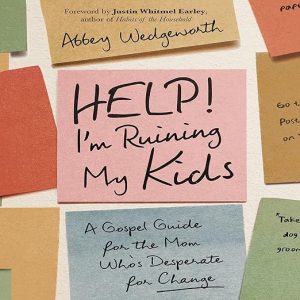
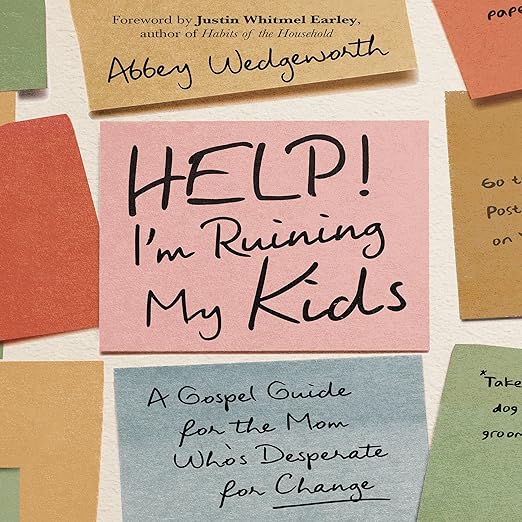
Abbey Wedgeworth's Help! I'm Ruining My Kids audiobook begins from a premise that lands with immediate recognition for a specific reader: you are trying hard, genuinely trying, and you still lose it at your kids in ways that stay with you long after the day ends. The parenting shelf is crowded with books that promise to close this gap between intention and action, and most of them offer secular behavioral frameworks or attachment theory. Wedgeworth's approach is distinctly different. She writes as a Christian mother with a biblical framework, and she is upfront that God's grace rather than better scheduling or improved mindset is her proposed solution to the problem of maternal insufficiency. Listeners who share her faith framework will find this one of the more practically grounded books in the Christian parenting space. Those outside it should understand what they are getting before they commit to the audiobook's six hours and thirty-nine minutes.
Wedgeworth's central argument is that the anxiety driving most parenting struggles, the constant fear that you are doing permanent damage, is itself the problem as much as any behavioral pattern. She is not dismissing the reality of parenting mistakes or the importance of changing reactive habits. She is arguing that the shame spiral triggered by those mistakes compounds the original problem, and that grace, specifically the theological concept of grace as freedom from deserved condemnation, is the mechanism that breaks the spiral. This is not vague spiritual encouragement. She works through what this means practically: how to identify personal limits, how to develop realistic expectations for motherhood, and how to construct what she calls a comprehensive action plan for change that is grounded in who a mother actually is rather than an idealized version she cannot sustain.
The book is organized around the specific emotional states that derail most mothers: self-condemnation, reactive anger, emotional unavailability, and the particular exhaustion of checking out at the end of a long day when nothing is left to give. Each section diagnoses the pattern and then offers both the theological framing and a practical tool for beginning to change it. The audiobook companion PDF, which contains charts and a discussion guide, extends the practical dimension for listeners who want to work through the material in a group or structured reflection setting. Wedgeworth notes this companion is available as a download, and for listeners who want to translate the content into behavioral change rather than simply absorb it, seeking it out alongside the audio is worthwhile.
Abbey Wedgeworth's Own Voice Sounds Like Conversation
Wedgeworth narrates her own book, and the self-narration is a significant asset for this particular material. She speaks with the directness of someone who has been honest about her own failures in this area rather than writing from a position of having resolved everything. A real transparency comes through in her delivery that a professional narrator could not replicate: the slight weight in her voice when she describes patterns she recognizes in herself, the warmth when she shifts from diagnosis to encouragement. At six hours and thirty-nine minutes, the audiobook moves with the rhythm of a personal conversation rather than a lecture, which makes it absorb naturally during daily tasks that are themselves part of the parenting life she is addressing.
The structure also supports repeat listening in a way that benefits busy parents. Mothers who return to a particular chapter, say the section on fighting mom guilt or the one on parenting as a work in progress, will find that the material holds up as a standalone reference rather than requiring the full context of preceding chapters. That structural quality matters for an audience whose listening time is, by definition, fragmented and unpredictable. Wedgeworth writes as if she knows this, keeping each section substantial enough to stand alone while threading a coherent argument through the whole across the entire audiobook.
Grace and the Holy Spirit Are Load-Bearing
The book's biblical framework is not incidental to its argument. It is load-bearing throughout every section. Readers who are not operating within a Christian worldview will find the proposed solutions grounded in theological claims, including the transformative work of the Holy Spirit and the sufficiency of God's grace, that cannot be separated from the practical advice without losing its internal logic. This is not a book that uses faith language as decoration while offering secular psychology underneath. It is genuinely and consistently integrated. Readers who prefer spirituality as supplementary rather than foundational to practical guidance should approach with that understanding clearly established.
The absence of listener reviews makes it harder to gauge the full range of reader responses, particularly whether her self-narration lands as effectively for listeners outside the Christian parenting space it's aimed at, but the book's combination of practical structure and personal transparency suggests it will work best for mothers who are already in a space of wanting to change and feel the weight of their own patterns. It is not designed as a crisis intervention resource. It is a sustainable reorientation for parents who are functioning but struggling with the gap between who they want to be and how they actually show up on the hardest days of family life.
Christian Mothers Navigating Maternal Guilt and Exhaustion
Christian mothers navigating maternal guilt, reactive parenting habits, and the exhaustion of never feeling like enough will find this audiobook speaks directly to their experience with specificity and compassion that most parenting books do not reach. Small group Bible study participants looking for a structured parenting discussion resource will benefit from the companion PDF. Mothers outside a Christian faith framework may find some of the practical tools useful but should know the spiritual underpinning is not separable from the advice as presented. The audiobook is primarily addressed to mothers, though the principles are not categorically exclusive to that experience. For its specific audience, it is carefully crafted, practically grounded, and genuinely encouraging without being saccharine or falsely reassuring about the difficulty of the work involved.
Does the Help! I'm Ruining My Kids audiobook require access to the companion PDF to get full value?
No, the core content stands on its own. The companion PDF contains charts and a discussion guide for group use or structured personal reflection, but the audiobook delivers the complete teaching without it.
Is this audiobook specifically for Christian mothers, or is the faith content light enough for a broader audience?
The biblical framework is central and load-bearing, not decorative. The solutions are grounded in theological concepts of grace and the Holy Spirit's transforming work. Mothers outside a Christian faith context will find some practical tools useful but will miss the logic that unifies them.
How does Abbey Wedgeworth's self-narration affect the Help! I'm Ruining My Kids audiobook listening experience?
It significantly enhances it. Her transparency about her own parenting struggles comes through in the delivery in ways a professional narrator could not replicate. The conversational tone makes the six-plus hours feel like a direct personal exchange.
Is this audiobook useful for mothers who feel their parenting is in crisis, or is it for ongoing guilt management?
It is primarily designed for the ongoing gap between good intentions and reactive patterns, what Wedgeworth frames as parenting as a work in progress. It is not a crisis resource but a sustainable reorientation for parents who want to change how they show up over time.