The Short Version
- Voice: Bob the Drag Queen narrates with the authority of a live performer; character differentiation is sharp and the original songs performed in the audio make this the definitive version of the work.
- Big ideas: Freedom and the cost of visibility, Black liberation across eras, hip-hop as collective memory
- Atmosphere: Inventive and emotionally layered, carrying serious weight at a compressed pace
- Worth it?: A landmark debut that uses the audiobook format as an integral design element rather than a delivery mechanism, with original songs that make listening the primary way to experience this novel.
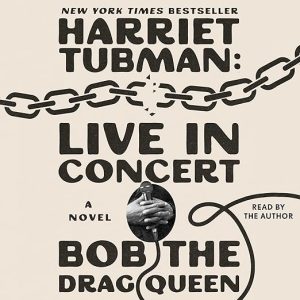
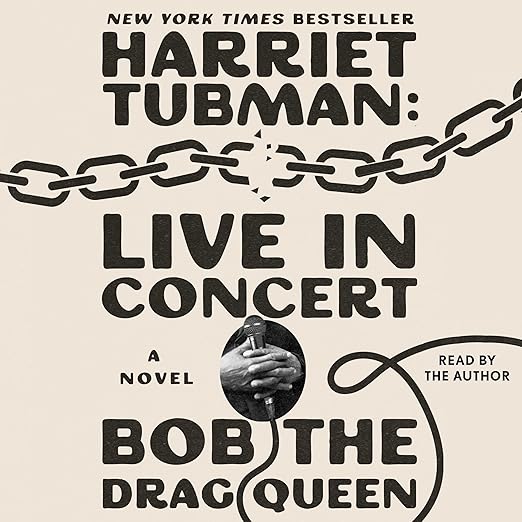
Harriet Tubman, in Bob the Drag Queen's debut novel, is a hip-hop artist who has returned from history with four of the people she led to freedom and a very particular agenda. She needs a songwriter. She finds Darnell, a once-successful hip-hop producer who was publicly outed on a BET talk show and has been rebuilding his career and his sense of self ever since. That collision, one of American history's most iconic freedom figures alongside a contemporary queer Black man negotiating his own exposure, is the central engine of this audiobook, narrated by the author and running four hours and seventeen minutes. The New York Times bestseller designation, a starred Publishers Weekly review, and Whoopi Goldberg's public endorsement situate this as a significant cultural document before the story even begins.
The Verdict, Briefly
Bob the Drag Queen, born Caldwell Tidicue, is primarily known as a performer and television personality: RuPaul's Drag Race winner, host of HBO's We're Here, and a Traitors contestant. This is a debut novel, and New York magazine's description captures its ambitions precisely: "an emotional exploration of religion, external and internalized homophobia, the pressure of progressing Black liberation, and the importance of revisiting the past." That is a lot to carry in four hours, and the novel manages most of it by making Harriet Tubman and Darnell's collaboration the space where all those pressures meet and negotiate.
The device of returning historical figures to the present, imagined in an age of miracles where such things are possible without further explanation, is not new to fiction. What is new is applying it to a hip-hop album creation as the central activity. Tubman and her four companions want to tell their story on their own terms, and they have chosen a form rooted in Black American oral tradition, vernacular innovation, and the kind of collective memory-keeping that enslaved people developed under conditions of enforced illiteracy. The choice of hip-hop is not incidental decoration. It is the argument. The form carries the content in a way that no other genre would replicate.
The novel's treatment of internalized homophobia, specifically Darnell's, is the thread that keeps the story from being purely a historical reimagining. His experience of being outed, the public nature of it, the way it restructured both his professional and personal life, is handled with enough specificity to function as something more than a plot mechanism. The conversations between Darnell and Tubman about freedom, visibility, and the cost of authenticity are where the novel does its most pointed contemporary work. Tubman's position as someone who risked everything for the liberty of others and Darnell's position as someone still negotiating the terms of his own liberation create a dialogue that the novel earns through character rather than through thematic declaration.
Why Listen to Harriet Tubman: Live in Concert
The audiobook includes two original songs written for this format and performed by Bob the Drag Queen. This is not a case of audio being used to deliver a book. The audio format is part of the book's design. A reader of the print edition encounters lyrics on the page. A listener hears them performed by the person who conceived them, in a voice that knows exactly what emotional register they are trying to reach. Publishers Weekly's "knockout" assessment is in part an assessment of this integration.
Bob the Drag Queen narrates with the confidence of a natural performer who understands audience in the way live entertainers do. There is no stiffness of a first-time narrator working through character differentiation. Tubman's voice is authoritative and specific. Darnell gets a different register entirely. The four companions from Tubman's freedom missions each have distinct presences that hold up over four hours and seventeen minutes, which is not automatic even for experienced narrators and is particularly notable for a debut in this format. Reviewer Ernescia Mitchell described Tubman's legacy as framed here in a way that "felt both personal and powerful," which tracks with the experience the novel delivers.
What Gives Us Pause
The compressed timeline of the collaboration, Tubman and Darnell have a short window to create the album before she returns to wherever returned heroes go, creates useful narrative pressure without generating the artificial urgency that deadline-driven plots sometimes produce. The conversations are the events. The album being built is both literal and metaphorical. Listeners who prefer plot-heavy pacing may find the novel's interior focus demanding, but those who read fiction for the quality of the thinking characters do rather than the quantity of things that happen to them will find the four hours well-spent.
The hip-hop album-creation sequences reward listeners who bring familiarity with hip-hop as a cultural form, but the novel does not require that familiarity to follow. Coyle has structured the collaboration so that the music-industry mechanics are explained as they unfold, and what Tubman and Darnell are building together is as much emotional and historical as it is musical. The ending positions their work as something the country will receive, which gives the novel an outward momentum despite its predominantly interior texture.
Should You Listen to Harriet Tubman: Live in Concert?
This audiobook is essential for listeners interested in LGBTQ+ fiction that centers Black queer experience with historical depth. The novel's original songs make the audio version the primary version of this work in ways that are not true of most literary fiction adaptations. Readers who prefer their historical reimaginings to be more conventionally plot-driven will find the novel's conversational, interior focus demanding. Listeners familiar with hip-hop as a cultural form will find additional layers in the album-creation sequences. This is a debut doing more simultaneously than most debut novels attempt, and the ambition is largely matched by the execution. The audiobook format is not a convenience here; it is the complete version of what Bob the Drag Queen made.