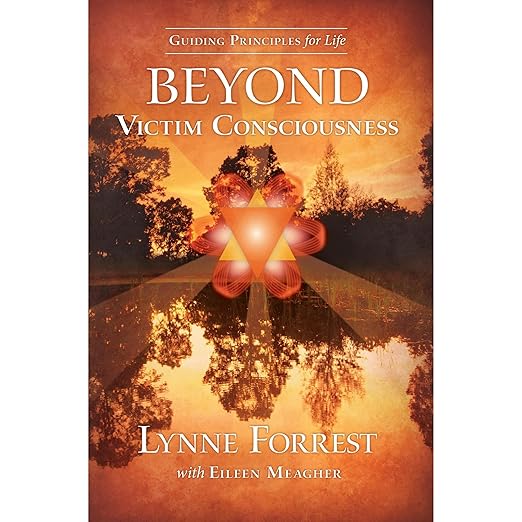
I have read enough personal development audiobooks to recognize the ones that are genuinely trying to give you something and the ones that are dressing up a simple observation in enough scaffolding to justify a book-length format. Lynne Forrest's Guiding Principles for Life Beyond Victim Consciousness belongs clearly to the first category. This is a therapist's work, grounded in decades of clinical practice, and even where it repeats itself, the repetition feels like pedagogy rather than padding. I came to it skeptical of the phrase victim consciousness itself, which in contemporary discourse has been weaponized in directions its practitioners would find troubling, and I was surprised by how carefully and specifically Forrest defines what she actually means. That definitional precision is one of the things the book does best, and it is what keeps the program from sliding into the vague language that mars so much writing in this space.
Her definition matters and deserves to be quoted properly: victim consciousness is the habit of thinking something outside of us is responsible for our happiness or unhappiness. That is not a political statement. It is a psychological one, and it is recognizably rooted in the same tradition as cognitive behavioral therapy, Eckhart Tolle's concept of reactive identification with circumstance, and the work of Byron Katie, whom Forrest explicitly credits. The book's argument is that most of us cycle through three roles in our daily lives, victim, perpetrator, and rescuer, what psychologist Stephen Karpman called the Drama Triangle, and that this cycling maintains a state of suffering regardless of which role we occupy at any given moment. The antidote Forrest proposes is what she calls observer consciousness: a state of awareness that steps outside the Triangle and allows circumstances to be seen as opportunities rather than impositions. This sounds simple stated plainly, but Forrest is interested in the gap between understanding the concept and actually applying it under pressure.
Karpman's Triangle Made Immediately Practical
Forrest is transparent about her sources, which I appreciate. She draws on Karpman's Drama Triangle, Byron Katie's framework, Tolle's presence-based approach, and metaphysical principles she describes as universal. The synthesis is coherent and her adaptation adds genuine value beyond a simple pastiche of existing ideas. Where the book contributes most distinctly is in the specific tools she offers for recognizing when you have entered victim consciousness and the guiding principles she articulates for navigating out of it. One reviewer described the core concept as arriving with clarifying force, noting that never before had it been so clear as to the actual mind-bending confluences involved in social and psychological patterns that keep people stuck. That is a fair response to what Forrest does well, which is name and structure experiences that many people have had but could not articulate in a way that allowed them to change the pattern. The Karpman Drama Triangle is not a new concept, but Forrest makes it immediately practical rather than abstractly theoretical.
Intentional Repetition That Reinforces the Vocabulary
A reviewer offered a balanced critique of the book's repetitiveness, calling it very important while noting it needs more examples and applications. Another reader, writing from a therapeutic context, found the repetition reinforcing rather than frustrating. Both responses are valid, and where you land probably depends on how you engage with this kind of material. Forrest repeats the core vocabulary, observer consciousness, victim consciousness, the Triangle, with intentional frequency. By the end of the five-hour runtime, the terms have become habitual enough to use as actual diagnostic tools in real situations. Whether that pedagogical choice is a feature or a limitation depends entirely on what you are listening for. I found myself settling into it rather than resisting it, particularly after the halfway mark. One reviewer who described the book as life-changing noted a specific outcome: a sense of freedom from being shackled to old patterns and behaviors. That kind of report is worth taking seriously even if you approach it with appropriate skepticism.
Adequate but Impersonal AI Narration
The Virtual Voice narration is adequate but impersonal. This is a book that has clearly grown from one woman's life practice and professional experience, and there are moments where you sense the personal behind the methodology, a quality that a human narrator, or ideally the author herself, would have activated more fully. The neutral AI delivery keeps the material at a slight emotional distance during passages that are asking you to do difficult personal work. That said, the instructional structure of the book means that clarity matters more than warmth, and on clarity, the narration delivers. The free audiobook availability via Audible is a real asset here: this is exactly the kind of self-development text you might want to try before deciding whether its framework belongs in your long-term toolkit. Readers who resonate with the Karpman Drama Triangle, Byron Katie's work, or Tolle's teachings will find this a useful and well-organized companion. At just over five hours, the commitment is manageable and the program is specific enough to be immediately applicable rather than waiting for a reread to make sense of it.
Byron Katie Fans Will Find a Useful Addition
The book addresses addiction, problematic relationships, and spiritual malaise through the lens of the Forrest framework, but it does not replace clinical treatment for serious psychological conditions. Her disclaimer is important: this is personal development work, not diagnosis or cure. Within those limits, the program she offers is thoughtful and internally consistent. Readers who have felt genuinely helped by Byron Katie's The Work or by similar frameworks built around consciousness and self-observation will find this a useful addition to that practice. The repeated emphasis on observer consciousness as an active state rather than passive detachment is the book's most useful distinction from simpler mindfulness frameworks, and it is worth sitting with even if some of the surrounding language feels familiar from other sources in the genre.
At a Glance
- Narration: Virtual Voice narration keeps the delivery neutral and consistent, which suits the instructional material but removes the warmth that a practitioner-author's own voice might have added.
- Themes: Observer consciousness versus victim consciousness, the Karpman Drama Triangle, self-responsibility and inner healing
- Mood: Steady and earnestly practical, with moments of genuine psychological depth
- Verdict: A coherent and well-organized personal development framework drawn from established psychological models, though the repetition that reinforces its core lessons may test some listeners' patience.
Common Questions
Is Guiding Principles for Life Beyond Victim Consciousness related to the Karpman Drama Triangle?
Yes, explicitly. Forrest's framework is built directly on Karpman's Drama Triangle, which identifies the roles of victim, persecutor, and rescuer as the three positions people cycle through in dysfunctional relationship dynamics. She credits Karpman alongside Byron Katie and Eckhart Tolle as foundational sources.
Is this book appropriate for someone dealing with serious trauma or mental health conditions?
Forrest is clear that her work is not intended to diagnose or treat illness or disease. The book is personal development work drawn from her clinical experience, not a clinical treatment program. Listeners dealing with serious trauma should engage with it alongside, rather than instead of, professional therapeutic support.
How does the Virtual Voice narration affect the experience of a self-development book?
The narration is clear and consistent, which matters for instructional material. However, the impersonal delivery reduces the warmth that a practitioner's own voice would bring to passages about vulnerability and self-responsibility. If you find yourself wanting a more personal quality in your self-development audio, that is a fair reason to try the print version instead.
Is Guiding Principles for Life Beyond Victim Consciousness available as a free audiobook?
Yes, this audiobook is available as a free audiobook on Audible. At just over five hours, it is a manageable free listen for anyone curious about the observer consciousness framework or the Karpman Drama Triangle and how to apply them practically.