In Brief
- Narration: Virtual Voice handles the narrative clearly but cannot differentiate between the novel's tonal registers, flattening the emotional contrast between its darkest and most tender passages.
- Themes: wartime love and separation, Nazi occupation and civilian survival, belonging across distance
- Mood: Intimate and difficult, with hope running underneath like a current
- Verdict: A carefully researched debut historical fiction that earns its wartime romance through genuine attention to the occupation's human cost, though Virtual Voice narration undersells the emotional depth.
Mariella's Rome in 1944 is not the Rome of vacation postcards. Luigina Vecchione's debut novel opens in a city under German occupation, where a fifteen-year-old girl has been denied an education, is responsible for her younger siblings, and carries the weight of an earlier childhood tragedy alongside the daily terror of starvation and arbitrary brutality. Greetings from Asbury Park, narrated in this audiobook by Virtual Voice, is a wartime love story, but its opening registers as something rawer and harder than that description suggests. Vecchione does not romanticize Mariella's circumstances before the romance enters, and that restraint earns everything that follows.
Then Jack arrives, a kind American soldier with an endearing smile and a willingness to see Mariella as she actually is rather than as someone to be managed or pitied. They have one day together before he ships off to Japan. From that single day, the novel builds its central question: can love survive the interruption of a world at war, the gap of different languages, and the years of uncertainty that follow? Reviewer Rosie Vee describes feeling "that I was sitting at the dinner table with the DeRosa family," which captures the domestic intimacy Vecchione sustains even in the most historically turbulent passages of the novel.
Vecchione's strongest quality as a novelist is her handling of the wartime home front, specifically the granular detail of what occupation looks like from inside an ordinary Roman family's daily life. The food shortages, the enforced curfews, the sound of troops moving through the neighborhood, the constant recalibration of risk that civilian life under military occupation requires: these details are rendered with the specificity of someone who has done deep archival research or has access to family testimony. Reviewer Jack Tran describes the protagonist as "plucky, conflicted, compassionate, and sensitive," and that compression is accurate. Mariella is not simply brave; she is genuinely afraid and genuinely determined, which is a harder combination to write convincingly than either quality alone.
The love story itself operates at a different register from the wartime setting, which is both appropriate and occasionally creates tonal unevenness. Jack is drawn with less psychological specificity than Mariella, a structural limitation of the novel's first-person-adjacent narration, which grants us Mariella's interiority but views Jack largely through her perception of him. For the audiobook's purposes, this means the emotional investment is weighted toward Mariella's experience rather than toward the partnership equally. Whether that imbalance registers as a flaw depends on whether you are reading primarily as Mariella's story or as a two-person love story.
What Luigina Vecchione Gets Right
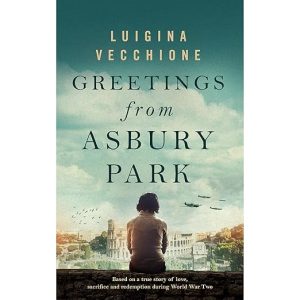
The Virtual Voice narration handles the narrative clearly enough, though it lacks the expressive range to fully differentiate between the novel's tonal registers. The grim occupation chapters, the warmth of Mariella's family scenes, and the tender passages between Mariella and Jack all arrive in roughly similar vocal temperatures, which is a limitation for a story that depends significantly on emotional contrast between its different modes. Reviewer Jack Tran warns "don't let the cover fool you," noting the novel is more serious and nuanced than its packaging suggests, and Virtual Voice narration similarly undersells the emotional depth of what Vecchione has written.
At nine hours and nine minutes, the audiobook gives the full novel its due runtime. The pacing in the wartime Rome sections is strong, and the novel's later movement, which follows Mariella and Jack across continents and years as they try to find each other again, sustains tension even as the stakes shift from survival to longing. Reviewer Rosie Vee calls it "a labor of love for the author," and the care in the historical research and family detail makes that description feel earned rather than promotional.
Where Luigina Vecchione Loses Some Ground
The novel's most powerful passages are those dealing with how war reshapes families rather than the romantic plotline specifically. Vecchione's treatment of how Mariella's siblings experience the occupation through different eyes, how the family's hunger and fear and love exist simultaneously in the same cramped wartime apartment, gives the book its emotional core. The title's reference to Asbury Park, a New Jersey shore town that would have been known to Jack and becomes a symbol for the American life Mariella imagines, operates as a sustained motif of possibility that earns its weight by the novel's final section.
The language barrier between Mariella and Jack is handled with more imagination than such barriers often receive in wartime romance. Rather than resolving it through magical shared understanding, Vecchione writes them as genuinely dependent on gesture, presence, and the emotional communication that does not require translation. The constraint becomes a feature of the relationship rather than an obstacle the novel has to write around, which is a mark of real craft in the handling of what could easily have been a convenient shortcut.
Who Should Pick Up Greetings from Asbury Park
This audiobook suits listeners who enjoy wartime historical fiction with a strong female protagonist and a romantic plotline that does not minimize the historical context it is embedded in. Fans of Pam Jenoff, Kristin Hannah, or Anthony Doerr will recognize the register: domestic and intimate, with large historical forces operating as the permanent backdrop rather than as spectacle. Listeners who want a lighter or primarily romantic experience should know that the occupation chapters are genuinely difficult and are not softened for easy listening. For those who want the emotional weight of wartime fiction alongside the hope that love provides across it, Vecchione's debut delivers both. Virtual Voice narration remains the practical limitation to weigh against the story's genuine strengths as a piece of historical fiction.
A Few Questions About Greetings from Asbury Park
Is the Greetings from Asbury Park audiobook primarily a romance or primarily a wartime historical novel?
Both elements are central, but Vecchione grounds the story firmly in the wartime occupation of Rome before the romance enters. The historical context is rendered with real specificity, and the love story is built on that foundation. Listeners who want primarily a light romance should know the novel opens in genuinely difficult wartime conditions.
How does the Virtual Voice narration affect the Greetings from Asbury Park audiobook experience?
Virtual Voice handles the narrative clearly but lacks the expressive range to distinguish between the novel's different emotional registers. The grim occupation chapters, the family warmth, and the tender romantic passages all arrive in similar vocal temperatures, which undersells the story's emotional contrasts.