Quick Take
- Narration: Virtual Voice narration delivers over 700 jokes in flat, synthetic delivery, the timing that makes dad jokes land in person is entirely absent, making this a reference tool rather than a listening experience.
- Themes: Intergenerational humor, clean comedy, family-friendly wordplay
- Mood: Cheerful in intent, mechanical in execution
- Verdict: The joke content itself gets genuinely warm responses from real families, but the Virtual Voice narration strips away the only thing that makes a joke book work in audio format: a human sense of timing.
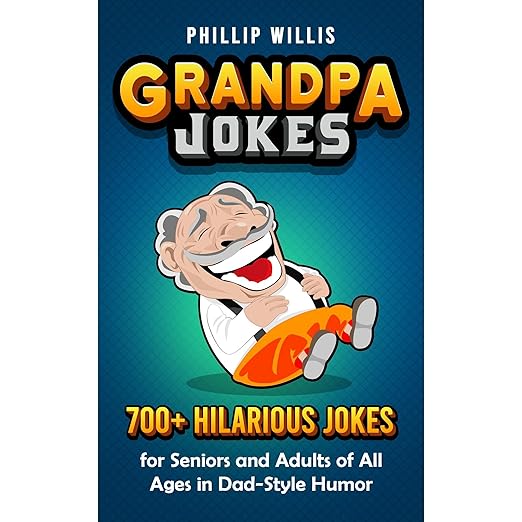
There is a specific pleasure in a well-delivered groan-inducing pun, and it depends almost entirely on the pause before the punchline. You need someone to read the room, to hold the beat just long enough that the listener commits to anticipating the wrong answer. It is a small performance skill, and it is exactly what joke books require from an audio narrator. I listened to a stretch of Grandpa Jokes on a quiet afternoon, curious whether 700-plus jokes could sustain a three-and-a-half-hour listen, and the answer comes in two halves.
The jokes themselves are exactly what they promise: clean, family-friendly, and reliably corny. Animal puns, everyday-life observations, one-liners with setups simple enough for a ten-year-old and groan-worthy enough for a ninety-year-old. One reviewer described using the book as a daily source for a joke of the day in an independent living community, while another documented her ten-year-old daughter repeating ten jokes a day to anyone who would listen. The content works. As a repository of material for grandparents who want to make their grandchildren simultaneously laugh and cringe, the book serves its purpose clearly.
The Problem Sitting in the Narrator’s Chair
What kills the audiobook experience is the narration. Virtual Voice technology has evolved considerably in recent years, and for certain content types it performs adequately. Dense nonfiction, instructional guides, structured reference material can survive synthetic delivery because the content carries the weight. Comedy cannot. A joke is a transaction between a performer and a listener, and that transaction requires a human performer who can shape the setup, inhabit the pause, and land the punchline with earned confidence.
Virtual Voice reads these jokes the way a text-to-speech engine would read a grocery list. The punchlines arrive at the same cadence as the setups. The pauses fall where punctuation dictates rather than where comic rhythm demands. The result is something technically accurate and experientially airless. It is the difference between having someone tell you a joke and having someone hand you a folded piece of paper with a joke written on it.
How Families Are Actually Using This
The reviewers who report genuine enjoyment of this book are almost universally describing a print or Kindle experience, or they are using the audiobook as source material rather than as a listening experience in the traditional sense. The grandmother using it as a joke-of-the-day generator is sampling, not sitting through a three-and-a-half-hour continuous listen. The ten-year-old reading along is engaging with the words on a page and then delivering the jokes herself, which is where the actual comedy lives.
That is a legitimate use case, and it speaks to what the book genuinely offers: a curated, navigable collection of clean humor that spans categories from animal jokes to life-observation puns. The content is well-organized enough that browsing or skipping through makes sense, and as a reference library for someone who needs a steady supply of family-appropriate jokes, the material holds up. But the 4.3 rating across 129 reviews almost certainly reflects the print and Kindle editions more than this specific audio production.
Who Should Listen / Who Should Skip
Consider this audio edition if you are treating it as a browsable source of joke material and plan to skip around rather than listen sequentially, or if you need hands-free access to content while driving or walking. The joke material itself is genuinely family-friendly and covers a wide enough range of topics to stay fresh for a while.
Skip the audiobook format entirely if you are hoping for an entertaining listening experience in the traditional sense. The Virtual Voice narration removes any possibility of comedic timing, which is the load-bearing element of a joke collection. A print copy or ebook will serve you significantly better if the goal is to read jokes aloud to others yourself, where your own timing can do the work.
Frequently Asked Questions
Is this joke collection appropriate for children and grandchildren listening together?
Yes. The content is specifically clean and family-friendly, avoiding any material that would be uncomfortable across generations. One reviewer notes her ten-year-old daughter and ninety-year-old grandfather both enjoy the same jokes, which is a reasonable endorsement of its cross-generational range.
How does Virtual Voice narration affect the comedic timing of these jokes?
Significantly and negatively. Synthetic narration delivers jokes at consistent cadence without the human pauses and emphasis that make punchlines land. If comedic timing matters to you, the print edition would be a better choice.
With 700 jokes across 3.5 hours, is this meant to be listened to straight through or sampled?
Sampling makes far more sense than a linear listen. The format is essentially a reference collection, and dipping in for a handful of jokes at a time is both how the content is designed to be used and how it performs best as an audio product.
Are the joke categories diverse enough to avoid repetition fatigue?
The synopsis outlines categories ranging from animal jokes to everyday life humor to puns, which provides enough variety for extended browsing. Whether 700 jokes in a single style sustains engagement across a 3.5-hour uninterrupted listen is a separate question, and the answer is probably no.