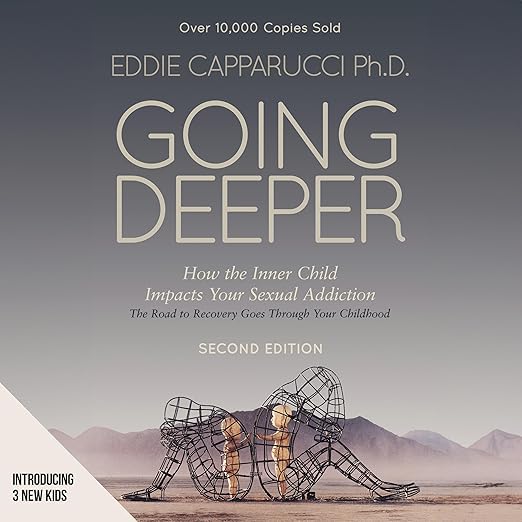
Eddie Capparucci's audiobook opens a clinical and personal conversation that most recovery resources sidestep entirely: the argument that sex and pornography addiction are not primarily problems of willpower or moral failure but of unmet childhood needs being re-enacted in adult life. Going Deeper: How the Inner Child Impacts Your Sexual Addiction, narrated by Nick Edwards, runs 6 hours and 24 minutes and represents Capparucci's distillation of the Inner Child Recovery Process he developed through years of clinical counseling practice. The book has drawn an endorsement from BookLife, which called it "intuitive and insightful," and it has earned the support of multiple recognized figures in the sex addiction treatment field.
Naming the Childhood Deficits Behind Addictive Behavior
The intellectual core of this audiobook is a claim that sex addiction recovery frameworks have historically treated the wrong level of the problem. Twelve-step programs, accountability structures, and content filtering address the behavioral surface. Capparucci argues that until a person identifies which specific childhood emotional deficits are being soothed by the addictive behavior - loneliness, shame, powerlessness, the need for validation - the behavior will reassert itself around every attempted intervention. The inner child, in his framing, is not a soft metaphor but a specific psychological structure: the younger self who learned to use certain behaviors to regulate emotional pain and has never been taught another way.
The treatment structure he presents is built around identifying these specific inner child states, naming their emotional needs, and learning to meet those needs through less destructive means. A reviewer who identified as a triple-certified coach described using the book as a direct clinical reference tool with clients, which is significant. Another reviewer described finding more insight in the first chapters than in years of therapy, specifically noting that therapists rarely investigate the root causes of addictive behavior with the directness Capparucci brings. A third reviewer, who had struggled with pornography addiction while cycling through depression and multiple counseling attempts, described the book as reaching root causes that his therapists had consistently avoided. That pattern across multiple reviewers - the sense that this book does what conventional treatment does not - is the audiobook's strongest practical argument.
Nick Edwards's Composed, Non-Judgmental Delivery
Nick Edwards brings a composed, non-judgmental register to the narration that the material genuinely requires. Capparucci is writing about experiences that carry significant shame for the people experiencing them. A narration style that was clinical to the point of coldness, or that performed therapeutic warmth in a distracting way, would undermine the trust the text is trying to build. Edwards avoids both traps. He sounds like someone who has read the material carefully and understands that even pace, without drama or emphasis on inflammatory terminology, is what allows the listener to stay present with difficult content.
The audiobook format has a specific advantage for this particular topic. Listening privately - on headphones during a commute or walk, not in a room where someone might glance at a book cover or browser history - lowers the psychological threshold for engaging with content about sexual addiction. The shame reduction that Capparucci argues is central to recovery is already served, marginally but meaningfully, by the delivery format itself. For someone in early recovery who is not yet ready to carry this book in public, the audio version is likely to be the first version they encounter, and the private access it affords is not a trivial consideration.
Own-Method Claims Without Peer-Reviewed Comparison
Capparucci is a practicing counselor presenting his own clinical method, and the book reflects that positioning. He writes with confidence in the Inner Child Recovery Process and endorses it through the lens of his own results rather than through peer-reviewed research comparisons. The "large majority of clients" framing in the synopsis is the closest thing to an efficacy claim but it does not specify sample size, measurement criteria, or comparison with other treatment approaches. Listeners who are clinically trained or research-oriented will want to hold the claims at some distance even while finding the framework useful.
The book is also written for people who are actively battling addiction, not for their partners or for professionals approaching the material purely academically. Partners of people with sexual addiction will find relevant material, particularly in the sections on emotional needs and relational dynamics, but the primary address is to the person experiencing the addiction. If you are coming at this from the outside of the experience, the usefulness of the audiobook is real but partial.
For Recovery Past Behavioral-Only Programs
Adults in active recovery from sex or pornography addiction who have tried behavioral-only frameworks without lasting results will find the childhood-root-cause approach of this audiobook meaningfully different from what they have likely encountered before. The private listening format makes it accessible in a way that a physical copy in a household might not be. Therapists and coaches working with this population will find it a clear and applicable resource, exactly as the coaching reviewer described.
Skip this if you are looking for content that addresses the couple relationship in detail - Capparucci focuses primarily on the individual recovery process. And while the material is serious in its intent, the framing presupposes the listener already accepts that addiction is the correct description of their situation; those still questioning whether the category applies to them will need a different starting point first.
- Narrator: Nick Edwards maintains a composed, non-judgmental tone throughout - exactly the register this sensitive material requires, keeping the listener present without adding shame or clinical distance.
- Subjects: Childhood emotional wounds driving adult addiction, inner child psychology, recovery beyond willpower
- Tone: Measured and compassionate, clinical without being cold
- Bottom line: A substantively different recovery audiobook for adults who have tried behavioral-only approaches and found them insufficient - the childhood-root framework is the one most other resources skip.
Good to Know
Is this audiobook appropriate for partners of people with sexual addiction, or only for addicts themselves?
Capparucci writes primarily for the person experiencing the addiction. Partners will find relevant material in the emotional needs and relational dynamics sections, but the core address is to the individual in recovery. Those approaching from outside the experience will find it useful but partial.
Does this audiobook replace professional therapy or counseling?
Capparucci is a licensed counselor and explicitly presents the Inner Child Recovery Process as a clinical method. One reviewer noted that the material closely parallels professional counseling at a fraction of the cost. The book is designed to supplement or initiate recovery work, not replace sustained therapeutic relationships, though it can serve as a meaningful standalone resource.
How does this audiobook's approach differ from twelve-step programs for sexual addiction?
Where twelve-step programs primarily address behavioral accountability and community support, Capparucci argues that lasting recovery requires identifying the specific childhood emotional deficits being re-enacted through the addictive behavior. The framework goes a layer deeper than behavioral management and asks the listener to do developmental psychology work alongside accountability work.
Is the audiobook format preferable to reading the print version for this topic?
For many listeners dealing with this topic, audio offers meaningful privacy advantages - no visible cover or browser history. Nick Edwards' steady narration also helps listeners stay engaged with difficult material. The format is worth prioritizing over print for most people in active recovery who are not yet ready to engage with the subject in public.