In Brief
- Read by: Julia Atwood brings genuine warmth to the material without veering into performed quirkiness; a natural fit for a lifestyle guide built around authentic self-expression.
- At its heart: Embracing imperfection, slow and sustainable living, body and identity acceptance
- Vibe: Cozy, playful, and gently subversive
- Short version: A warm entry point into goblincore philosophy and practice that suits newcomers more than dedicated practitioners looking for deeper craft content.
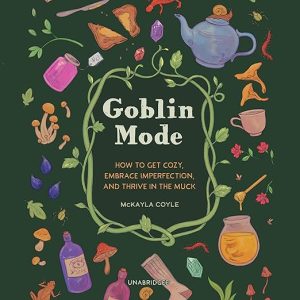
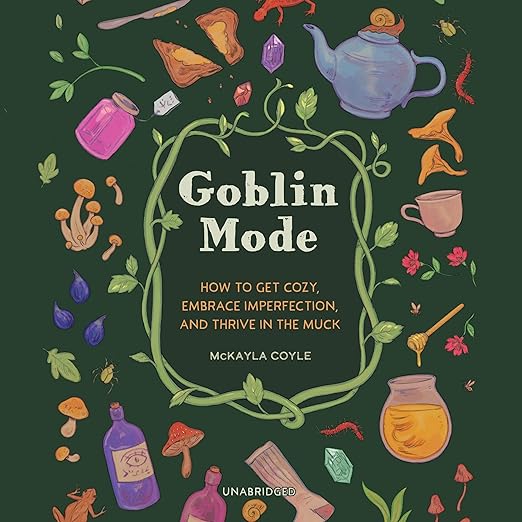
McKayla Coyle's Goblin Mode arrives in a particular cultural moment when "goblin mode" as a phrase already circulated widely online, describing an unapologetic embrace of comfort, mess, and self-directed weirdness over performative tidiness. The audiobook, narrated by Julia Atwood and running just under five hours, takes that subcultural shorthand and builds something more practical around it: a guide to decorating, dressing, foraging, crafting, and generally inhabiting your life in ways that prioritize authentic interest over curated appearance. Whether that sounds liberating or vague depends heavily on where you are starting from, and the book makes a clear choice about who it is talking to.
Goblin Principles Turn Oddities Into Features
The book's core argument is straightforward and not especially controversial: your oddities are features, not flaws, and you can build a life that reflects them rather than suppresses them. Coyle draws this through the lens of what she calls goblin principles, including community, diversity, proud weirdness, and what she terms joyful mess. The framing is playful. She leans into the goblin mythology seriously enough to make the metaphor work: goblins love fungi, rocks, moss, damp corners, and chaotic creativity, and the book uses that affection to anchor practical content about moss gardening, medicinal plant growing, urban foraging, clothing repair, and rock collection display.
Moss Gardens, Foraging, and a Broader Manifesto
The practical sections are the book's most reliable material. Instructions for building a moss garden for your home, foraging for berries in urban environments, and mending clothing are specific and actionable. Coyle does not just gesticulate toward these activities. She gives readers enough detail to actually attempt them, which is what separates a functional lifestyle guide from an aesthetic mood board. Reviewers note that the book does not go deep enough for dedicated goblincore practitioners who already know the craft side, but for someone arriving from outside that subculture, the balance of philosophy and activity works reasonably well.
One reviewer called it "a manifesto for celebrating our passions, embracing coziness, accepting our bodies, subverting systems of waste." That framing captures what the book is trying to do better than any single summary of its contents. Coyle weaves in material about body acceptance, neurodivergent identity, anti-consumerism, and community-building alongside the practical crafting content. These threads are not always seamlessly integrated. Some transitions between practical instruction and broader social commentary feel a little abrupt in audio format, where a reader cannot flip back to reorient themselves. But the book's overall coherence holds, and Atwood's narration keeps the transitions navigable.
Atwood's Narration Avoids Precious or Performed Quirk
Julia Atwood's narration is a good fit for the material. The book has a conversational, warm energy that could easily tip into either precious sincerity or over-performed quirkiness, and Atwood avoids both. She reads with enthusiasm that does not feel manufactured, and the shorter runtime means there is no opportunity for listener fatigue to set in around a personality-driven delivery. At under five hours, the book respects listeners' time and does not repeat itself to fill a longer format.
The chapters on rejecting prejudice, celebrating physical and mental diversity, and building more inclusive communities are sincerely meant and integrated throughout rather than siloed into a single section. The book's commitment to inclusivity is structural rather than decorative, which keeps it from feeling like an afterthought. That said, the arguments on these subjects are not especially developed or nuanced. Coyle states positions rather than arguing them at length. For readers who want substantial analysis of the ideas behind goblin principles, the book gestures toward those conversations without fully entering them. The book's intellectual work is in the practical sections, not the philosophical ones.
Light for Deep Goblincore, Grounded by Real Skills
The book operates at a particular register that reviewers describe as good for "a mix of nature, cottage core, peace" but potentially light for deep goblincore practitioners. That is worth flagging honestly. If you are already embedded in the hobbyist or subculture side of goblincore, with existing foraging knowledge, established craft practices, and a familiar relationship with the broader aesthetics, the book's content will feel introductory. Coyle is writing for people who need an entry point and an invitation, not for people who have already arrived. There is real value in that, but it is a different kind of book than a deep-dive craft manual, and approaching it with the wrong expectation will make it feel thinner than it is.
The snail that teaches you to be a better person and the mushroom that offers fashion tips are among the book's more whimsical framing devices. Coyle uses them lightly, as organizing conceits rather than sustained metaphors, which keeps the tone from tipping into the kind of precociousness that lifestyle manifestos sometimes fall into. The practical chapters benefit from being grounded in actual skills. There is something to be said for a book about embracing joyful mess that also tells you exactly how to build a functional moss garden with real materials and real instructions. That combination keeps the book from being purely aspirational.
Popular With Teens, Thin for Analytical Readers
This audiobook suits listeners who are already adjacent to cottagecore, goblincore, or slow-living aesthetics and want a guided entry point into the practical side of those interests. It works particularly well for younger listeners, as evidenced by the reviewer who noted it was a hit with her teenager. Listeners who approach self-help from a more analytical or evidence-based angle will likely find the philosophical sections underdeveloped. Those who want a project-oriented guide with a warm, playful personality doing the narrating will get exactly that from Julia Atwood's five-hour performance. Not a comprehensive reference, but a genuine and non-condescending invitation to a way of living that more people should probably try.
Questions Listeners Ask
Does the Goblin Mode audiobook include the practical crafting instructions, or does it focus mainly on philosophy?
Both are present. Coyle covers building a moss garden, growing medicinal plants, urban foraging, clothing mending, and rock collection display with enough specificity to be actionable. The philosophy and the practical content are woven together throughout rather than separated into distinct sections.
Is this audiobook suited for experienced goblincore practitioners or is it aimed at newcomers?
It is aimed primarily at newcomers and those curious about the aesthetic from the outside. Reviewers who are already embedded in goblincore note that the content feels introductory. The book's value is as an invitation into the subculture rather than a deep resource for those already inside it.