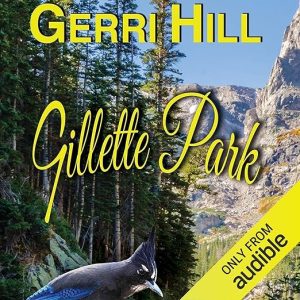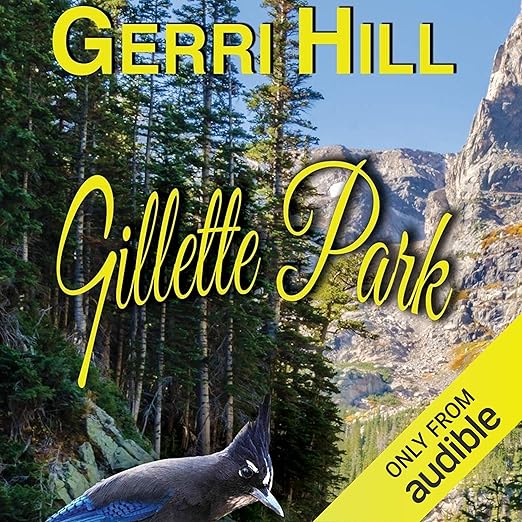
Gerri Hill's audiobook Gillette Park, narrated by Nicol Zanzarella, stands out in Hill's catalog not just for its quality but for its structural ambition. Hill has published over thirty-seven books, almost all of them LGBTQ+ fiction with a romantic core, but Gillette Park brings a serial killer procedural and a supernatural investigative element together with the slow-burn romance in a way that tests whether all three components can sustain the same twelve hours and thirty-seven minutes. Based on reader response, including a longtime Hill reader who called it the book that most surprised them across her entire catalog, the answer is that they can. This audiobook delivers something relatively rare: a mystery that earns its paranormal element without undercutting the procedural, and a romance that develops organically out of the danger both characters share.
What We Made of It
The backstory that opens the novel establishes the stakes immediately: twenty-three years ago, a young girl went missing in this Rocky Mountain town. Two days later, her body was found under the footbridge over Boulder Creek. That murder was not an isolated incident; it was the beginning of a pattern. A serial killer has been hiding in Gillette Park since then, killing two or three times a year, year after year. This is not a mystery with a clean timeline. The killer has been operating across two decades and has clearly embedded deeply enough in the community to avoid detection despite a Sheriff's department that is presumably aware of the pattern. That setup implies either profound investigative failure or something more complicated, and it gives the investigation an uneasy undertone that sustains throughout the audiobook.
Mason Cooper returns to Gillette Park after a career as an LA cop and a breakup that made staying there impossible. The familiar tension between the person she left behind and the community she abandoned is handled briskly by Hill, who is not interested in lingering on homecoming sentimentality. Dr. Grace Jennings arrives from the FBI's side with her psychic ability presented as an established professional tool rather than a supernatural secret to be revealed dramatically. The FBI solicits Grace's help because her track record justifies it, not because the investigation has run out of conventional options. Hill's decision to establish the psychic element as professional rather than revelatory keeps the mystery from feeling like it is cheating when Grace receives information through non-conventional means.
Why Listen to Gillette Park
Nicol Zanzarella is one of Hill's regular collaborators, and that familiarity shows in how precisely she calibrates the two leads. Mason is practical, somewhat sardonic, carrying accumulated damage without performing it; Zanzarella gives her a dry vocal quality that makes the eventual emotional openings feel genuinely earned rather than scripted. Grace is warmer, more accustomed to existing at the margins of conventional professional life, and Zanzarella's version of her is quietly confident rather than eccentric. The relationship between them develops out of the specific circumstances of the investigation rather than arriving as a predetermined romantic outcome, and Zanzarella's narration sustains that procedural logic even in the scenes where the attraction between the characters is explicit.
At twelve hours and thirty-seven minutes, this is one of Hill's longer novels, and the pacing requires a narrator who can hold the dual threads of investigation and romance without allowing either to feel like an interruption of the other. Zanzarella manages this throughout. The supernatural element, far from being a generic addition to the thriller formula, is used here to complicate the procedural in ways that create genuine uncertainty about what is knowable and what the investigation can prove, which is a harder structural problem to solve than most romantic suspense attempts.
What Might Not Land
Listeners who come to this audiobook primarily from the thriller or mystery genre without prior experience of Hill's romance work should know that the relationship between Mason and Grace is a central story concern rather than a subplot. The romance does not overshadow the investigation, but it is given equal structural weight. The reverse is also true: readers who follow Hill primarily for the romance should expect a serial killer investigation that is genuinely dark and handled without the softening that lighter romantic suspense often applies. The resolution of the mystery requires the paranormal element to carry some evidential weight that the procedural logic alone cannot fully supply; whether that satisfies or frustrates will depend on the individual listener's tolerance for supernatural resolution in an otherwise grounded thriller context. The main characters face real physical danger, and Hill does not keep them entirely safe from it.
The Right Listener for Gillette Park
Readers already in Gerri Hill's readership who want to see what she does with a genuine thriller structure alongside her established romantic sensibility will find this her most ambitious work. Listeners who enjoy sapphic romance within a crime procedural context and are comfortable with a paranormal investigative element will find the twelve-hour runtime absorbing rather than demanding. Zanzarella's narration is a consistent asset throughout. The Rocky Mountain setting is used with intention rather than as generic backdrop; the isolation of Gillette Park as a small mountain town is structurally important to the serial killer's ability to hide in plain sight, and Hill builds that claustrophobia steadily. Listeners who require their mysteries to resolve through strictly conventional evidentiary means may find the psychic element an obstacle, but Hill integrates it with enough procedural rigor that the combination holds together better than the setup description alone suggests.
- Read by: Nicol Zanzarella is one of the most consistent performers in Gerri Hill's catalog, and her handling of Mason's dry pragmatism against Grace's more open, intuitive register gives the relationship its distinctive texture.
- At its heart: serial killer procedural, psychic ability as investigative tool, slow-burn sapphic romance
- Vibe: Tense and atmospheric, with genuine emotional investment in the central relationship
- Short version: Hill's strongest thriller to date according to readers who have followed her across thirty-seven books, and Zanzarella's narration is central to why it works so well in audio.