Quick Take
- Narration: Allison Moon self-narrates with the ease of someone who has taught this material in person for years, relaxed, direct, and genuinely engaging across nearly 9 hours.
- Themes: Casual sex and consent, communication in hookup culture, intersectionality and sexual identity
- Mood: Warm and frank, like an extended workshop with a thoughtful educator who has heard all the questions before
- Verdict: An unusually comprehensive and intersectional guide to hookup culture that takes communication and consent seriously without becoming preachy about either.
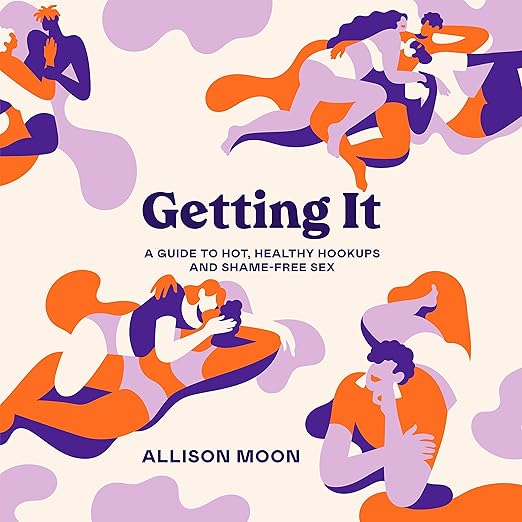
I was halfway through my morning run when I realized I had been so absorbed in Allison Moon’s Getting It that I had looped the park a second time without noticing. That’s not a trivial observation for a sex education audiobook. The genre tends toward either the clinical or the breathlessly enthusiastic, and Moon operates in neither register. She sounds like someone who has spent years teaching workshops on this exact material, which she has, and who has developed the ability to keep an audience engaged because she learned early on that the content doesn’t sell itself through novelty alone.
Getting It presents itself as a guide to hookup culture for people of all sexual identities and experience levels, and it delivers on that scope. The 8 hours and 47 minutes cover first moves, sex etiquette, navigating nonmonogamy, and sexual health, but what holds everything together is Moon’s persistent return to the question of what casual sex actually means for each individual listener, rather than treating hookup culture as a set of universal practices with a fixed set of rules.
Intersectionality as Design Principle, Not Footnote
The synopsis describes Getting It as refreshingly intersectional, and that description holds up under scrutiny. Moon doesn’t add a note about how the guide applies to queer people, nonbinary people, or people navigating disability and chronic illness and then proceed to write primarily for a default heterosexual reader. The intersectional frame is built into the structure of the material from the beginning. That doesn’t mean every listener will see their specific experience represented in equal depth, but the effort to acknowledge that hookup culture is navigated differently across different bodies and identities is genuine and consistent.
This is where Getting It distinguishes itself from comparable guides that were written with good intentions but default to a narrower audience. Moon’s background as the author of Girl Sex 101 has clearly informed how she thinks about the range of people who have sex, and that range is reflected throughout this book.
The Consent and Communication Architecture
I want to be specific about this because it’s one of the things that makes this audiobook more practically useful than it might appear from a summary. Moon doesn’t relegate consent to an obligatory chapter at the beginning of the book before moving on to the content that listeners actually came for. Consent and communication are treated as the mechanism by which hookup culture functions well or poorly, and they run through every section. The guidance on how to have conversations before, during, and after sexual encounters is some of the most concrete and clearly delivered in this category.
One reviewer describes the book as providing an excellent guide to navigating every aspect of the most amazing casual sex, and another calls it something you could open to any page and use as a starting point for breakthrough conversations. Both are accurate. The book works as linear listening and also as reference material you return to when facing specific situations.
Recovering When Things Go Wrong
One section I found particularly valuable is Moon’s treatment of what happens when you make a mistake, or when someone makes a mistake with you. The language of hookup culture tends to present encounters as either successful or failed, with limited vocabulary for the space in between. Moon addresses the reality that many hookup situations involve someone acting imperfectly, either through miscommunication, crossed wires, or genuine error, and she offers concrete guidance on how to recover gracefully from both sides of that dynamic. This is uncommon in sex-positive guides, which tend to spend more energy on getting things right the first time than on repairing or processing situations where they went sideways.
The PDF of notes and recommended reading is available in the Audible library alongside the audio. It’s worth accessing for the reading list alone, which is genuinely useful for anyone who wants to go deeper on specific topics Moon covers in the book.
Who Gets the Most From This Audiobook
Listeners who will find Getting It most valuable are adults who are actively navigating casual sex or considering it, who want a guide that takes their autonomy seriously and doesn’t assume their gender, sexuality, or relationship goals in advance. It is also an excellent resource for people who feel confident about the practical side of hookups but less confident about the communication and relational dimensions. Listeners looking for explicit instructional content about specific sexual techniques will find this lighter on that material than the title might suggest. Moon is more interested in how people relate to one another before, during, and after encounters than in the technical specifics of those encounters themselves.
Frequently Asked Questions
Does Getting It address hookup culture specifically for queer and nonbinary people, or is the coverage primarily heterosexual?
Moon explicitly addresses multiple sexual and gender identities throughout the book, including queer, nonbinary, and trans experiences. The guide is structured to avoid assuming a default heterosexual reader, and the consent and communication frameworks she builds apply across the full range of identities the book engages with.
Is the PDF companion a meaningful addition or just supplemental notes?
The PDF contains notes and a recommended reading list. The reading list is genuinely curated and points toward authors and resources that extend the specific topics Moon covers. It’s worth downloading before you start so you can note titles as they come up in the audio.
How does Getting It compare to Moon’s earlier book, Girl Sex 101?
Girl Sex 101 focuses specifically on sex between women and femmes, with a narrower audience in mind. Getting It is written for a broader audience across all sexual identities and is specifically focused on casual sex and hookup dynamics rather than general sexual practice. The two books complement each other but address different audiences and different aspects of sexuality.
The synopsis mentions navigating nonmonogamy. How much of the book covers polyamory and open relationships?
Nonmonogamy is covered as one component of hookup culture rather than as the book’s primary subject. Moon addresses how casual sex functions in the context of open relationships, and she covers communication practices that apply specifically to nonmonogamous situations, but listeners looking for a comprehensive polyamory guide will want to supplement with a title focused specifically on that topic.