Quick Take
- Narration: KC Wayman reads with a patient, instructional tone that suits the step-by-step format without becoming monotonous over the relatively short runtime.
- Themes: Home cultivation, working with biological systems, budget-conscious self-sufficiency
- Mood: Practical and encouraging, like a knowledgeable friend walking you through their setup
- Verdict: A well-structured beginner’s guide that earns its focus on the full cultivation process rather than isolated techniques.
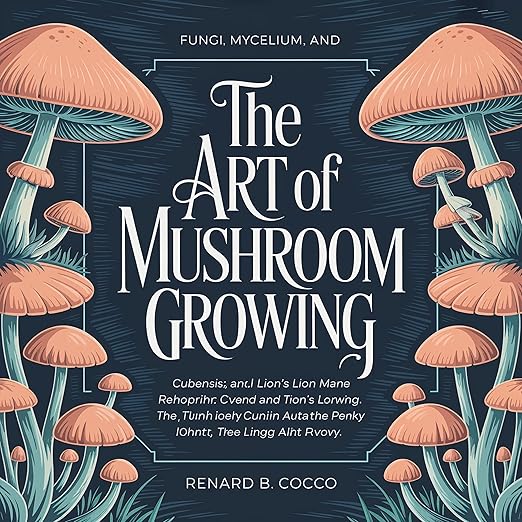
I have tried to grow mushrooms twice. The first attempt, oyster mushrooms on coffee grounds, produced one small and structurally unimpressive flush and then contaminated spectacularly with green mold. The second attempt, following a kit rather than my own improvised setup, worked fine but felt like cheating. Both times I ran into the same gap: the available guides either assumed knowledge I did not have, or they isolated specific techniques without explaining how the full system fit together. Renard B. Cocco’s Fungi, Mycelium, and the Art of Mushroom Growing is addressing exactly that gap, and its explicit awareness of the problem is its main selling point.
The book is organized around what Cocco calls a complete, beginner-focused system, not a collection of techniques but a structured path from understanding the biology of fungi to managing the full cultivation process at home. The species coverage includes oyster mushrooms as the first project (a sound choice; they are the most forgiving for beginners), shiitake, lion’s mane, and medicinal varieties. Substrate methods cover straw, sawdust, and logs. The troubleshooting section addresses the two failure modes that end most beginners’ attempts: mold contamination and stalled growth.
Our Take on Fungi, Mycelium, and the Art of Mushroom Growing
The book’s structure is its real strength. Too many cultivation guides present the pieces without the sequence, and beginners end up with partial knowledge that cannot be assembled into a working practice. Cocco builds the learning path deliberately: biology and ecological role first, then the cultivation fundamentals, then specific species, then troubleshooting. The promise of a budget-conscious entry point, beginning for as little as twenty-five dollars, is genuine; the minimalist to advanced setup tiers give listeners a realistic cost picture at different scales. The medicinal mushroom section, covering species like lion’s mane and reishi, reflects the growing interest in functional mushrooms as both food and supplement, and Cocco includes simple preparation methods alongside the cultivation guidance. This is useful grounding for listeners who came to the topic through wellness interest rather than pure gardening curiosity.
Why Listen to Fungi, Mycelium, and the Art of Mushroom Growing in Audio
At under four hours, this is a short listen that can be completed in a single session. KC Wayman’s narration is unhurried and clear, which is appropriate for instructional content where the listener may want to replay sections while setting up their grow space. The audio format has an inherent limitation for practical guides: you cannot see the substrate textures or contamination signs that the book describes. Listeners who engage with audio primarily for concept absorption and then implement from notes or supplementary text will get the most out of it. As an orientation to the full cultivation process before you invest in equipment or materials, audio works well.
What to Watch For in the Contamination Section
The troubleshooting and contamination sections are where beginners most need specific, visual guidance, and audio is the weakest format for delivering it. Cocco describes the signs of mold contamination and stalled growth clearly enough that an attentive listener can form a working mental model, but identifying green trichoderma mold versus healthy mycelium growth is the kind of judgment that really benefits from images. Listeners who take this as a conceptual foundation and then seek out visual resources, the Kurzgesagt of mushroom cultivation is probably Robert Rogers or similar YouTube cultivation channels, will be better equipped than those who rely on the audio alone for their contamination education.
Who Should Listen to Fungi, Mycelium, and the Art of Mushroom Growing
This is a genuine beginner’s resource for anyone who has been curious about home mushroom cultivation and has not known where to start. The scope is appropriate, broad enough to cover the major gourmet and medicinal species, specific enough to be actionable. Experienced cultivators will find the material too introductory. Beginners who have been intimidated by the jargon or the contamination risk will find Cocco’s approach genuinely demystifying. At under four hours, it is a low-investment orientation to a genuinely satisfying practice.
Frequently Asked Questions
Does the book cover medicinal mushrooms like lion’s mane and reishi, or only gourmet species?
Both. The book explicitly covers gourmet varieties including oyster and shiitake alongside medicinal species, and includes preparation guidance for the medicinal varieties. This dual focus makes it useful for listeners who came to mushroom cultivation through functional health interest as well as those motivated by home food production.
Can someone really start growing mushrooms for twenty-five dollars as the synopsis claims?
The minimalist setup tier is designed to be that accessible, using inexpensive substrates like straw and basic inoculation methods. The twenty-five dollar estimate is realistic for an oyster mushroom first project. More advanced setups with temperature control, pressure sterilization, and multiple species will require more investment.
Is audio a good format for a practical cultivation guide?
For conceptual orientation and process sequencing, yes. For identifying contamination signs or judging substrate texture, no, those require visual reference. The ideal use is audio for the framework, then supplementary visual resources for the hands-on implementation details.
Does the book cover outdoor cultivation methods like log inoculation, or is it focused on indoor grows?
The substrate section includes logs alongside straw and sawdust, which suggests outdoor or semi-outdoor log cultivation is covered. The book appears to address both indoor and outdoor methods, with the indoor focus more prominent given the beginner orientation around home growing.