Quick Take
- Narration: Ray Higdon narrates his own work with the direct, coaching-session cadence of someone who has given this presentation many times, confident, occasionally repetitive, and clearly invested in the outcome.
- Themes: Network marketing growth, social media prospecting, personal branding for MLM
- Mood: High-energy and prescriptive, written for insiders who already believe in the model
- Verdict: Useful and specific for active network marketers who want updated social strategy; entirely self-contained within its own ecosystem and less relevant outside it.
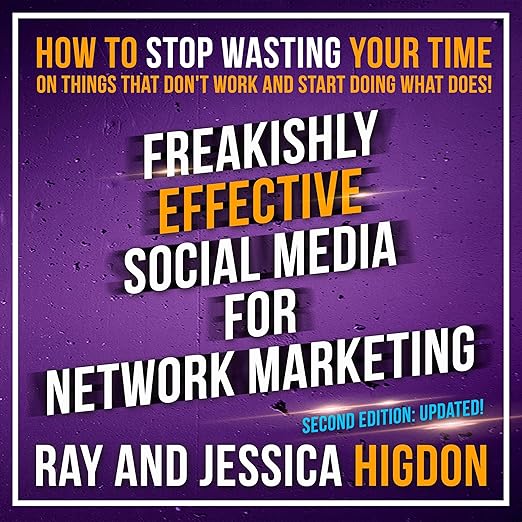
Two hours and twelve minutes is a short book, and Freakishly Effective Social Media for Network Marketing knows exactly what it is. I listened on a Friday afternoon, straight through, and that felt like the right way to approach it, a single concentrated session rather than something you dip in and out of. Ray Higdon isn’t trying to write a long book. He’s trying to give you a working playbook, and at that he mostly succeeds.
The context matters here. This is a book written for people already operating inside network marketing, by someone who has built a following in that space. Higdon and his wife Jessica are well-established figures in the MLM training world, and this second edition updates material from the original with newer platform behavior, video strategy, and what Higdon calls the critical ingredient for staying consistent. If you’re not in network marketing, or if you’re skeptical of the model itself, almost none of this will speak to you. The book has no interest in convincing you that the business model is sound, it assumes that premise and moves directly to tactics.
The Video Pivot and Why It Dominates
The section on video gets the most sustained attention, and that’s consistent with where the platform landscape has moved. Higdon argues that video is no longer optional for network marketers building a social media presence, it’s the primary mechanism through which trust is established quickly with strangers. The advice on what type of video content converts, how long it should be, and what to avoid is specific without being platform-locked. That specificity is actually the book’s main strength: it tells you what kinds of content to create and why, rather than stopping at the level of encouraging you to be authentic.
The prospecting section takes a similarly direct approach. Higdon identifies who to focus your efforts on and why, which is one of the more useful distinctions in the book, since beginner network marketers often make the mistake of broadcasting to everyone rather than selecting with any intentionality. The follow-up advice, addressing what to do when people seem interested and then disappear, is practical and grounded in real interaction patterns rather than idealized conversion funnels.
Self-Narration and Its Costs
Higdon reads his own material, which is appropriate for a book in this genre. The coaching persona is built into the content, and having a professional narrator deliver it would create distance between the voice and the message. However, the narration style is recognizably that of someone more accustomed to speaking in front of a room than to a microphone. He tends to hammer certain points with an emphasis that works in a live setting but can feel slightly overwrought on repeat listening. Phrases like this is a must-hear appear in the prose itself, which is the kind of internal marketing language that listeners often find grating once they notice it.
The runtime also means there’s very little fat to cut. At just over two hours, the book covers a lot of ground quickly, which means some sections feel more like a list of principles than a developed argument. The branding section, in particular, covers what to include and what to avoid in your profile without always explaining the underlying reasoning. That’s fine if you trust Higdon’s expertise; it requires more faith if you’re coming to this with skepticism about any of the premises.
Second Edition Updates and Shelf Life
The most valuable thing about the second edition label is the signal that someone has looked at the material recently. Social media strategy advice that isn’t updated becomes a historical artifact very quickly. The new material on video, updated platform guidance, and revised prospecting methodology reflects current conditions more accurately than the original would. Still, the specific platform mechanics will continue to shift, and some of what reads as current advice in this recording will date within a year or two. The principles around personal branding, consistency, and prospecting selection are more durable; the tactical detail around specific content types and formats less so.
Who Should Listen and Who Should Skip
Listen if you are actively working in network marketing and want a specific, updated framework for using social platforms to build your business. The advice is actionable, specific to your situation, and delivered by someone with real experience in the space. Skip if you’re not in network marketing, this book is written for and about a very specific business model, and the principles don’t translate easily outside it. Skip if you want a book that examines the model critically or helps you evaluate whether to get involved; Higdon assumes you’re already in.
Frequently Asked Questions
Is this book useful for general social media marketing, or only for network marketing specifically?
It is written almost entirely for network marketers. The prospecting and relationship-building frameworks are grounded in MLM business logic rather than general brand marketing. Some principles around video content and personal branding have broader applicability, but the book is not trying to serve a general audience.
What does the second edition add compared to the original?
According to Higdon, the second edition includes updated platform guidance, expanded material on video strategy reflecting how video has become central to the medium, new methodologies, and revised prospecting tactics. The core philosophy remains the same; the tactical layer has been refreshed.
At just over two hours, is this book long enough to be substantive?
It covers significant ground for its length, which means some sections are more summary than development. The most substantive sections are on video, prospecting, and follow-up strategy. If you’re looking for deep explanatory content, the short runtime will feel thin; if you want a usable checklist-style playbook, the brevity is a feature.
Ray Higdon narrates his own book. How does that affect the listening experience?
His narration is confident and energetic, consistent with his coaching persona. Listeners who are fans of his style will find it affirming; listeners who prefer more neutral delivery may find the persuasive register tiresome over time. The short runtime limits how much this becomes a factor.