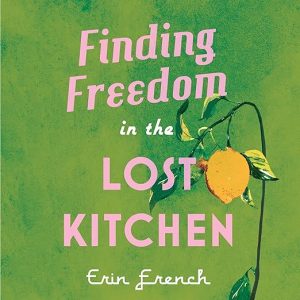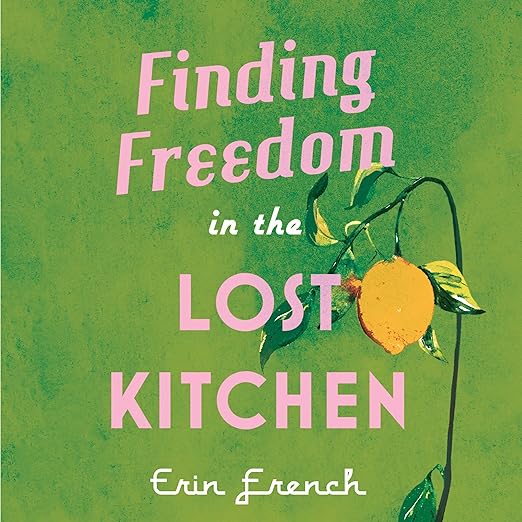
I've driven past enough country diners and small-town restaurants to have a complicated relationship with the mythology of the American chef-as-hero. The narrative of passion overcoming adversity, rustic simplicity masking extraordinary ambition, it has been told so many times that the template feels worn. Finding Freedom disrupted that familiarity in the best way. Erin French's memoir is less interested in the fairytale of The Lost Kitchen than in the real cost at which it was assembled, and the honesty of that accounting is what makes the book worth nine and a half hours of your time.
French reads her own story, and the decision is the right one. There are passages in this memoir, the addiction, the marriage to a man who systematically dismantled her sense of self, the years as a jobless single mother in rural Maine, that would feel clinical in a professional narrator's hands. French delivers them with the flatness of someone who has said the hard parts out loud enough times that they no longer need performance to land. That restraint is more devastating than expressiveness would be.
The Review
The book covers ground that gets described in memoir-speak as "raw" and "honest" so often those words have lost meaning. What I can say more precisely is that French does not arrange her suffering for narrative elegance. The sequence of rock-bottoms she describes, pregnancy at seventeen, dependency on pills that she traces with clinical accuracy to a specific emotional crisis, a marriage she stayed in too long for reasons she names without excuse-making, doesn't organize itself into a clean three-act recovery arc. It loops. Things get better and then worse. The pills stop and then don't. The restaurant closes.
What anchors the memoir is food. French grew up in her father's diner, and food functions throughout the book not as a metaphor but as a literal scaffold: when she could not hold much else together, she could cook. The descriptions of ingredients and seasons that some reviewers found draggy are, in my reading, doing important work, they establish that her relationship with food is not romantic or aspirational but functional, almost medicinal. It is the thing that kept returning her to herself.
The Lost Kitchen is, by the time French writes about it, already a well-known restaurant with a lottery system for reservations and regular coverage in national publications. But the memoir earns the reader's investment in that success by refusing to treat the success as the point. One reviewer notes accurately that the book "dwells on the tragic" and that French gives only a few pages to the new relationship in her life after the abusive one ends. That choice is deliberate and, I think, correct. This is not a book about arriving. It is a book about what surviving actually looks like from the inside.
The Maine backdrop does real work throughout. French writes about the lushness and severity of Maine's seasons with the specificity of someone who has lived inside them rather than observed them, and the rhythm of the natural world, the bounty of summer against the long, difficult winters, becomes a structural element of the memoir rather than a setting detail. The bleakness of those winters shapes the texture of her lowest points in ways that feel earned rather than deployed for atmosphere.
Before You Commit to Finding Freedom
One reviewer flags that this audiobook is essentially the same as the earlier Finding Freedom, A Cook's Story release under a different cover. Listeners who have already heard that version should verify before purchasing to avoid duplication. There are no recipes or photographs, as several reviewers note, this is a narrative memoir, not a companion to her cookbooks.
The pacing in the first third is deliberately slow, which some listeners find challenging. French lingers in the details of her father's diner and her adolescent relationship with food before reaching the more dramatic material of her adult life. If you find yourself wondering when the story is going to start, keep going, the memoir builds rather than front-loads, and the patience it asks of the listener in the early chapters pays off in the later ones.
Who It's For
This is the right memoir for listeners who want emotional authenticity over narrative polish, who are interested in creative resilience, addiction recovery, or the specific challenges of rebuilding a life after an abusive relationship. Fans of Gabrielle Hamilton's Blood, Bones, and Butter will find a natural companion here, both are chef memoirs that refuse to make the kitchen a sanctuary from reality. Those who want more time with the triumphant Lost Kitchen story and less with the years of difficulty should probably know in advance that this book's priorities are the opposite of that expectation.