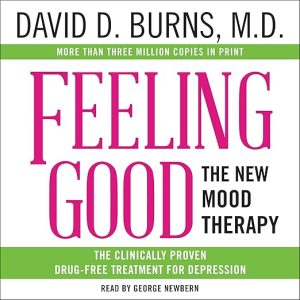
David D. Burns's Feeling Good has been used as bibliotherapy, meaning a therapeutic reading assignment, by more mental health clinicians than almost any other psychology text. This audiobook, narrated by George Newbern, gives you thirteen hours and twenty minutes with one of the most cited and widely applied cognitive behavioral therapy resources ever written. Burns argues that anxiety, guilt, procrastination, low self-esteem, and depression can be substantially reduced without medication, using a set of scientifically validated techniques for identifying and reframing the distorted thinking patterns that generate and maintain these states. That claim is not marketing; it is backed by decades of clinical research and the practical experience of millions of readers and listeners.
What We Made of It
Burns's achievement in this book is translating the clinical apparatus of CBT into language that a listener with no psychology background can apply in their own life. The structure is pedagogical: he introduces a thinking distortion, names it, shows how it operates in specific emotional situations, and then provides concrete techniques for countering it. That sequence, definition, example, intervention, repeats across the book with enough variation to hold attention across the full runtime. Newbern's narration matches the tone Burns establishes: warm, measured, and direct without being either cold or falsely enthusiastic. For a book that asks listeners to examine their own habitual thought patterns, the narrator's tone matters more than it does for most genres. Newbern gets it right.
One reviewer describes listening while walking by the ocean every day during a period of serious anxiety and depression, finding that the audiobook made a real difference. Another calls it among the best books they have read. These responses reflect what clinical evidence also suggests: that active engagement with cognitive restructuring techniques produces measurable improvement in mood. The updated edition includes a new consumer guide to antidepressant drugs and a new introduction addressing questions about treatment options, which adds contemporary relevance to the foundational techniques the book has always provided. A third reviewer noted both the breadth of practical tools and the frustration of being on the audio platform without easy access to the PDF worksheets, a genuine limitation worth naming.
The audio format works for this material because the conceptual sections, which explain why distorted thinking produces specific emotional states, translate naturally to spoken word. The narrative thread of personal examples and clinical cases that Burns uses to illustrate each distortion keeps the content engaging across thirteen hours in a way that a drier academic treatment would not. Newbern's pacing is calibrated for the material: slower through the technique explanations, with appropriate weight given to the examples that make the abstract concrete. The website mentioned in the synopsis, feelinggood.com, provides access to the Feeling Good Podcast and supplemental materials, which means the audiobook is part of a larger ecosystem of resources rather than a standalone document.
Burns's approach to procrastination deserves specific mention as one of the more practically useful sections of the audiobook for a broad range of listeners. His analysis of procrastination as a mood regulation strategy rather than a time management failure, the avoidance of a task because anticipating it is aversive, reframes a behavior that most self-help books treat as a discipline problem. The intervention he describes, breaking tasks into components so small that the activation energy required to begin approaches zero, is a concrete behavioral technique that listeners can apply the same day. That combination of explanatory depth and immediate applicability is what distinguishes Burns's approach from inspirational self-help: the techniques are grounded in a model of how the behavior works, not just in the assertion that change is possible.
For listeners who have already read the book For listeners who have already read the book in print, the audio version offers the particular value of having Burns's techniques read aloud in a context where active reflection is easier than it sometimes is while reading. The cognitive restructuring exercises benefit from being heard as instructions rather than read as text. The chapter on dealing with hostility and criticism is especially effective in audio form because hearing the suggested responses read aloud primes the listener in a way that reading them silently does not. The consumer guide to antidepressants added in the updated edition provides genuinely useful context for listeners navigating treatment decisions alongside their engagement with the CBT material.
Before You Commit to Feeling Good
The practical exercises in the book, the structured journaling and thought records that are central to how CBT actually works, are referenced in the audio but not fully executable through listening alone. The companion PDF and the supplemental materials at feelinggood.com partially address this, but listeners who want to get the full therapeutic benefit of the techniques will need to engage with those supplementary resources actively rather than treating the audiobook as a passive listen. This is not a criticism unique to Burns; it applies to the entire genre of self-help psychology in audio form. Burns is also writing primarily for listeners experiencing depression and anxiety within the moderate range; those experiencing severe clinical depression should engage with these techniques alongside rather than instead of professional mental health support, which Burns himself recommends in the text. The 4.4 rating from 113 reviews is consistent with the broad appeal and occasional format limitations that reviewers identify.
Best Suited For
This audiobook is for anyone who has experienced anxiety, low mood, procrastination, or distorted self-assessment and wants evidence-based tools for addressing those states without medication as a first resort. It works equally well for people in therapy who want supplementary material and for those who want to try structured self-help before pursuing clinical treatment. Mental health professionals who are not already familiar with Burns's framework will find it a useful clinical resource. Skip it if you want a passive reading experience: the book asks something of you, and the returns are proportional to the engagement you bring. Newbern's thirteen-plus-hour narration is among the better performances in the clinical self-help audiobook genre.
- Narrator: George Newbern reads David D. Burns with a warm, measured authority that suits the clinical-meets-accessible register of cognitive behavioral therapy made practical, never cold, never saccharine.
- Subjects: cognitive behavioral therapy for depression and anxiety, identifying and restructuring distorted thinking, building self-esteem and emotional resilience
- Tone: Grounded and hopeful, methodical without being clinical
- Bottom line: Burns's landmark CBT manual remains one of the most practically useful mental health audiobooks available, with Newbern's narration giving the evidence-based techniques the warmth they need to land.
Is the Feeling Good audiobook as effective as the print version for applying CBT techniques?
For the conceptual and narrative sections, the audiobook works very well. The practical exercises, including thought records and cognitive restructuring worksheets, require the companion PDF or supplemental materials from feelinggood.com to execute fully. Listeners should treat the audio as the instructional layer and the written materials as the practice layer.
Does this audiobook cover medication as well as CBT techniques?
The updated edition includes a new consumer guide to antidepressant drugs, which Burns added specifically to address listener questions about treatment options. The primary focus remains CBT-based techniques for depression and anxiety, but the medication guide provides useful context for listeners navigating those decisions.
How does George Newbern's narration hold up across the full 13-hour runtime of this audiobook?
Reviewer responses and the audiobook's strong rating suggest Newbern maintains the appropriate tone throughout. His warm, measured delivery suits the clinical-yet-accessible register Burns establishes, and the pacing across thirteen hours keeps the material from becoming repetitive or monotonous.