The Short Version
- Voice: C. Michele shifts convincingly between a wounded heroine's vulnerability and a crime heir's controlled menace.
- Big ideas: Forced proximity, trauma and rediscovery, arranged-marriage pressure
- Atmosphere: Heat-forward and emotionally charged
- Worth it?: A tightly paced romance for listeners who want stakes and heat together, not a wrapped-bow epilogue.
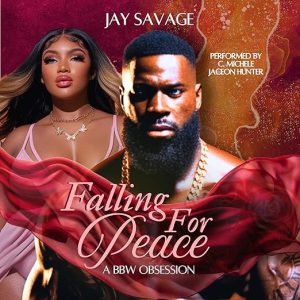
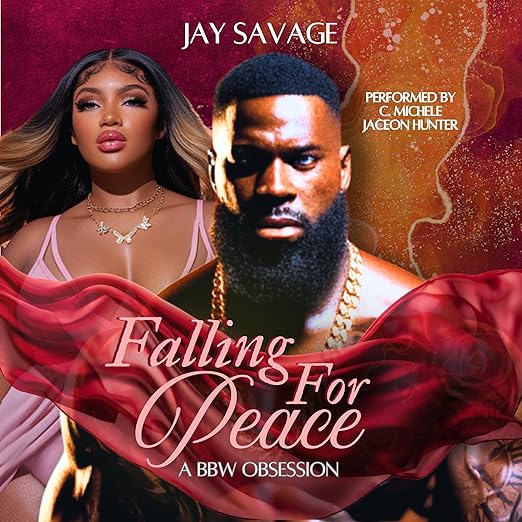
Peace Rivers wakes from a brutal accident to find the face haunting her dreams sitting real and solid beside her hospital bed, and that collision between fantasy and consequence sets the tone for this audiobook romance from Jay Savage. Falling for Peace runs six hours and twenty-eight minutes, narrated by C. Michele, and pairs a big, beautiful heroine trapped in a loveless marriage with Tru LeRoux, heir to a Creole crime dynasty given five months by his family to marry and produce an heir or lose the alliance his father built. Neither character asked for the other, which is precisely the engine this kind of forced-proximity romance runs on.
Peace's Art Rebuilds More Than a Memory
The setup leans hard on two well-worn romance engines at once, amnesia-adjacent vulnerability after Peace's accident and a mafia-adjacent arranged-marriage countdown for Tru, and the book earns more credit than a lesser version of this premise might for keeping both threads emotionally grounded rather than purely plot-mechanical. Peace's turn toward art after losing fragments of her past gives her arc an interior life beyond simply waiting to be rescued, and reviewer Tracy Pettis singled this out directly, writing that 'their love was for them and really beautiful in the end,' language that suggests the book earns its emotional payoff rather than just asserting it.
Genre tags attached to this listing include erotica alongside romance, though the three attached reviews describe the book in warmer, more relationship-centered terms than that tag alone implies, page turner, beautiful, an unusual take on rediscovery, rather than language centered on explicit content specifically. Reviewer Kindle Customer noted they had never read a rediscovery story quite like this one, which points to the amnesia-and-recovery angle as the book's real distinguishing feature rather than heat level alone. Readers should treat the erotica tag as a heat-level signal worth taking seriously, but the reviews suggest emotional weight carries at least as much importance as any explicit content.
C. Michele Balances Two Emotional Registers
C. Michele's narration has to carry two very different emotional registers across six and a half hours, Peace's fragile, art-focused rebuilding after trauma and Tru's controlled, crime-dynasty menace, and a single narrator handling both a wounded heroine and a hardened heir successfully depends entirely on vocal range rather than volume. Reviewer Miss Jones's enthusiastic response and insistence that this book did not disappoint suggests the performance lands the emotional beats the writing sets up, though the review itself focuses more on wanting more from this author than on narration specifics directly, which leaves the actual performance unconfirmed by that review alone.
The runtime itself works in the book's favor for this particular subgenre. At six hours and twenty-eight minutes, Falling for Peace sits well under the ten-plus-hour range many romance audiobooks now run, which suits a story built around a compressed five-month countdown rather than a sprawling multi-book courtship. A tighter runtime mirrors the urgency Tru's family deadline creates on the page, and listeners who want the emotional payoff of forced-proximity romance without committing to a much longer series entry get exactly that structural match here between plot pressure and listening-time investment.
Reviewer Miss Jones's specific request for more from this author points to something worth naming directly: Jay Savage appears to be building a catalog in this same emotionally charged, high-stakes romance space, and readers who connect with Falling for Peace's particular blend of trauma recovery and crime-family danger are the exact audience an author develops a backlist for. A reader who finishes this in one sitting and wants more of the same tone has a reasonable expectation of finding it, based on how directly that reviewer's enthusiasm points toward wanting a continued relationship with this specific author's voice rather than just this one book.
Six Hours Leaves the Wider Cast Offstage
Reviewer Kindle Customer flagged a specific structural choice worth knowing going in: unlike many romances that spend a final chapter checking in on every side character and couple after the main resolution, this book does not do that here. Listeners who specifically enjoy that kind of epilogue-style wrap-up, seeing secondary characters get their own happy ending confirmed, should adjust expectations, since the ending appears to close tightly around Peace and Tru rather than opening back out to the wider cast the crime-dynasty setup implies exists around them.
The crime-family backdrop, an heir forced to marry within five months to secure an alliance, promises a level of danger and consequence that a shorter runtime has less room to fully explore compared to a longer romantic suspense series. Readers expecting deep worldbuilding around the Creole crime dynasty itself, its internal politics, rival factions, or extended family dynamics beyond Tru's immediate pressure, may find six and a half hours keeps that material as backdrop rather than fully developed subplot, with the central relationship taking priority over the criminal-underworld machinery surrounding it.
Peace's turn toward art as her recovery mechanism after losing pieces of her memory is a specific, well-chosen detail worth watching for rather than skimming past as generic backstory. Art as a narrative device works because it gives a physically and emotionally injured character something active to do that does not depend on Tru or anyone else rescuing her, and listeners who appreciate romance heroines with an independent creative identity outside the central relationship will likely find this a more satisfying character choice than a heroine defined purely by her trauma or her romantic interest.
Countdown Romance Fans Get a Tight Listen
This suits romance listeners drawn to forced-proximity and second-chance-at-life setups, where trauma and vulnerability open the door to connection rather than a slow-burn courtship building from friendship. Readers who enjoy a heat-forward romance with real emotional weight attached, not heat as the sole point, will find the erotica and romance tags both earn their place here, and the compressed six-and-a-half-hour runtime makes this an easy single-sitting or single-commute listen for anyone wanting a complete romantic arc without a multi-book series commitment hanging over the ending.
This also suits readers specifically drawn to the arranged-marriage romance subgenre, where the countdown clock itself generates tension independent of whether the two leads like each other yet. Tru's five-month deadline gives the book a clear structural spine that fans of that specific trope will recognize and appreciate, and pairing it with Peace's medical trauma recovery gives both halves of the central couple a countdown of their own, his imposed by family duty, hers imposed by the slow work of healing, running in parallel across the same six and a half hours.
Skip this if a tidy, everyone-gets-a-bow epilogue matters to the listening experience, given Kindle Customer's note that side characters do not get the usual wrap-up treatment here. It is also a weaker fit for readers wanting extensive crime-family worldbuilding rather than a tightly focused two-person romance, since the Creole dynasty setup functions mainly as pressure on Tru rather than a fully explored world in its own right across this particular runtime.
Frequently Asked Questions
How much heat or explicit content does this Falling for Peace audiobook actually have?
The listing carries an erotica tag alongside romance, but the three attached reviews emphasize emotional connection and rediscovery over explicit detail specifically, suggesting a heat-forward romance rather than erotica-first content.
Does this audiobook wrap up every character's ending, or just the main couple's?
Just the main couple's. A reviewer specifically noted the book skips the common romance convention of checking in on every side character after the resolution, closing tightly around Peace and Tru instead.
How long is the Falling for Peace audiobook, and is it a quick listen?
It runs six hours and twenty-eight minutes, noticeably shorter than many romance audiobooks, making it a manageable single-weekend or few-commute listen.