At a Glance
- Read by: Will Damron's calm, measured delivery lets Levy's deeply reported material accumulate its own quiet force.
- At its heart: Silicon Valley ambition, unchecked platform power, the human decisions behind a company's rise and reckoning.
- Vibe: Evenhanded yet damning, serious investigative journalism with real narrative momentum.
- Short version: One of the most thoroughly reported technology audiobooks available, essential for understanding how Facebook actually got built.
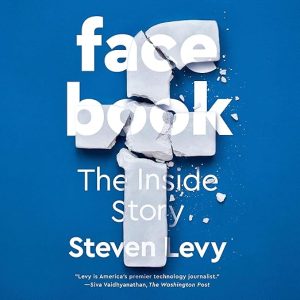
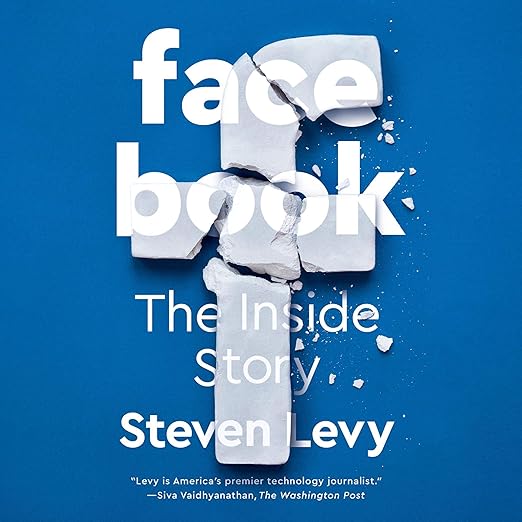
Steven Levy spent three years with what one reviewer calls 'unprecedented access' to Mark Zuckerberg and his inner circle, and the craft achievement of this Facebook audiobook is how little that access seems to have softened the final account. This is the veteran technology journalist behind Hackers and In the Plex applying the same deep-reporting model to Facebook's rise from a Harvard dorm-room project to one of the most scrutinized companies on earth, built on hundreds of interviews inside and outside the organization, and it runs nearly 19 hours precisely because Levy refuses to compress a fifteen-year story into a magazine-length gloss.
Evenhanded, Devastating, and Stopped in 2019
The Financial Times called this one of the best technology books of 2020, and the specific quality that earns that praise is Levy's refusal to pick a single lane, either hagiography or takedown, and stay there. The San Francisco Chronicle's description of the book as 'evenhanded and devastating' captures the actual reading experience precisely: Levy lets Zuckerberg and his team explain their own decisions in their own words, growth at all costs, the WhatsApp and Instagram acquisitions, the platform's addictive design, and the damning quality emerges from the accumulated weight of those decisions laid out plainly rather than from editorial commentary layered on top.
One reviewer notes the book ends in 2019, meaning the entire 2020 news cycle, and everything that followed, falls outside its scope. That is a real structural limitation worth naming clearly rather than a flaw exactly, Levy was writing contemporaneous history with real access, not retrospective analysis with the benefit of hindsight, and the trade-off is a deeper, more granular account of the company's first fifteen years in exchange for missing whatever comes next.
Interior Access No Outside Reporter Could Get
NPR's blurb on this book, comparing it to how the HBO comedy Silicon Valley 'did not have to reach far for its satire,' is a sharper compliment than it first appears. It suggests Levy's reporting captures a level of absurdity in the company's actual internal decision-making that a scripted satire could barely exaggerate, which is a specific and fairly damning kind of praise for a work of straight journalism to earn.
The WhatsApp and Instagram acquisitions get treated as their own throughline rather than footnotes to the main Facebook story, and that structural choice pays off. Levy traces how 'growth at all costs' as an operating philosophy directly shaped both deals, showing the acquisitions less as isolated business decisions and more as inevitable expressions of a company culture that had already been set in place years earlier.
The synopsis names the platform's most damaging recent chapters directly, election-influencing fake news accounts, the handling of users' personal data, and Levy gives each its own sustained reporting rather than a passing mention. These sections carry the specific weight the Chronicle's 'devastating' description points to, built from named sources and internal decision-making rather than outside speculation about what must have happened behind closed doors.
Reviewer Admiralu titles their review 'The Interior Workings of Facebook,' and that phrase captures precisely what makes Levy's access-driven approach distinctive within business journalism generally. A lot of corporate histories are written from the outside looking in, reconstructed from public statements and secondhand accounts; Levy's three years embedded with Zuckerberg's actual team produce the kind of interior, decision-by-decision detail that outside reporting simply cannot replicate, whatever its other strengths.
Damron's Calm Delivery Sustains Nineteen Dense Hours
Will Damron has built a real specialty narrating exactly this kind of measured, deeply reported technology and investigative nonfiction, and his work here extends a pattern already visible across his catalog: a calm, unhurried delivery that trusts serious material to land on its own weight rather than performing urgency the text has not earned. That register is precisely correct for a book Levy has structured to let facts accumulate into judgment rather than announcing conclusions upfront, and Damron's restraint keeps nineteen hours of dense reporting legible without ever flattening into monotone.
Reviewer S. Schrock, who describes actively disliking what Facebook has become, still calls the origin story and its 'multi-layered challenges' genuinely interesting and enlightening, which speaks to how well Levy separates the reporting from the reader's own feelings about the subject. You do not need to like Facebook, or use it, to find the actual story of how it got built and how it got this powerful genuinely compelling as a piece of narrative journalism.
A Plain Title That Withholds Any Verdict
At nearly 19 hours, this demands a real time commitment, and listeners should go in understanding that Levy is not delivering a breezy business-book summary but a fully reported history with the pacing and density that implies. This rewards patience and works best across many sessions rather than an attempt to binge it in a weekend.
Because the book stops at 2019, it does not cover the January 6th aftermath, the company's rebrand to Meta, or any regulatory and reputational developments since. Listeners specifically seeking analysis of Facebook's most recent controversies should understand this book's scope ends before that chapter of the story begins, even though everything it does cover remains directly relevant to understanding how the company got there.
Reviewer Admiralu suggests Levy 'may have to do a follow-up' covering everything since 2019, and that is a fair wish rather than a real complaint about this specific book. The foundational reporting on how Facebook's culture and decision-making actually worked does not go stale the way a pure news recap would, since the patterns Levy identifies in the company's first fifteen years remain the same patterns observers point to when explaining what came after.
It is worth noticing that the book is titled simply Facebook, no explanatory subtitle promising a rise-and-fall arc or a scandal-of-the-century framing the way so many corporate exposes do. That plain, unadorned title matches the book's actual method: let fifteen years of accumulated reporting make the argument, rather than announcing a verdict on the cover before a single chapter begins.
Compelling Even to Someone Who Never Used It
This is essential listening for anyone trying to understand how a dorm-room project became one of the most powerful and controversial companies in American life, and it rewards listeners who appreciate deeply sourced, patient investigative journalism over quick-hit business takes. Reviewer Maureen Bolton, who has never had a Facebook account and never understood the platform's appeal, still found the origin story compelling, which suggests the book works even for listeners with no personal stake in the company's products.
Skip this one if you specifically want coverage of Facebook's post-2019 controversies or its transformation into Meta, since that material falls outside this book's timeline entirely. For the fifteen years it does cover, though, few technology audiobooks offer this level of sourced, patient detail on exactly how one company reshaped how billions of people communicate.
A Few Questions About Facebook
Does this audiobook cover Facebook's rebrand to Meta or recent controversies?
No. Levy's reporting ends in 2019, so the book does not cover the Meta rebrand or anything that followed.
How long is the Facebook audiobook, and is it worth the full runtime?
It runs nearly 19 hours, and the length reflects genuinely deep, interview-based reporting rather than padding, which most listeners describe as earning the time investment.
Do I need to be a Facebook user to find this audiobook interesting?
No. At least one reviewer who has never had a Facebook account still found the origin story and the company's challenges genuinely compelling.